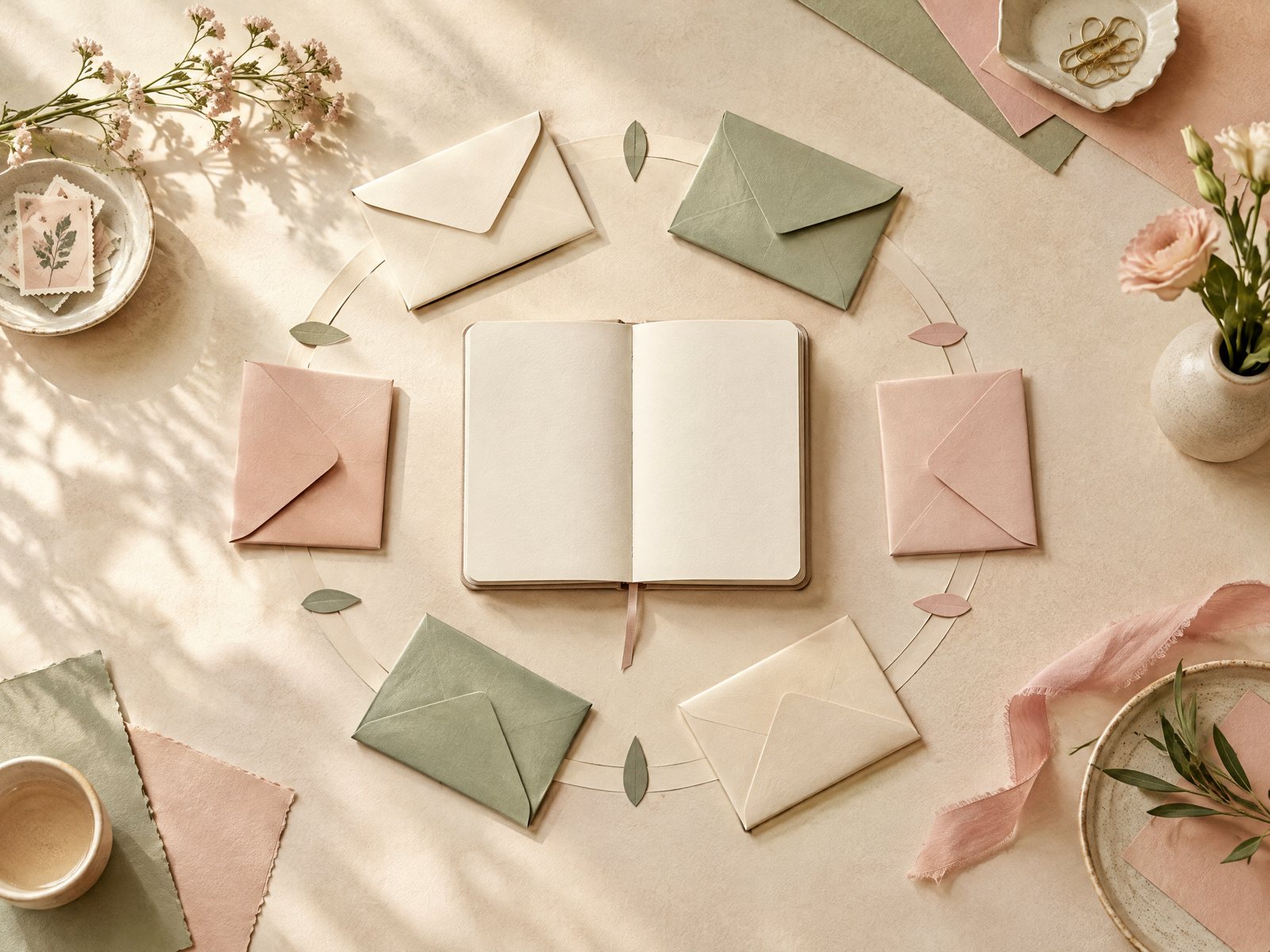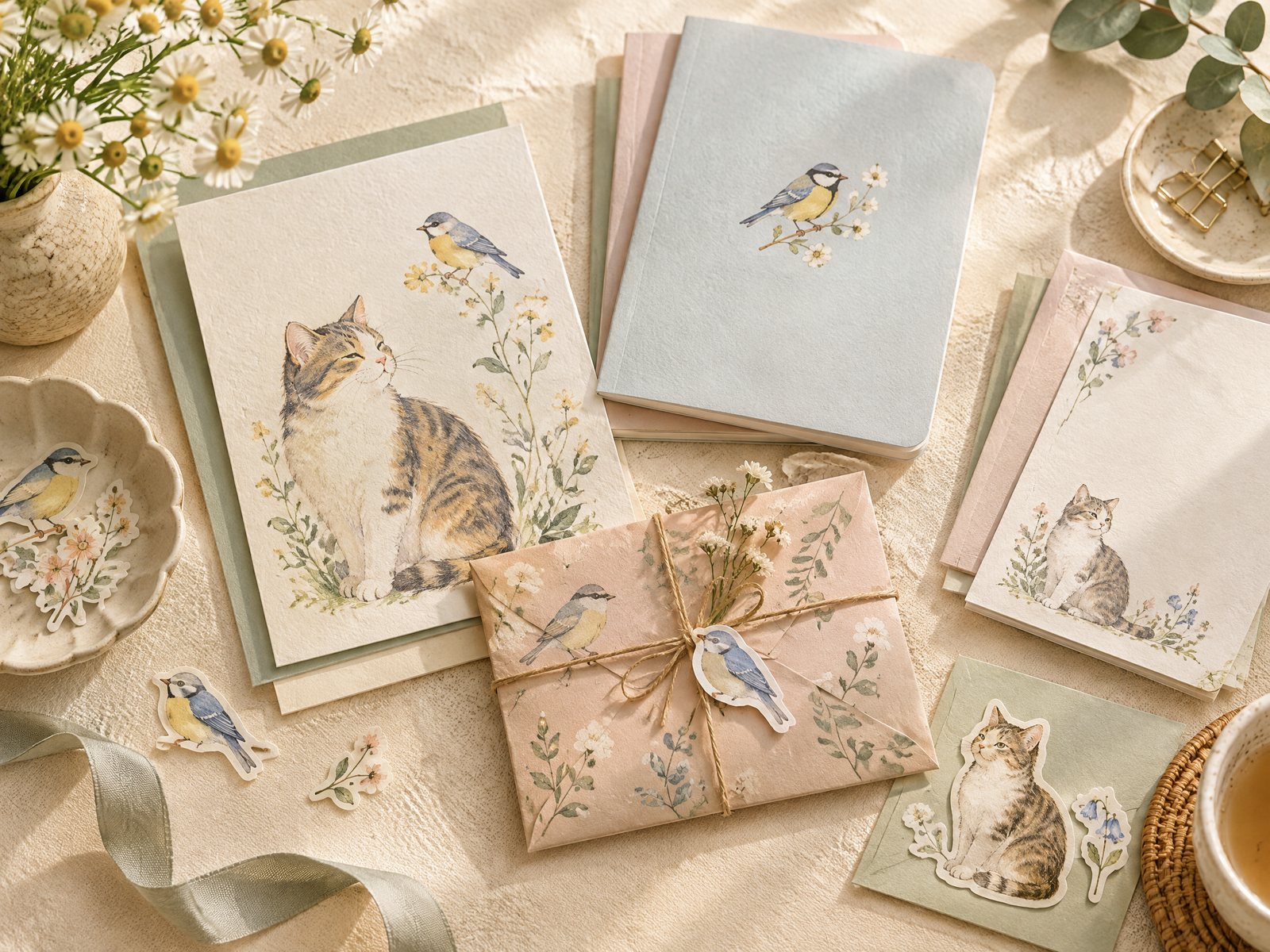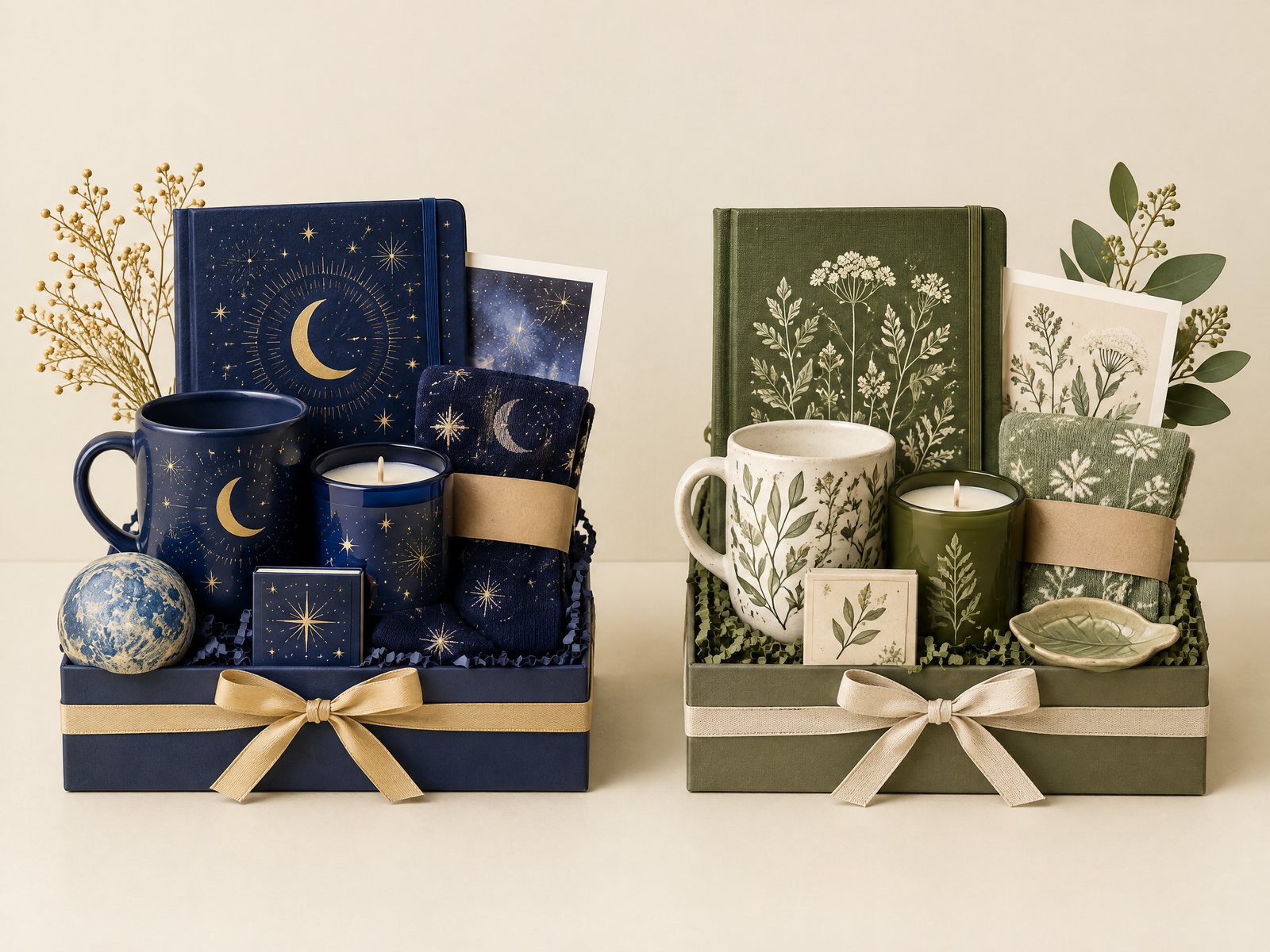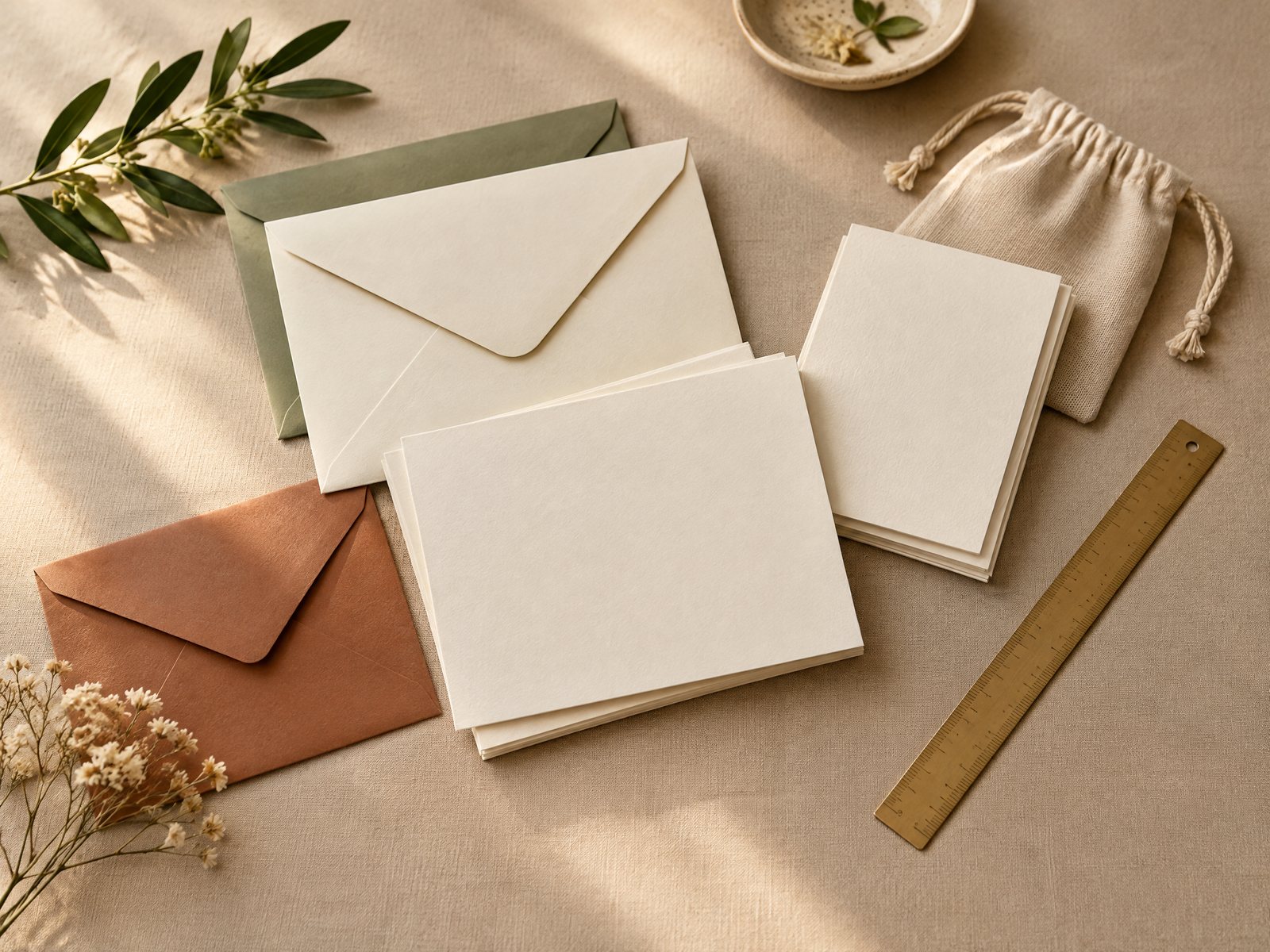
A mixed paper bundle can look perfect in a product grid and become awkward on a real desk: the card is too large for the envelope, the notebook bends a pouch, or the items technically fit but leave no room for a pen. Farouk Book Store is a useful place to make this a deliberate selection rather than a guess, because its catalog brings together paper goods and carry pieces from different categories. The key is to cross-check the job each item must do before you combine motifs.
This is not a matter of making every measurement identical. A good bundle has a lead item, a container, and enough breathing room for handling. Start by deciding whether the bundle is for a handwritten message, a compact writing kit, a reading companion, or a small gift. Then ask the fit questions below in order. The measurements cited here come from selected catalog listings; always recheck the current product page before requesting an order, since availability and details can change.
Start with the item that sets the bundle’s footprint
The largest or least flexible item usually determines the rest. In a writing-focused bundle, that may be the Botanical Bliss Spiral Lined Notebook (7x9"), which is listed at 7 x 9 inches. It has a spiral binding, a softcover, and a rigid chipboard back, so it is not the same as a thin stack of loose cards. Treat the 7 x 9-inch footprint as the starting boundary, not as a suggestion that every companion must match it.
Next, decide how the notebook will travel. The catalog’s Stacked Books Cute Aesthetic Pencil Case | Bookworm Canvas Bag Zipper Pouch measures 8 x 5 inches and has a zipper closure. That makes it a plausible home for pens, erasers, and other small supplies, but it is not a 7 x 9-inch notebook sleeve. Its shorter side is the immediate warning: if the notebook must ride inside the pouch, the listed dimensions do not support that plan. Use the pouch alongside the notebook instead—one holds the writing tools while the other remains the writing surface.
This distinction prevents a common bundle failure: treating “carry item” as a universal container. A pouch can organize accessories without enclosing the main paper item. If you need a carry solution for the notebook itself, compare the notebook’s actual measurements with a listed sleeve or bag, including thickness and closure clearance. Do not assume a product image proves a fit, and do not add a sleeve to the bundle merely because the colors coordinate.
A smaller anchor can work better when portability matters. For example, a 3 x 3-inch sticky-note pad leaves room inside a pouch for a pen and a few loose reminders. It also changes the bundle’s purpose from “complete notebook kit” to “quick note kit.” Make that decision consciously: the right size depends on what the recipient will carry, not just on how attractive the motifs look together.
Match cards and envelopes by usable interior space
Cards and envelopes need a different check from notebook-and-pouch combinations. The outside dimensions of an envelope are not automatically the usable writing or insertion area. Folded card thickness, a crease, embellishments, and the envelope’s closure all consume space. A safe pairing begins with the card’s finished folded size, then compares it with the envelope’s interior rather than forcing the card through the opening.
The Botanical Bliss Envelopes | Stationery Envelope Set is listed as A7, approximately 5.25 x 7.25 inches, in a set of 10. That is a useful reference point for a larger greeting-card plan, but it does not establish that every A7 card, handmade insert, or folded note will slide in comfortably. Keep the card flat, measure its width and height after folding, and allow a little clearance at the opening. If the card has a thick fold, raised decoration, or several inserts, test one sample before assembling the whole set.
A mixed bundle can include cards and envelopes without making them a direct pair. For instance, use an envelope set as the message component, while the notebook and pouch form a separate writing component. This works when the recipient will write a note first and use the notebook later. It fails when the promise is a ready-to-mail card kit but the card size is unknown. In that case, either choose a known card format or label the envelope as a future-use stationery item rather than implying a confirmed match.
The closure is another practical question. A moisture seal may be convenient for a finished letter, but it can be wasted if the recipient plans to open and reuse the envelope. Think about the moment of use: a one-time message, a keepsake enclosure, or a supply for repeated correspondence. A visually matched envelope does not need to share the notebook’s exact motif, but it should support the same handling routine.
Check the bundle in three physical arrangements
Before you settle on a mixed paper bundle, test three arrangements on a table or sheet of scrap paper. First, make a working layout: notebook open, pen beside it, sticky notes or cards within reach. This reveals whether the bundle is pleasant to use or whether the largest item crowds everything else. A 7 x 9-inch notebook may be roomy for lists but too large for a narrow lap desk; a compact pouch may be easy to carry but too small for the notebook’s supplies.
Second, make a packed layout: close the notebook, gather the writing tools, and place only the items intended to travel together. Check whether the pouch closes without bulging. Do not count the zipper as extra capacity. A pouch that accepts two pens and an eraser may not accept a thick marker, a tape roll, and a stack of cards at the same time. If it strains, remove an item rather than treating a difficult closure as a successful fit.
Third, make a gift layout: separate the items as the recipient will see them. This is where scale matters. A large notebook beside a small envelope set can look balanced if the envelope is the message element, but a tiny note pad buried under the notebook can disappear. Use one lead piece, one practical companion, and one small accent. A decorative sticker sheet or bookmark may add personality without occupying the pouch’s limited interior, but it should not be used to disguise an unresolved size problem.
The arrangement also exposes material conflicts. A spiral notebook can catch on an unprotected paper edge. A sealed envelope can crease when placed under a rigid back. A pouch can rub against loose cards if they are not placed in a separate sleeve. These are handling observations, not claims about product performance; the goal is simply to notice what your chosen combination requires.
Adjust the selection when the first plan fails
If the card is too large for the envelope, do not trim it immediately. First ask whether a different card format, a larger envelope, or a separate card-and-envelope pairing solves the problem without damaging the paper. If the envelope is oversized for the message, add a separate inner sheet only if that supports the purpose; do not fill empty space just to make the parcel look fuller.
If the notebook does not fit the pouch, split the bundle into “write” and “carry” zones. The notebook can travel in a tote or book bag, while the office and school supplies collection supplies a pouch for the smaller tools. This is a better adjustment than bending a 7 x 9-inch notebook or overloading an 8 x 5-inch pouch. If the bundle is intended to sit on a desk, the mismatch may not matter at all—just describe the pieces as companions, not as an integrated container system.
If the bundle feels visually busy, reduce motif count before reducing useful paper. Keep the notebook as the focal design, choose an envelope with a related color family, and let the pouch provide quiet structure. Conversely, if everything feels too plain, add one small accent that does not create a new fit requirement. A bookmark, a small sticker sheet, or a single note pad can supply contrast while remaining separate from the card-and-envelope test.
If you are ordering through the site, remember that the bag prepares an email order request rather than functioning as a payment checkout. Inventory, taxes, and shipping need confirmation. For questions about a particular combination, use the Farouk Book Store contact page and describe the intended arrangement, the product names, and any dimensions that matter. For general context about the shop and its catalog, the about page is the appropriate place to start; do not infer product manufacture or ownership from a coordinated visual edit.
The strongest mixed bundle is not the one with the most pieces. It is the one where each piece has a clear job, the measurements have been checked at the point of use, and the recipient can separate or carry the items without friction. Choose the footprint first, verify card-to-envelope clearance, test the packed arrangement, and adjust the plan without forcing a near-fit. That small discipline turns a collection of attractive paper goods into a bundle that makes practical sense.
Related reading: How to Build a Personalized Gift Bundle, Notebook Size Guide for Journaling, Lists, and Travel, and Envelope Sizing for Note Cards and Small Paper Gifts.