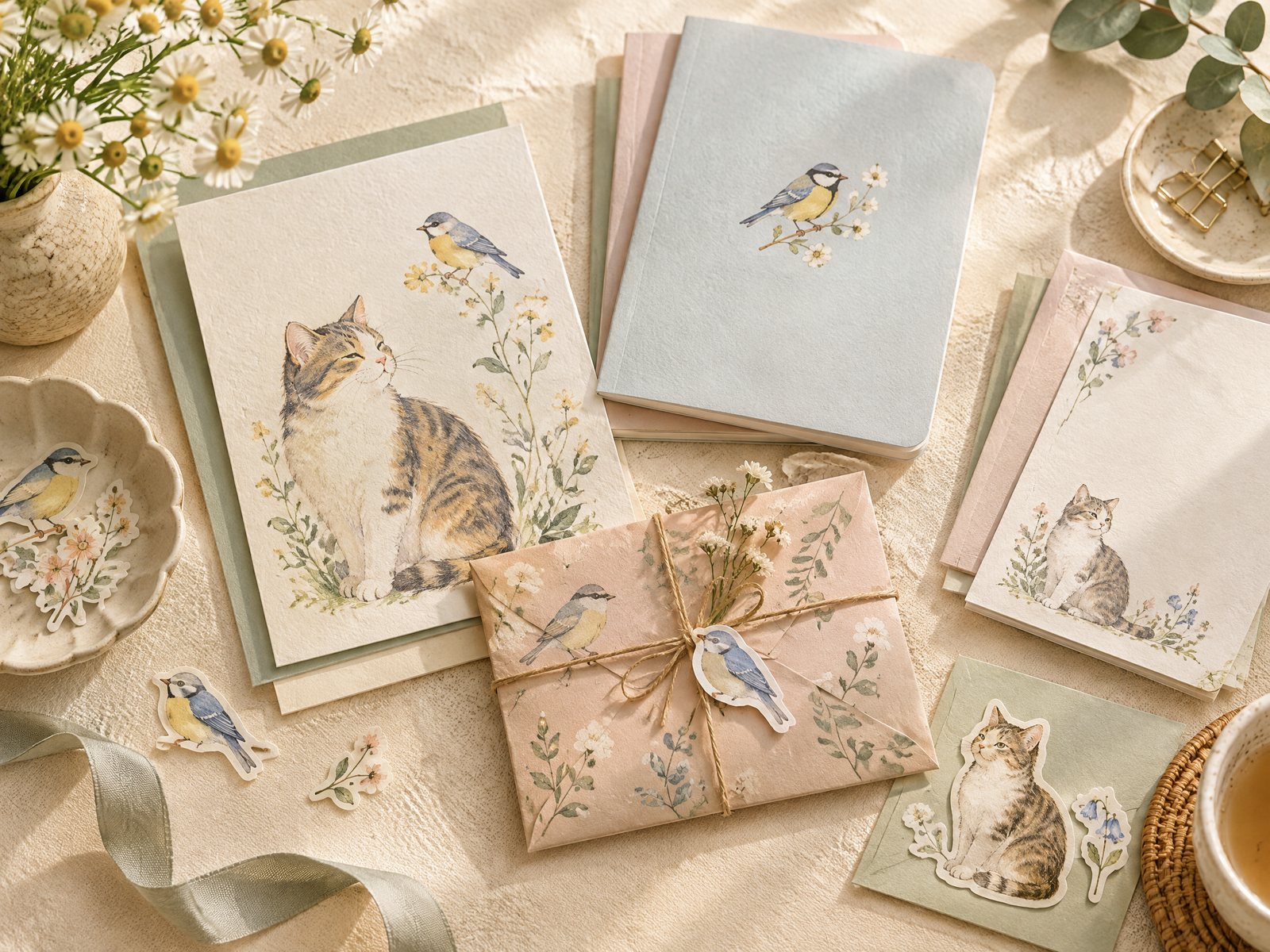
The hard part of a small gift is often not finding something attractive; it is finding something that makes sense for this particular moment. A farewell, a thank-you, a new reading habit, and a casual “I saw this and thought of you” call for different levels of intimacy and usefulness. Farouk Book Store can be easier to browse when you reverse the usual order: name the occasion first, define the gesture, and only then open the catalog.
This is a shopping method, not a claim that every item suits every recipient. Farouk is a shop with an editorial selection of stationery and accessories, so the useful question is which available object fits the situation you are trying to acknowledge. Keep the shortlist small, check the current product page, and leave room for the recipient’s taste rather than treating a motif as a personality diagnosis.
Start with the moment, not the merchandise
Write one plain sentence before you browse: “I need a small, low-pressure item for a colleague who helped me,” or “I want a reading-related add-on for a friend’s birthday.” The sentence should include three details: the occasion, your relationship, and what the recipient might actually do with the item. This prevents a common failure case—choosing something because its picture is charming, then realizing it says too much, takes up space, or requires a hobby the recipient does not have.
Next, assign the gesture a scale. A courtesy gesture should be compact and easy to receive. A personal token can reflect a known interest, such as books, music, or journaling. A shared-project gift may include two or three coordinated pieces, but only when you know the person enjoys making or arranging things. Scale is about social weight as much as physical size: a tiny card can be more appropriate than an elaborate bundle after a brief professional interaction.
Use the recipient’s evidence, not assumptions. “They mark pages while reading” is useful evidence; “they seem like a stationery person” is vague. If you do not know whether they use stickers, avoid building a gift around stickers. If you know they keep index cards beside a desk, a note-card format has a clearer job. If the occasion is sensitive or the relationship is new, choose a neutral, practical object and keep the message optional.
A quick filter helps:
- Purpose: What will this help them do—write, mark, organize, display, or simply enjoy?
- Context: Will they receive it at work, after a meal, at a book gathering, or privately?
- Commitment: Does it require upkeep, a matching set, or a particular device or surface?
- Personal signal: What known preference makes it feel considered without making a claim about who they are?
If you cannot answer purpose and context, pause before adding the item to the basket. Browsing can resume once the occasion has supplied a reason.
Build a shortlist by gesture type
For a thank-you after a small favor, begin with one useful paper object and a brief note rather than a decorative bundle. The Reading Room Note Cards are a concrete option when the recipient already uses index cards or likes compact writing surfaces. The catalog description identifies a set of 50 cards in a 3 x 5 inch format, with a lined side and a blank reverse. That gives the item a practical role: quick lists, labels, short reminders, or small sketches. It is a better fit for someone who uses cards than for someone who prefers a single bound notebook.
For a casual birthday or “thinking of you” moment, a small visual accent can work when you know the recipient’s taste. The Blooming Records Sticker Sheet offers 18 record-inspired and floral designs on a 4 x 6 inch sheet. Its mix of music and floral imagery can support a recipient who has mentioned records, playlists, or decorating notebooks. Do not infer that someone likes it simply because they are young, creative, or fashionable; use an actual association. If that association is missing, choose a less motif-dependent gift or ask a low-key question before shopping.
For a reader’s add-on, separate “bookish” from “a book.” An accessory can acknowledge reading without guessing which title they want. The Accessories collection is a useful place to compare small visual pieces, while a product such as the Reading Room Note Cards can support reading-adjacent tasks without pretending to be a bookmark. If the recipient already annotates, keeps quotations, or makes recommendations, cards may have a clear job. If they only read on a phone and dislike paper clutter, the same choice may miss.
For a small personal gesture with a single focal motif, consider the Fortune Teller Sticker only when the recipient has a suitable smooth surface and enjoys decals. The catalog describes an approximately 3.5 by 2.6 inch matte vinyl sticker, so the decision is not merely “do they like the design?” It is also “would they choose to place a sticker on a laptop, bottle, notebook, or another surface?” A sticker is not automatically a gift just because it is inexpensive or easy to mail. Its usefulness depends on permission, placement, and taste.
These examples show why an occasion-first shortlist may contain only one item. The goal is not to maximize pieces. It is to match the social moment, the recipient’s demonstrated habits, and the object’s likely use.
Make the final choice with practical checks
Once you have two or three candidates, run a three-minute comparison. First, read the product description rather than relying on the thumbnail. Confirm what the item is, its stated format, and any surface or use assumptions. Do not invent dimensions, material performance, or compatibility. A card set, sticker sheet, and vinyl decal may all be small, but they create very different obligations for the person receiving them.
Second, test the “awkwardness” question: would the recipient have to explain why they cannot use it? A sticker may be awkward for someone whose workplace laptop cannot be decorated. A visually themed card may feel too intimate for a new colleague. A paper item may be welcome after a meal but unnecessary when the recipient is already carrying several things. When in doubt, reduce the gift to one modest object and let the note carry the occasion.
Third, decide whether the item needs a pairing. Pair only to solve a real problem. A note card plus a known reading accessory can create a small, coherent gesture; two unrelated decorative items can look like clearance shopping. Match by use before color: a writing piece with another writing piece, or a motif item with a recipient’s known interest. Avoid pairing merely because the catalog has more than one attractive option.
There is also a practical ordering check. Farouk’s bag prepares an email order request rather than functioning as a payment checkout. Inventory, taxes, and shipping need confirmation, so do not present a displayed item as guaranteed available or promise a delivery date. If timing matters—a birthday this weekend or a farewell tomorrow—contact the shop through /contact to clarify current availability and ordering details. For basic shop context, see /about, but keep your article’s decision grounded in the individual product page and the occasion.
A useful backup plan is to name a substitute category before you commit. If the first choice is unavailable, move from a motif-dependent sticker to a neutral note card, or from a multi-piece idea to one small paper item. This keeps the decision intentional instead of turning a stock question into rushed browsing.
Adjust the gift to the relationship
The same product can communicate differently depending on who receives it. For a colleague, choose a modest item tied to a shared work moment and avoid wording that assumes friendship. For a friend, a known motif or hobby reference can make the choice more personal, but it still helps to keep the object usable. For a host after a meal, a small paper gesture can be handed over without asking the host to display it or respond immediately. In each case, the occasion sets the boundary.
Consider delivery timing and privacy as part of the choice. A gift given in front of a group may need to be neutral enough not to put the recipient on the spot. A private handoff allows a more specific note, but it still should not disclose personal information on the outside of a package. If you are sending an item, confirm the recipient’s preferred address through an appropriate channel rather than guessing or forwarding details casually.
Failure cases are useful here. If the gift feels too generic, add one concrete sentence about the occasion instead of adding more merchandise. If it feels too personal, remove the motif and keep the practical item. If the shortlist is too broad, return to the verb: write, mark, organize, display, or enjoy. If none of the verbs fits, you may be shopping for the picture rather than the person.
Before placing an order request, say the decision aloud: “I chose this because you do X, and this occasion is Y.” If the explanation sounds like a stereotype, revise it. If it names a real habit and a proportionate gesture, the shortlist is doing its job. Browse all stationery and accessories collections only after that reasoning is complete, not as a substitute for it.
The best occasion-first purchase is often quiet. It does not need to announce a grand feeling or predict a new identity for the recipient. It needs to arrive at the right scale, offer a plausible use, and leave the other person free to enjoy it in their own way. That is enough to turn a broad catalog into a considerate, defensible choice.
Related reading: How to Build a Personalized Gift Bundle, Small Gifts for Book Club Members Without Matching Everyone, and Stationery Gift Budget: How to Plan a Stationery Gift Budget Without Guesswork.