A borrowed book often arrives with two small responsibilities: keep the library receipt somewhere safe and remember when the book is due back. The trouble starts when the receipt disappears into a wallet, the reminder gets buried in a phone, or someone sticks a note inside the book and leaves a mark. Farouk Book Store can be a useful place to select the paper pieces for a separate, external loan pocket—a small holder that travels with the book but never attaches to it.
This is not a book-protection system and it does not replace the library’s own receipt, account, or due-date information. It is a gentle piece of organization for the paper you already receive. The central rule is simple: nothing adhesive goes on the borrowed book. Keep the pocket loose, visible, and easy to remove before the book returns to the library.
Define what the pocket must hold
Start with the actual loan rather than shopping for a decorative set. Put the receipt, return slip, and any personal reminder on a table. Measure the largest paper in its folded state, or use a spare sheet of the same size as a mock-up. A pocket that swallows the receipt but bends the return slip is not a success; neither is one so large that the papers slide out whenever the book moves.
A practical pocket has three jobs:
- Contain: hold the receipt and one clearly dated reminder together.
- Identify: show which borrowed book the papers belong to without writing on the book.
- Release: open quickly at home, in a reading bag, or at the return desk.
Keep the contents deliberately limited. A library receipt, a small card with the title or call number, and a return-date reminder are usually enough. Do not place identification documents, payment cards, or sensitive account details in a pocket that someone else could see. If the receipt includes more information than you need for your reminder, fold it inward and keep the printed side protected from casual view.
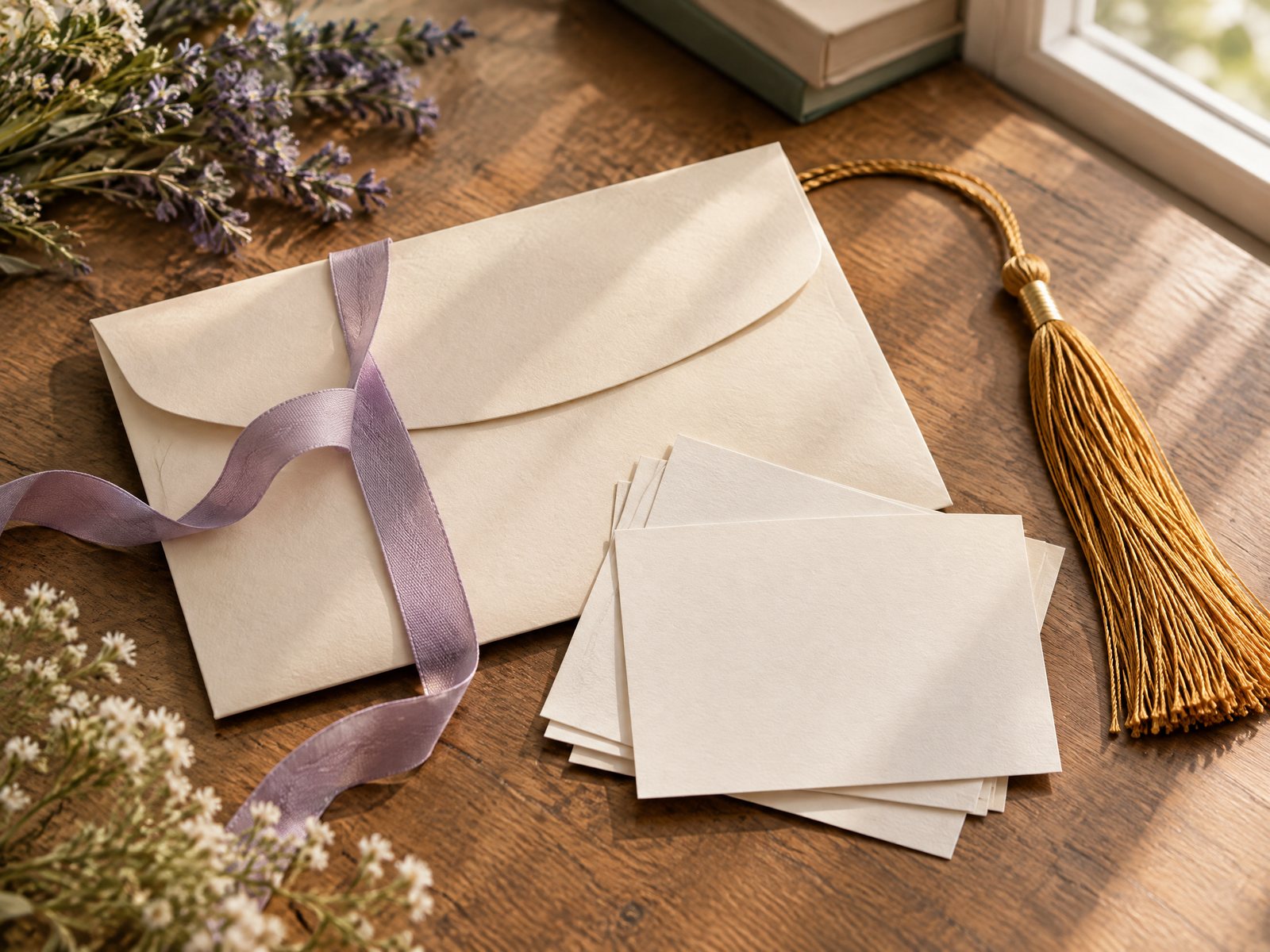
For a tidy external holder, an A7 envelope can provide a useful starting format. The Reading Room Envelopes set contains 10 envelopes described as approximately 5.25 x 7.25 inches, printed on 70 lb paper, with full-color exterior and interior printing and a moisture-seal closure. Those details make it a paper container to evaluate, not a claim that it was designed specifically for library loans. Before using one, compare its opening and interior space with your receipt and reminder. If the papers sit loosely, add a folded blank card as a removable divider rather than forcing the contents into a crease.
The Envelopes collection is another place to compare available formats. Check the listed size and closure for the particular item; do not assume every envelope in the collection will fit the same receipt. A pocket that requires trimming, gluing, or taping is the wrong adjustment for a borrowed-book system.
Build a removable pocket, not a book attachment
The safest construction is a loose sleeve or envelope carried beside the book. Put the receipt inside, write the return date on a separate reminder card, and place both in the holder. Then keep that holder in the outside pocket of a tote, a book bag, or a dedicated compartment. If the book travels without a bag, slide the pocket between your own notebook and the book rather than between the borrowed book’s pages.
Do not tape the envelope to a cover, glue a paper flap to an endpaper, use a sticky note as a hinge, or tuck a pressure-sensitive label onto the spine. These shortcuts can leave residue, pull fibers, or create a repair problem even when the adhesive appears gentle. A removable pocket should not depend on the condition of library property.
The distinction matters because a pocket that travels *with* a book is different from a pocket that is fixed *to* it. If you need to read on a bus or at a café, take the receipt holder out first and put it in your bag. If you place the book on a table, set the pocket beside it, not under it. This adds one small movement but prevents the paper container from becoming a wedge, a pressure point, or a loose object that can fall into the pages.
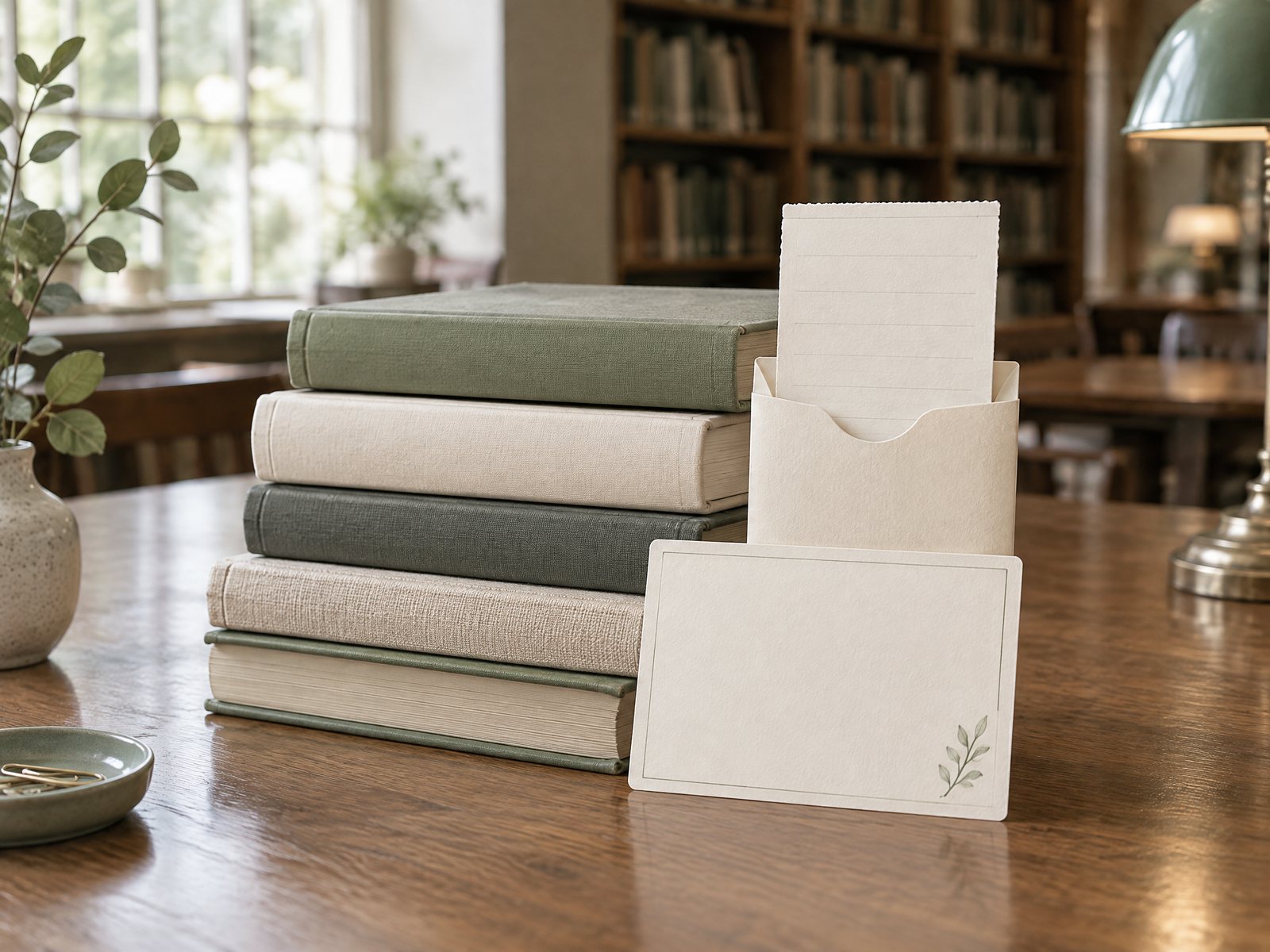
A folded note card can make the pocket easier to handle. The Reading Room Note Cards are listed as a 50-card set, with 3 x 5 inch cards, one lined side, a blank reverse, and 14 pt matte paper. One card can serve as a return-date reminder: use the lined side for “Return by,” the date, and the library branch or collection name. Leave the reverse blank or use it for a simple “renewal checked” mark. The card stays with the receipt inside the external envelope; it does not become a label for the book.
If that card is too large for your chosen envelope, do not cut the library receipt or force a sharp fold. Use a smaller piece of your own paper, or choose a larger holder. The point is a clean release, not an elaborate handmade object. Also remember that catalog colors can appear different in person because of lighting, photography, printing, or screen settings; choose for format first and appearance second.
Make the return date hard to miss without making it public
A due date can be easy to overlook when it appears only on a narrow receipt. Give it one private, high-contrast place in the pocket. Write the date in large numerals on your own reminder card, then add a second cue where you already plan your week. The paper pocket should be the source of the date; your calendar or phone can be the backup. This is organization, not a promise that a reminder will prevent late fees or change the library’s terms.
Use a two-line format that remains readable at a glance:
RETURN BY: October 28 CHECK ON: October 24
“Check on” is useful because it creates a decision point before the final date. On that day, look at the book and ask whether you need to finish, renew through the library’s approved process, or prepare it for return. Do not write a new date unless the library has actually confirmed a renewal. If the account or receipt shows a different date, keep the official information and correct your personal card.
For a household with several loans, assign each pocket a quiet identifier: the book title, author surname, or a short color mark on the reminder card. Avoid putting a reader’s name, account number, or other private information on the outside. If multiple people borrow books, use separate pockets in one tote rather than one crowded envelope. The goal is to make a mismatch obvious before anyone leaves for the library.
A slim bookmark can help with reading position, but keep it separate from the loan paperwork. The Stacked Books Cute Aesthetic Bookmark is listed as approximately 2 x 6 inches, made from glossy cardstock with rounded corners and double-sided printing. It may be a cheerful reading marker, but it is not a receipt pocket and should not be used to clip or carry papers. Place it in the borrowed book only if the library permits ordinary loose bookmarks and remove it before return; otherwise use your own reading notebook as the place marker.
Test the system and adjust the failure points
Run a short test before leaving home. Put the receipt and reminder in the pocket, carry the book as you normally do, and check what happens after ten minutes. Does the receipt slide behind the card? Does the closure catch on the tote lining? Does the colorful exterior make you uncomfortable in a public setting? Does the pocket get mistaken for scrap paper? Each answer suggests a small adjustment.
If papers slide out: fold your own reminder once, not the library receipt, or select a closer-fitting envelope. Never seal the pocket permanently if you need regular access to the date.
If the envelope is too decorative: turn it so the plainest side faces outward, use a different listed format, or place it inside an opaque personal pouch. An editorial selection can offer visual choices without requiring a conspicuous look.
If the closure is inconvenient: leave the flap open inside a zipped bag compartment, provided the papers cannot escape. Do not wet a moisture seal repeatedly just to make the pocket reusable; treat the closure as part of the product’s listed format and choose a looser, open sleeve when frequent access matters.
If the book is returned without the pocket: keep a simple handoff ritual. Remove the holder at the door or at the return desk, check that the receipt is still inside, and put the pocket back in your own bag. The library book should leave with no added paper, adhesive, label, or mark.
If a receipt is lost: do not improvise a replacement date from memory. Check the library’s official account or contact the library through its normal channel. The paper pocket organizes information; it does not authenticate it.
A useful final check is the “empty-book” check: open the borrowed book and confirm that your marker, reminder, and envelope are all outside it. Then check the pocket itself for only the current loan’s papers. When the return date arrives, take the book and the empty holder separately. That habit keeps the system courteous to the next reader and flexible for the next loan.
Farouk’s catalog can supply the envelope, note-card, or reading accent for this small setup, but the method depends more on restraint than on a matching set. Select a real format, verify its listed dimensions, keep every component removable, and let the library’s own receipt and rules remain authoritative. The result is modest: one external paper pocket, one readable date, and no adhesive anywhere near a borrowed book. For a little more context on the shop’s selection, visit About Farouk Book Store.
Related reading: Book Sleeve Sizing: Measuring Your Books Before Buying, How to Protect Paperback Books While Traveling, and How to Use Reading Log Bookmarks to Track Your Books.