Knowing how to protect paperback books while traveling helps you arrive with a readable, comfortable book instead of a curled cover and crushed corners. Paperbacks are light and convenient, but their flexible covers can bend inside a crowded bag, pages can pick up moisture, and loose objects can leave pressure marks. The good news is that careful packing does not need to be complicated. Choose a suitable outer layer, keep the book away from avoidable hazards, and check it whenever your travel conditions change.
Start with the book and the journey
Before packing, inspect the paperback. Close it gently and notice whether the cover already curls, the spine is loose, or the pages are unusually thick. A well-used book may need more support than a newer, compact novel. Measure the book when it is closed, including any cover overhang. Do not assume that a sleeve described as “standard” will fit every paperback; trim size, page count, and cover flexibility vary.
Next, identify the main risks of your trip. A short car ride in a tidy tote calls for less protection than a flight with checked luggage, a rainy walking commute, or a backpack that will be placed on the floor. Ask three practical questions:
- Will the book be squeezed by a laptop, water bottle, camera, or charger?
- Could it meet rain, a drink spill, damp clothing, or condensation?
- Will I reach for it often, or will it stay packed for hours?
These answers determine the right approach. For a quick train ride, a firm pocket in a day bag may be enough. For a full travel day, use a dedicated sleeve and keep the paperback away from hard edges. For checked luggage, carry the book in your personal bag whenever possible. Suitcases are handled and compressed in ways you cannot control, so even a careful outer layer is not a guarantee against bending.
A paperback also travels better when it is not left open. Do not fold the front cover backward while walking or use the book as a writing surface. Those habits put repeated stress on the spine and hinge. If you need a place marker, use a slim bookmark rather than a bulky object. Farouk Book Store’s Stacked Books Cute Aesthetic Bookmark has a slim approximate 2 x 6 inch profile, rounded corners, and double-sided glossy cardstock. It can mark a page without the extra thickness of a pen, receipt bundle, or improvised folded paper.
Build a protective packing layer
The most reliable setup is a simple three-layer arrangement: the paperback, a close-fitting protective sleeve, and a stable place inside your bag. A sleeve should prevent rubbing and keep the book from catching on other items. It should not be so tight that inserting the book bends the cover or forces the spine flat. You can browse Farouk Book Store’s book-covers collection when comparing travel-friendly options.
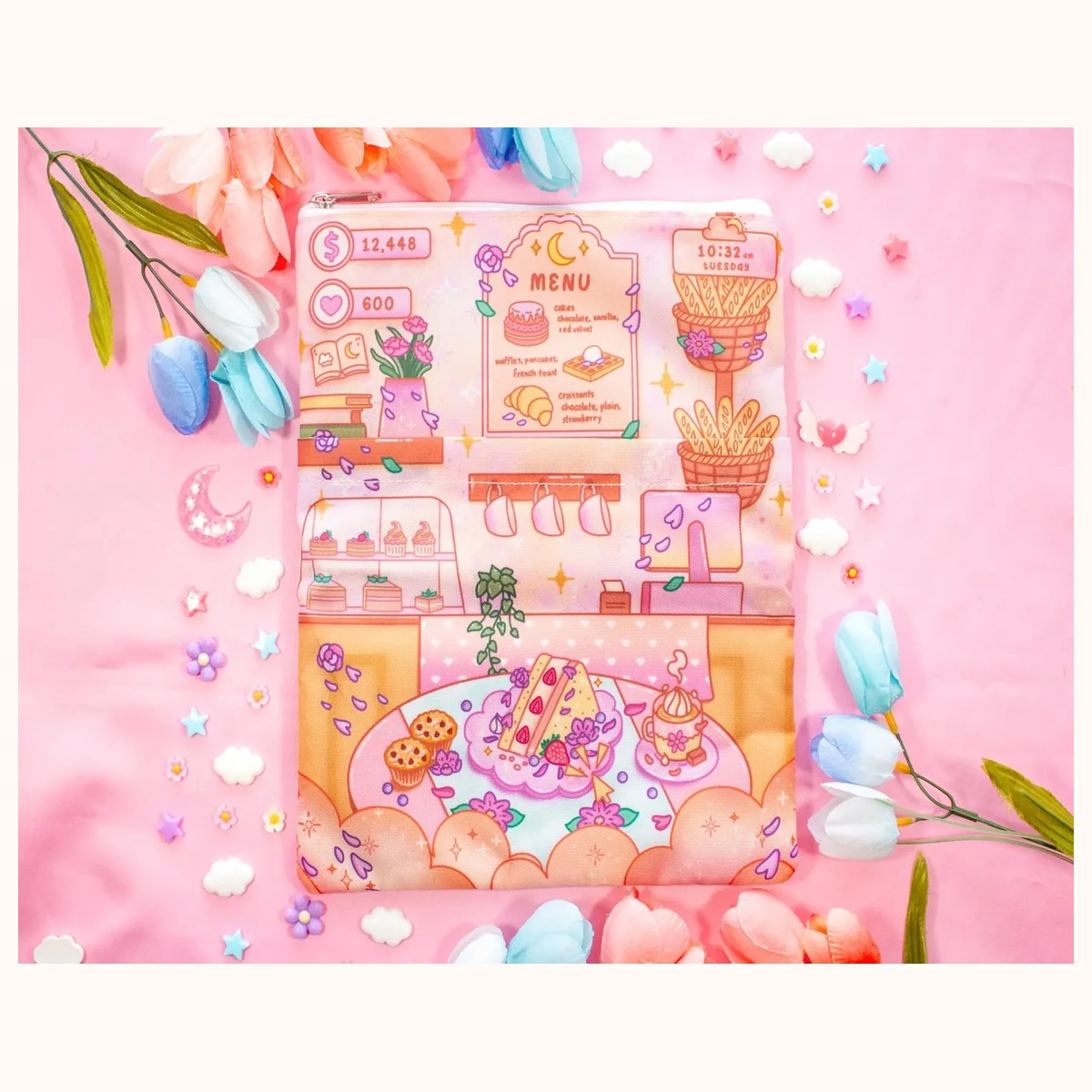
For a practical travel option, consider the Game Time Book Sleeve With Zipper and Pocket. The catalog describes a padded polyester canvas exterior, soft interior padding, a full-length zipper, and a rear slip pocket. Its approximate 9 x 12 inch size is roomy enough for a 7 x 9 inch notebook, paperback, or similar tablet, but you should measure your own book before ordering. The zipper is useful when a bag will be tipped or opened repeatedly; the rear pocket can hold a slim bookmark or a few notes, but avoid filling it with hard objects that could press against the book.
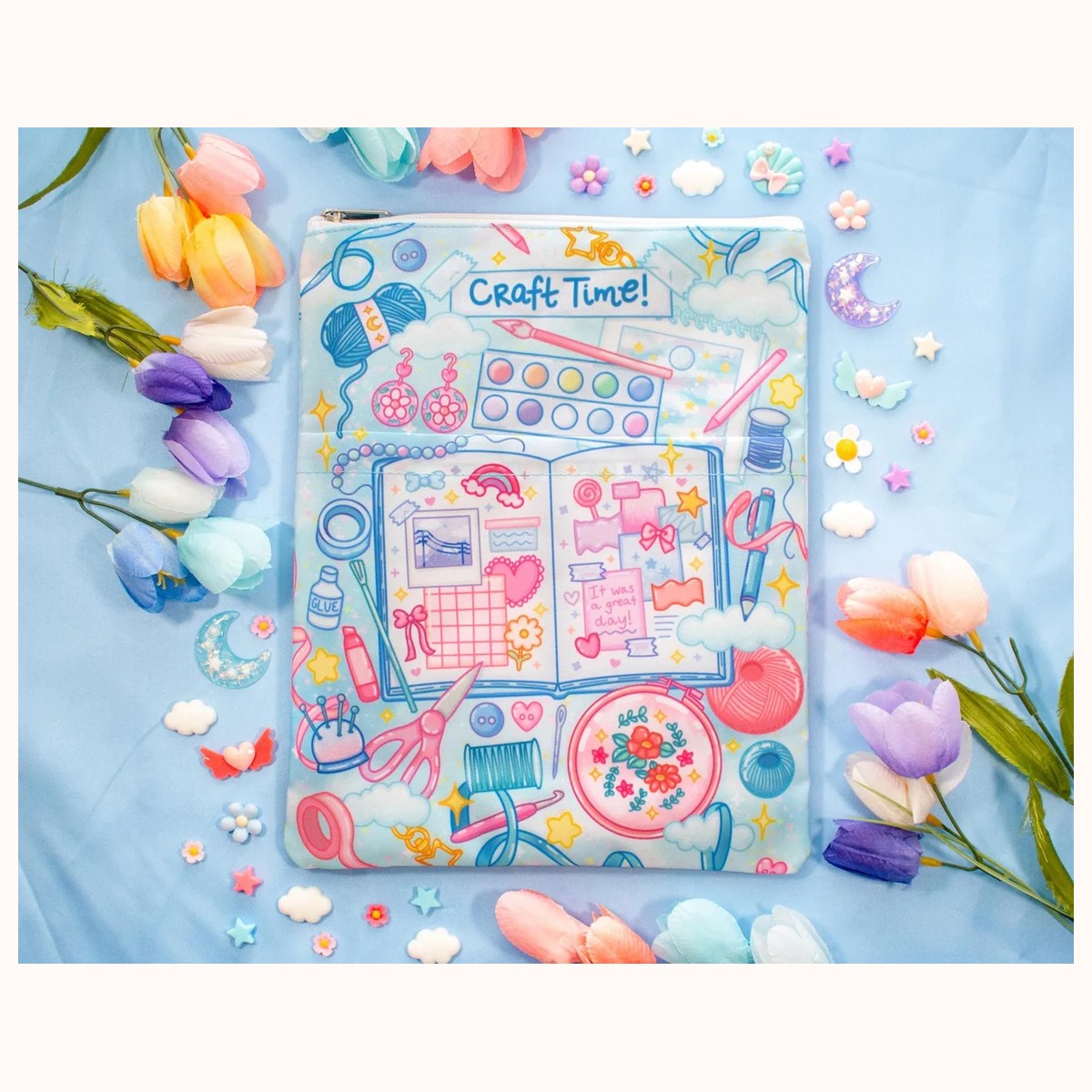
The Craft Time Book Sleeve With Zipper and Pocket offers a similar decision point: an approximately 9 x 12 inch padded format, zipper closure, and flat back pocket for bookmarks, pens, or small papers. Choose between sleeves by pattern or availability only after confirming the dimensions you need. A pocket is convenient, but it is not a separate hard case. Keep coins, keys, and charging plugs somewhere else.
Place the paperback in the sleeve with the spine aligned rather than diagonally. If the sleeve is noticeably loose, use a thin, clean sheet of paper on the open side to reduce movement. Do not wedge in thick clothing, cardboard, or a second book simply to fill space. Excess pressure can bow the cover. If the book is too large, stop and choose a larger carrier instead of forcing it through the zipper.
Inside your bag, position the sleeve between soft, flat items or against the bag’s back panel. Keep it away from the bottom, where it may meet grit or a hard floor, and away from the side that receives repeated knocks. A laptop compartment can work if the sleeve fits without compression, but do not stack a heavy laptop directly on an unprotected paperback. Test the packed bag at home: lift it, set it down gently, and check whether the book slides, bends, or catches when you open the zipper.
Manage water, heat, and everyday handling
Moisture is often a bigger travel threat than a single bump. Put drinks in a separate, closed compartment and keep the paperback above shoes, toiletries, or damp clothing. If rain is likely, place the sleeved book inside a larger bag or pack liner. A sleeve can reduce exposure, but do not treat a fabric carrier as a waterproof guarantee unless its product information specifically says so.
Condensation deserves attention during changes in temperature. If a cold bag comes into a warm room, leave the paperback closed in its sleeve until the exterior feels dry and the contents have adjusted. If the book does get damp, do not apply a hair dryer, radiator heat, or direct sun. Separate wet pages carefully, blot surface moisture with clean absorbent paper, and let the book air-dry in a ventilated place. Pressing it shut while wet can transfer ink, encourage wrinkling, or make pages stick. If the cover is only slightly damp, keep handling gentle and allow extra drying time before packing it again.
Heat can soften or distort covers, especially when a bag sits in a hot car or in direct sunlight. Store the book in the shaded interior of your bag rather than against a window. Avoid leaving it in a parked vehicle. If the cover develops a curl, place the dry book under a light, even weight for a while, with clean paper between surfaces if needed. Use modest pressure; a heavy object can create a new crease or flatten raised printing.
At security checks, café tables, and hotel rooms, give the book a landing place. Do not set it beside an uncovered drink or on a wet countertop. When reading outdoors, use the sleeve as the storage location between sessions instead of sliding the book loosely into a pocket with sunglasses and cables. If you use a bookmark, remove it before closing the book if it has a clip, charm, or thickness that creates a lump. A flat bookmark is usually kinder to the spine than a bulky keepsake.
Troubleshoot damage before it gets worse
The cover is bending in the bag. First remove anything pressing on it and check whether the sleeve is too small. Repack the book flat, spine parallel to the sleeve’s edge, and place it against a stable panel. If the bag is overfilled, move another item rather than compressing the paperback. A sleeve cannot correct a packing problem caused by a tightly stuffed compartment.
The corners are getting crushed. Look for contact with the bag base, a zipper track, or a hard accessory. Turn the sleeve so the zipper is not rubbing directly against the book, then add soft separation on the outside of the sleeve. If corners remain exposed because the paperback is too small for the carrier, use a closer-fitting sleeve or a clean, thin protective wrap. Avoid taping anything directly to the cover.
The spine is opening or pages are loosening. Stop carrying the paperback under tension. Do not force it shut with a strap or elastic band around the middle. Keep it closed naturally, reduce handling, and use a sleeve that supports the book without squeezing it. For a valuable or already fragile book, consider carrying a different reading copy and keeping the fragile one at home.
The book got wet. Separate it from dry belongings immediately. Blot—do not rub—the cover and page edges. Fan pages only as far as they move without resistance, then let the book dry with airflow. If pages begin sticking, do not pull them apart while wet. Once dry, inspect for odor, rippling, or ink transfer before returning it to a sleeve. If the damage is extensive, ask a professional conservator or experienced bookseller for advice rather than experimenting with household heat.
The sleeve smells damp after the trip. Remove the book and let both items dry separately. Follow the sleeve’s care information, if provided, and avoid storing the paperback inside until there is no remaining dampness. A clean, dry carrier protects better than one that traps moisture.
A final check takes less than a minute: confirm the zipper is closed, the paperback is not rubbing against a hard object, drinks are sealed and separate, and your bookmark is flat. For product dimensions, fit questions, or help verifying a book-cover option, visit Farouk Book Store’s contact page or About page. Product details and fit should be confirmed before travel because your paperback’s measurements and your bag’s layout are unique.
Related reading: How to Choose Stickers for Journals and Planners, Vinyl vs. Paper Stickers: A Complete Guide, How to Build a Personalized Gift Bundle