A small club or team can want a recognizable visual thread without asking everyone to look identical. The difficult part is not finding a cute object; it is choosing a motif that feels voluntary, readable, and comfortable for people with different tastes and budgets. Farouk Book Store’s catalog can be approached as an editorial selection for that decision: one person might carry a book charm, another a food motif, and someone else might prefer no accessory at all.
Think of the “group icon” as a shared reference, not a uniform. It might appear on a bag, key ring, zipper pull, or a group card, but it does not need to be worn, purchased, or displayed by every member. That distinction makes the idea work for a book circle, a casual study group, a volunteer project, or a small creative team. Start with the social agreement, then use the catalog to test a visual direction.
Decide what “shared” actually means
Before browsing, describe the smallest commitment you want. There are at least three useful versions:
- Same motif, different formats: everyone who opts in chooses the same broad idea, while color or placement varies.
- One visual family: members choose related objects, such as books, drinks, or retro technology, without matching exactly.
- Shared reference only: the group names an icon for invitations, notes, or a chat image, while physical accessories remain optional.
For most small groups, the second or third version is the least pressuring. “We are using a bookish theme” is easier to accept than “everyone must buy and carry this charm.” It also avoids making a single purchase a test of commitment. If the group has a limited budget, you can make the icon part of a welcome card or meeting prompt rather than a required item.
Ask three quick questions in plain language: Is participation optional? Is there a spending limit? Can someone choose a different item or simply use the motif on paper? A yes to all three keeps the visual idea friendly. Do not ask members to explain a private reason for opting out. A simple “no accessory for me” is enough.
You can make the decision concrete with a tiny vote: present three motif families, allow each person one preference and one veto, then select the idea with the broadest comfort rather than the loudest enthusiasm. Record the result as a description, not a brand claim—for example, “small book-related accents in varied colors,” not “the official group charm.”
Build a motif shortlist from real examples
A shortlist of two or three actual items gives the discussion something tangible. The Farouk keychains collection is a useful place to compare motifs, while each listing should be checked for its current details before anyone decides. Farouk is presenting a shop selection here, not claiming to manufacture every design in the catalog.
For a group whose shared interest is reading, the Stacked Books Linked Keychain is an obvious reference without requiring a literal logo. It uses two linked transparent acrylic charms, with a top charm measuring 2 by 1.75 inches and a smaller lower charm measuring approximately .75 by 1 inch. The layered format can suit a group that likes a little visual detail. Because it is a pair of linked charms, members who prefer a quieter look could use only the idea of stacked books on a card or choose a different book-related object if available.
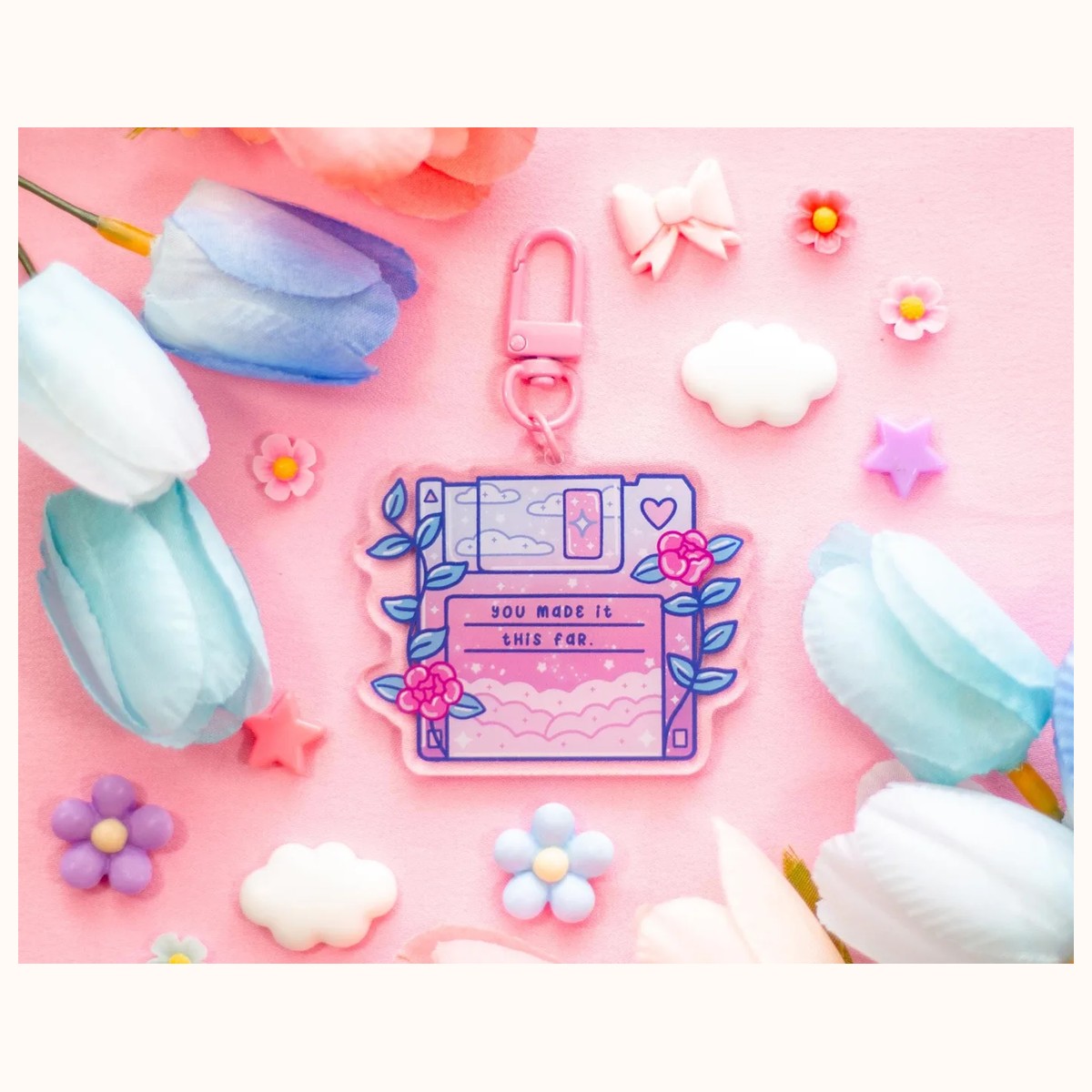
A less expected option is the Floppy Disk Aesthetic Cute Acrylic Charm Keychain. Its transparent acrylic charm is approximately 2.5 by 2.5 inches, with a contrasting pink clasp, and the listing describes double-sided printed artwork, a scratch-proof finish, and waterproof acrylic. This could work for a digital-making club, a retro-media group, or a team that wants an icon with a clear silhouette. The protective film should be peeled off before use; mention that practical detail to anyone selecting it, rather than treating the film as part of the design.
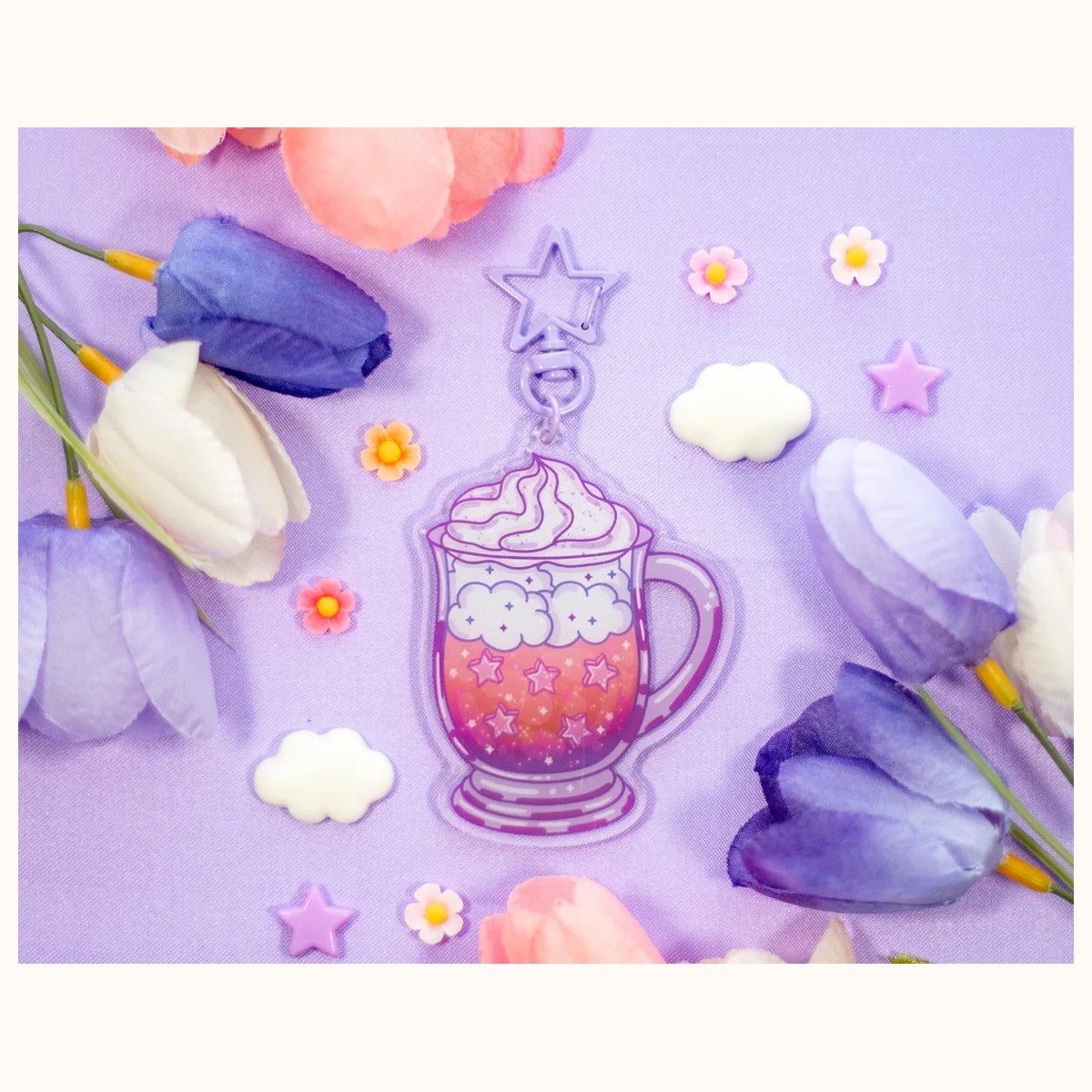
For a group organized around informal meetups, the Iced Coffee Aesthetic Cute Acrylic Charm Keychain offers a food-and-drink direction. The transparent acrylic piece measures approximately 2.25 by 3 inches, has a purple clasp, and is printed double-sided. It is described as waterproof and scratch-proof, with protective film to remove before use. The motif may feel playful for one group and too specific for another, which is exactly why it belongs on a shortlist rather than being treated as a default.
Compare the three by association, scale, and flexibility. Books may describe a shared activity; a floppy disk may signal a period or interest; iced coffee may point to a familiar meeting ritual. Scale matters when several charms hang together: a tall drink shape and a compact square may read differently on a small zipper. Flexibility matters when members have different belongings. A motif that works on a tote may not suit a work badge or a minimalist notebook.
Make opting in easy and visible
A thoughtful selection process separates enthusiasm from obligation. Share a short message such as: “We are considering a loose group motif for those who want one. Please choose a motif family, suggest an alternative, or opt out—there is no need to explain.” Include a deadline for preferences, but not a deadline for buying anything.
Offer choices at different levels of participation. Someone might buy a charm; someone else might draw the motif on a meeting card; another person might use a colored thread or a small paper tag they already own. If the group is exchanging gifts, do not silently turn the shared icon into a required contribution. Ask first whether people want a coordinated exchange, and set a maximum amount only if everyone agrees.
Avoid collecting more personal information than necessary. A simple response form can have three fields: motif preference, physical item or paper-only, and “I am sitting this one out.” Do not publish who declined. If a group chat needs a visual identity, use an original abstract symbol or a neutral crop inspired by the general motif instead of implying that every member owns the same product.
There is also a useful distinction between group identity and individual ownership. A club can call a reading season “the stacked-books round” while members choose their own notebooks and bags. A team can use a floppy-disk reference on a welcome card while leaving work equipment undecorated. This keeps the icon available to people whose workplaces, uniforms, accessibility needs, or personal style make accessories inconvenient.
If someone chooses a different motif, incorporate it rather than correcting it. A coffee charm beside a book charm can show the group’s actual range. The goal is a shared conversation starter, not a visual inspection. When one member dislikes all three options, the fairest adjustment may be to return to a paper-only icon or abandon the physical component altogether.
Test the edit before you call it finished
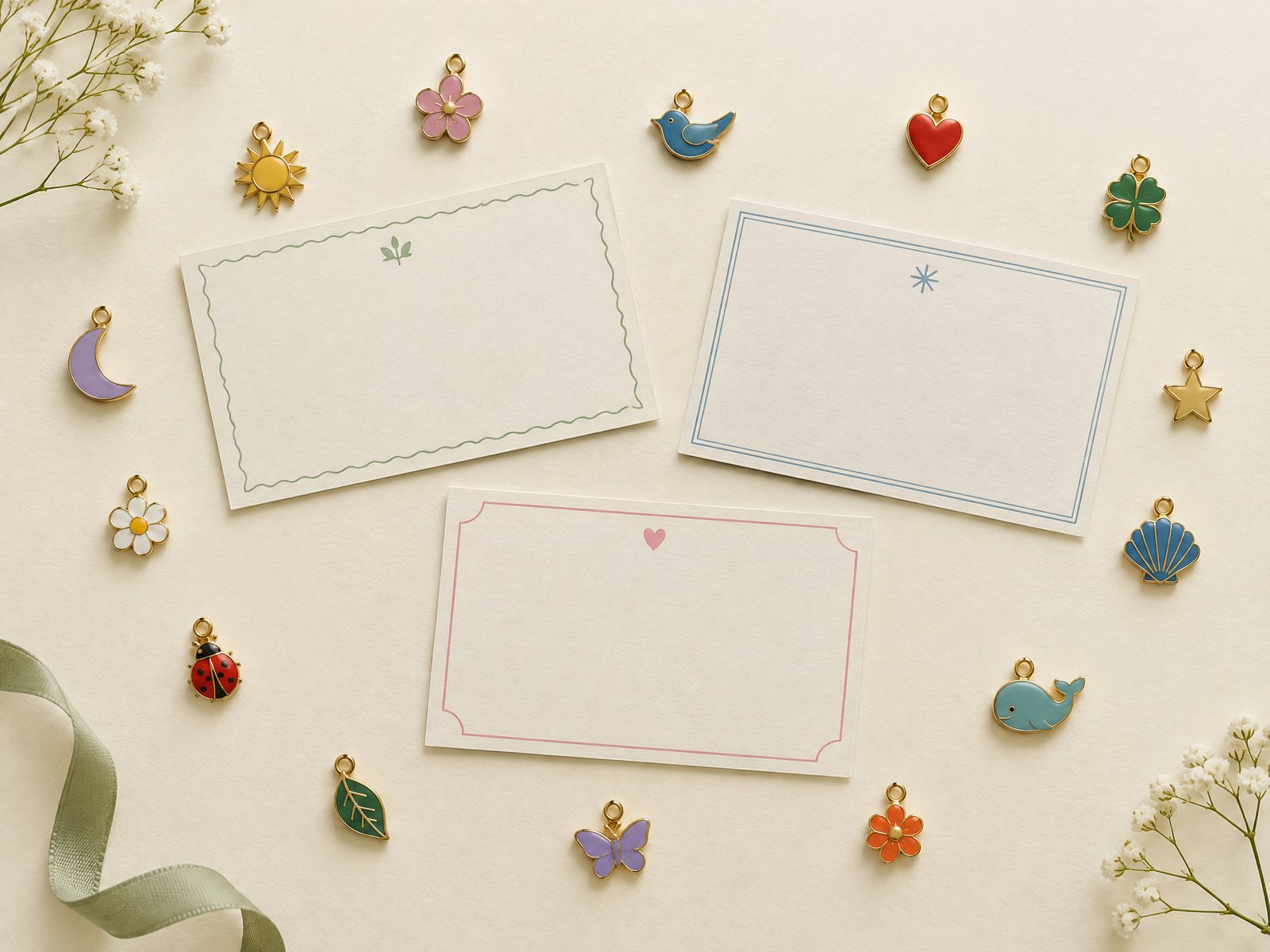
Make a small paper test on a table: write the three motif names on blank cards, sketch their approximate silhouettes, and place them beside the objects members commonly carry. This is not a product test or a claim about performance. It is simply a way to notice whether the proposed icon is too busy, too large, or too narrowly associated with one person’s interest.
Try three scenarios. First, place one charm on a small zipper pull and check whether its shape is legible without other decoration. Second, place two different motifs together and see whether they look like a family rather than competing souvenirs. Third, remove the physical item entirely and ask whether the group still has a usable shared reference. If the idea collapses without a purchase, it may be functioning as a requirement rather than an invitation.
Common failure cases are easy to correct. If the group vote produces one enthusiastic favorite and several uncertain responses, pause and offer a no-purchase version. If the motif is too literal, broaden it from “everyone carries a floppy disk” to “a small retro-tech reference in our paper materials.” If members worry about damage or workplace rules, keep the icon on removable cards and do not attach anything to another person’s property. If a charm’s dimensions do not suit a particular bag, let that member choose the motif on a bookmark, note, or digital message instead.
When linking to a product, describe only the listing details that help the decision, and remind readers that colors can appear different in person. For a little more context about the shop, see Farouk Book Store’s About page. The shop’s bag prepares an email order request rather than a payment checkout, so inventory, taxes, and shipping need confirmation before anyone treats a group plan as finalized. Avoid promising a shared delivery date or assuming that every listed item will remain available.
A good final edit might therefore read: “Our optional visual theme is small book, retro-tech, or café imagery. Members may choose a catalog charm, a paper-only version, an existing item, or nothing. No one needs to match.” That sentence is specific enough to guide the group and open enough to respect it. Farouk Book Store can supply the browsing starting point, while the group decides what participation means.
Related reading: Keychain and Bag Charm Styling Without Clutter, Acrylic Keychain Care: Keeping Everyday Charms Presentable, and Small Gifts for Book Club Members Without Matching Everyone.