An acrylic keychain can turn an ordinary set of keys, backpack, or zipper pull into a small display of personality. Because it travels through pockets, bags, desks, and changing weather, a little acrylic keychain care helps keep its artwork and hardware looking tidy. The safest routine is simple: remove loose dust, use a soft slightly damp cloth when needed, dry it promptly, and avoid treating the charm like a tool or a piece of luggage.
This guide focuses on practical decisions for everyday charms. Product details can vary, so check the item description and contact Farouk Book Store if you need help confirming care for a particular design.
You can browse the full keychains collection when comparing shapes, clasp styles, and linked-versus-single charm designs.
Start with the charm’s construction and first-use details
Before cleaning or attaching an acrylic charm, look closely at what you actually have. A clear acrylic piece may have printed artwork on one or both faces, a clasp or ring, and sometimes a removable protective film. Those parts do not all need the same handling.
Remove protective film carefully
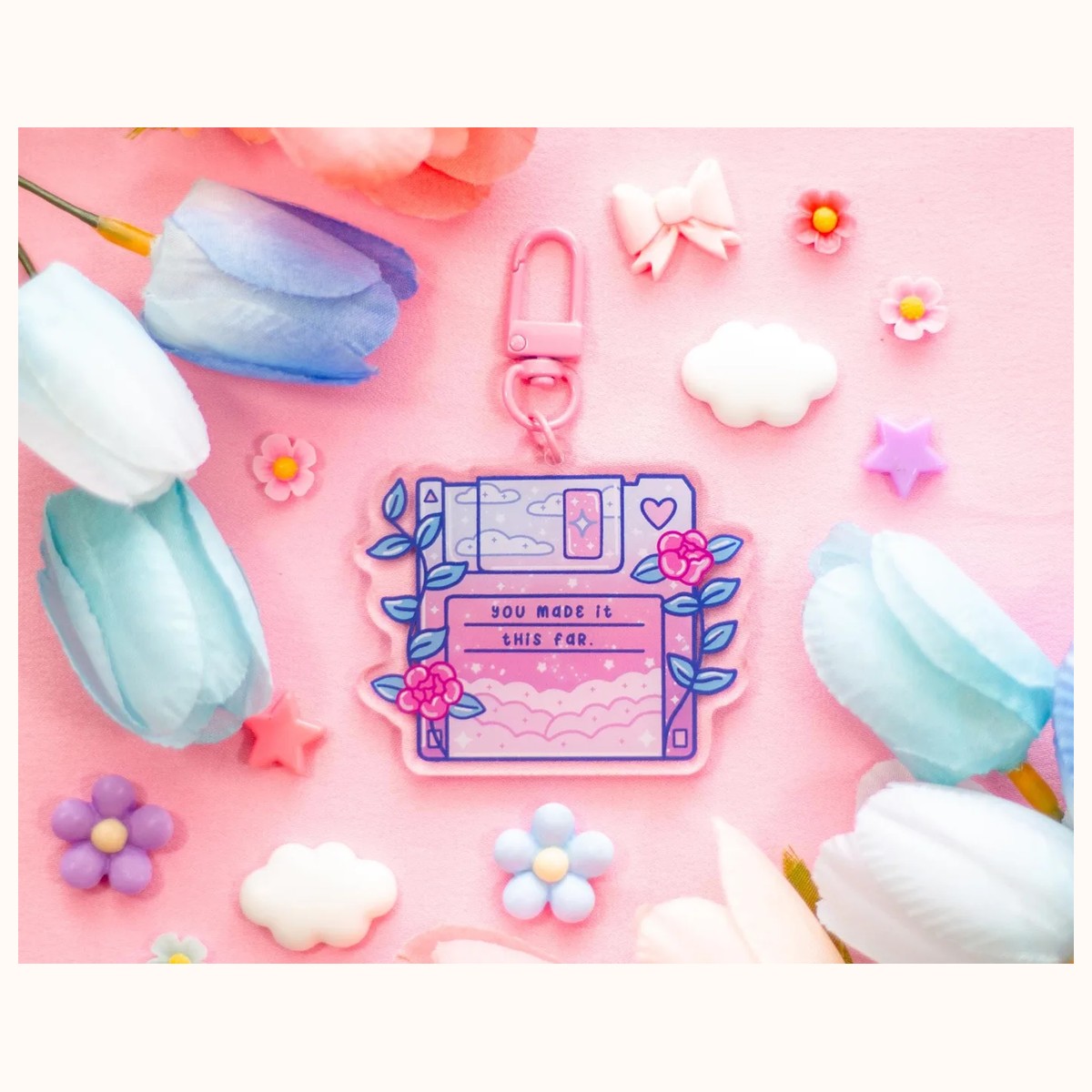
Some cataloged acrylic keychains arrive with a protective film over the printed surfaces. For example, the Floppy Disk Aesthetic Cute Acrylic Charm Keychain description says to peel the film off before use. Lift a corner with a fingernail and pull slowly across the surface rather than scraping with a blade, pin, or metal key. If the film seems stuck, pause and inspect the edge; forcing it can make you mistake the film for a print layer.
Do not assume every transparent part is covered. If no film edge is visible, leave the surface alone and use the product instructions as your guide. A cloudy or slightly hazy appearance on a new charm may be removable film, but it can also be lighting, a reflection, or the look of the printed surface. When uncertain, ask before using a solvent or abrasive cleaner.
Check the attachment point
Hold the charm by the clasp or ring and check whether the connection is closed. If a jump ring has opened slightly, the charm can fall even when the acrylic face looks perfect. Use the correct small tool only if you know how to close the ring without twisting it out of shape; otherwise, move the keychain to a safer loop and request assistance.
Choose an attachment point that matches the job. A zipper pull is usually a lighter-duty place than a crowded key ring. On a bag, attach the charm to a sturdy loop rather than a thin decorative cord. Keep it away from areas where it will be repeatedly crushed between a chair, a door, or the floor.
Plan around contact and friction
Acrylic can handle ordinary carrying, but presentability depends on reducing unnecessary rubbing. Keys, coins, metal clips, rough fabric, and gritty surfaces can mark or scuff a charm over time. If you carry several keychains, give each one a little room or place the acrylic charm on a separate zipper pull. Avoid letting the printed face sit directly against a metal key bundle all day.
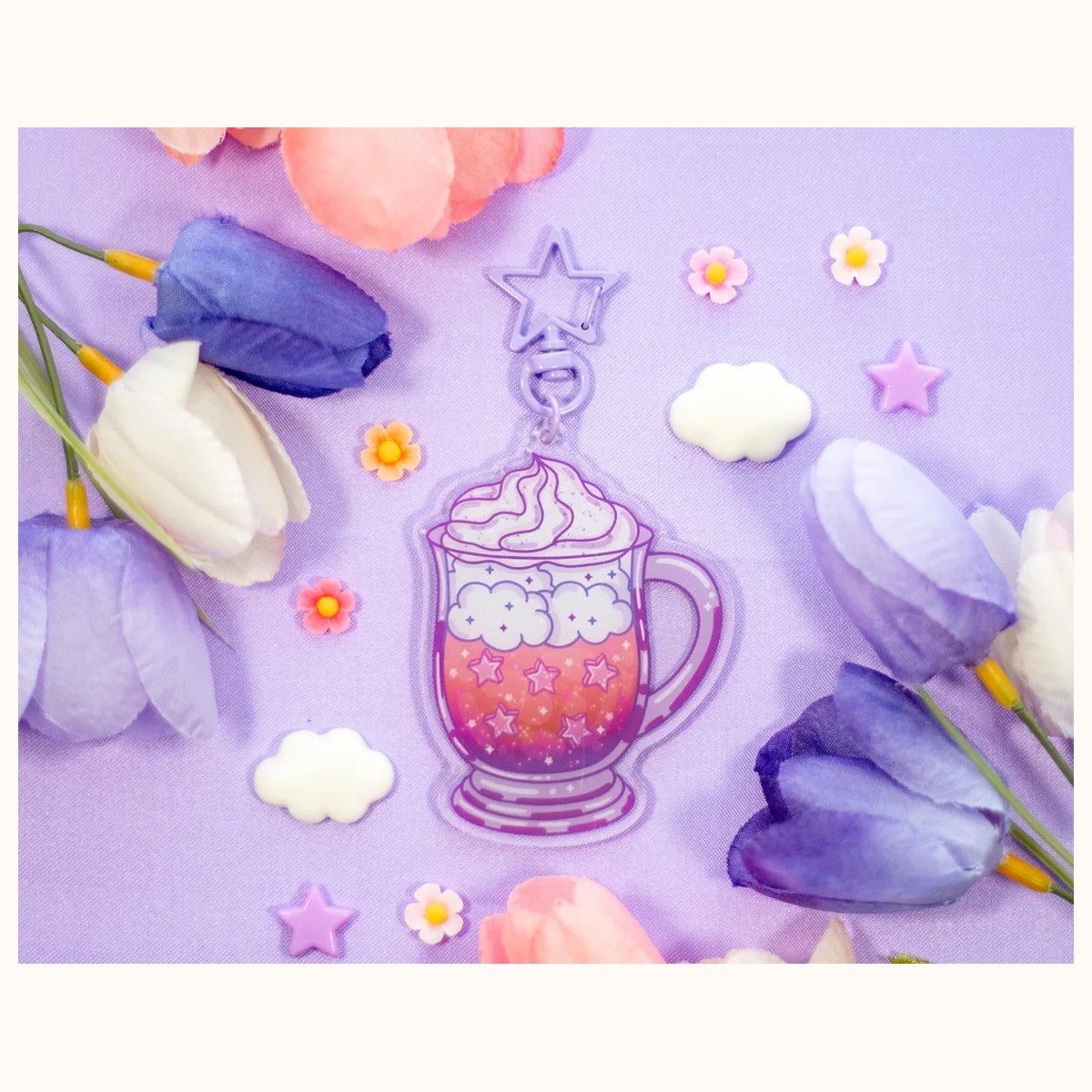
The Iced Coffee Aesthetic Cute Acrylic Charm Keychain is described as a double-sided, waterproof charm with a protective film to remove before use. That makes it a useful example of why attachment, surface protection, and first-use preparation should be considered together—not just the design itself.
Build a gentle cleaning routine for everyday grime
Most visible dirt on an acrylic keychain is loose dust, fingerprints, or a small smear from hands and bags. Start with the least aggressive method and stop as soon as the surface looks clean. More pressure and stronger chemicals do not automatically produce a better result.
A three-step clean
1. Remove dry particles. Shake the charm gently over a clear surface or use a clean, soft microfiber cloth to lift dust. Do not rub gritty particles back and forth, since they can act like tiny abrasives. 2. Wipe lightly. Dampen a corner of the cloth with plain water and wring it out well. Wipe the acrylic with gentle strokes, giving extra attention to fingerprints around the edges and clasp area. Keep moisture away from openings, seams, and hardware when possible. 3. Dry immediately. Use a second soft cloth or a dry section of the first cloth. Let the charm finish air-drying before putting it back in a pocket or pouch. This prevents damp lint from clinging to the surface and helps keep the metal attachment from staying wet.
If a mark remains, repeat the light wipe once rather than pressing harder. For an unknown printed finish, test any proposed cleaner on an inconspicuous edge only when the product guidance allows it. Avoid acetone, nail-polish remover, paint thinner, strong disinfectants, rough paper towels, melamine sponges, and powdered cleaners unless the maker specifically approves them. These products or tools may affect printed artwork, surface clarity, or the finish.
Handle water claims sensibly
A listing may describe a particular charm as waterproof, but that does not mean it needs soaking, a washing machine, or prolonged submersion. Waterproof wording is best treated as reassurance for normal splashes and light moisture—not an invitation to test the limits. After rain or a spill, wipe the charm dry and inspect the clasp and ring.
Do not leave an acrylic keychain in a wet bag, beside a sink, or in a steamy bathroom for long periods. If water gets between components or the attachment area remains damp, separate the charm from other belongings and allow it to dry fully in a ventilated place. Skip hair dryers, heaters, and direct high heat; a gentle room-temperature dry is the safer choice when the instructions do not specify otherwise.
Make cleaning part of the right moment
Clean the charm when you already empty your bag or wipe your keys—perhaps weekly for a frequently handled zipper pull, or whenever fingerprints become noticeable. A charm used on a desk may need less attention than one clipped to a commuter bag. The aim is not a fixed schedule; it is a small response to actual dirt and friction.
When packing for travel, clean and dry the charm first, then place it in a soft pouch or a separate pocket. Do not wrap it tightly in a rough paper receipt or leave it loose beside coins. This simple pause prevents a clean charm from immediately picking up lint and scratches.
Troubleshoot appearance, damage, and storage decisions
A tidy care routine is also about knowing what not to fix at home. Examine a change in appearance under even light and decide whether it is removable dirt, protective film, an attachment problem, or damage to the printed surface.
If it looks cloudy or dull
First check for an unremoved protective film, especially around corners and the hole near the clasp. Next, wipe with a clean, barely damp microfiber cloth and dry it. If the haze remains, compare the surface in different lighting; glare or condensation can change how transparent acrylic appears.
Do not polish aggressively to restore shine. Abrasive rubbing can make a clear surface look more uniformly hazy. If the dull area is still present after gentle cleaning and drying, photograph it in natural indirect light and contact Farouk Book Store or the store’s contact page for product-specific guidance rather than applying household polish.
If there is a scratch or print mark
A light line may be dust, a fingerprint, or a strand of lint. Remove it with the dry-cloth step before deciding that the acrylic is scratched. If a line remains, stop rubbing. Do not use a sharp object to test its depth, and do not sand or buff the face. A printed mark may be on one side while the acrylic itself remains clear, so aggressive treatment can create a larger problem.
Move a visibly scratched charm to a lower-friction use, such as a pouch zipper that does not share space with keys, if the attachment is secure. If the scratch affects a favorite display area, replacement may be more sensible than continued experimentation. For everyday wear, accept that a charm attached to a working key set will face more contact than one used as a backpack accent.
If the clasp or ring feels loose
Stop carrying the charm on that attachment point. A loose ring is a loss risk, not merely a cosmetic issue. Transfer it carefully to a secure loop, keep the charm in a small pouch, and inspect whether the ring is bent, separated, or simply not fully closed. Avoid hanging heavy objects from a clasp intended for a lightweight charm.
If the hardware is bent or the acrylic hole looks stressed, do not force it back and forth. Take a clear photo and ask for advice before attempting a repair. Keep any replacement ring compatible with the charm’s hole and weight; a larger or heavier fitting can create more leverage and rubbing.
Choose storage by frequency of use
For daily use, a separate pocket or a soft fabric pouch is usually enough. For longer storage, keep the charm clean and dry, away from direct sunlight, heat, and pressure from books or other hard objects. Store linked charms so they do not repeatedly knock against each other. If you rotate seasonal accessories, label the pouch so you are not searching through a box and dragging every charm across one another.
A practical decision rule is simple: if the charm is still clean, dry, securely attached, and free to move without scraping against hard items, your setup is probably working. If any one of those conditions changes, clean it, reposition it, or store it separately before the problem grows.
Acrylic keychains are small accessories, but their best appearance comes from consistent small choices. Prepare the surface correctly, keep friction low, clean gently, dry promptly, and treat loose hardware as a safety signal. With that routine, a favorite everyday charm can remain an intentional accent rather than becoming lost in the clutter of the things it travels with.
Related reading: 10 Best Creative Keychains for Thoughtful Gifts · How to Choose Stickers for Journals and Planners · How to Build a Personalized Gift Bundle