A casual book swap can become awkward when the recipient opens a book and has no idea why it was selected, whether the pages show use, or what kind of conversation the giver expects. A removable message tag gives the book enough context without writing on the cover or turning a friendly exchange into a formal review. Farouk Book Store’s editorial selection offers paper goods and labels that can help you assemble a small, bookish tagging kit; the point is not to make every exchange look identical, but to make each handoff considerate and clear.
The most useful tag answers three questions quickly: Why this book? What should the next reader know about its condition? What kind of response, if any, is welcome? Keep those answers separate from the book itself. A tag tied around the outside, tucked into an outer sleeve, or attached to a removable paper band can travel with the title and come off cleanly when the recipient wants an unmarked reading copy.
Start with the exchange, not the decoration
Before choosing paper or lettering, decide what the swap actually is. A one-for-one neighborhood exchange has different needs from a table where several people bring books, or a friend-to-friend handoff where the recipient already knows your taste. The tag should reduce uncertainty, not add another task.
For a simple personal swap, use one small external tag with four short lines:
- For: the recipient’s first name, nickname, or “next reader”
- Why I chose it: one specific connection
- Condition: a plain description of wear
- Reply: an optional invitation, such as “Tell me what you think when you finish”
The recommendation line works best when it names a reading experience rather than making a grand promise. “I thought you might enjoy the dry humor and short chapters” is more useful than “You’ll love this.” It gives the recipient a reason to accept or decline without making taste feel like a test. If the book came from a group table, write “I picked this because the setting is unusual” rather than implying that everyone should want it.
Keep the tone low-pressure. A tag can say, “No need to report back—just passing it along,” or “If it is not for you, feel free to swap it again.” That small sentence matters when people have different reading speeds, preferences, or available time. A book exchange is a shared opportunity, not an obligation to complete a title or defend a reaction.
Write a useful recommendation in limited space
A tag is not a summary card. Avoid retelling the plot, copying jacket text, or revealing a late twist. Instead, choose one context clue and one expectation-setting detail. These combinations are concise while still personal:
- Mood plus format: “A quiet, observant story; short chapters make it easy to dip into.”
- Interest plus setting: “For your interest in old houses—the place matters as much as the people.”
- Conversation hook: “I kept thinking about the choices the characters make under pressure.”
- Reading caveat: “The opening is slow, then the family history starts to unfold.”
- Pass-along note: “I enjoyed it, and it is ready for a different reader now.”
Use “I” statements for opinions and direct language for facts. “I found the middle tense” is clearly personal; “there are pencil notes on pages 12 and 48” is a condition disclosure. This distinction prevents a recommendation from sounding like a universal verdict.
For a group swap, create a small vocabulary that keeps tags scannable. A colored dot or short heading can identify gentle pace, fast plot, poetry, nonfiction, or discussion pick, but do not use a category as a substitute for explanation. A reader who sees “discussion pick” still needs to know whether the book is marked, missing a dust jacket, or likely to prompt a difficult subject. If the exchange includes sensitive themes, name them plainly and briefly without dramatizing them: “Includes grief and a strained parent-child relationship.” That lets someone make an informed choice without spoiling the ending.
If handwriting becomes hard to read, draft the wording on scrap paper first. Aim for 25–45 words on the face of a small tag. Longer context can go on the reverse, but the outside should remain readable at a glance. Leave space around the text; cramped lettering makes a thoughtful note feel like an instruction sheet.
Disclose condition without making the handoff awkward
Condition notes protect trust when they are factual, proportionate, and easy to find. You do not need a grading system for a casual swap. Describe visible details that could affect someone’s decision: “creased front cover,” “small coffee mark on the lower edge,” “name written on the title page,” “some underlining,” or “pages clean; cover has shelf wear.” If you are unsure whether a mark is removable, do not promise that it will come off.
A practical tag separates wear from missing parts. “Cover rubbed at corners” is different from “dust jacket not included.” For a used workbook, cookbook, or reference title, note writing, filled-in exercises, clipped pages, or loose inserts. For a library discard or ex-library copy, mention labels or stamps rather than hiding them under a decorative element. Condition disclosure is not an apology; it is information that helps the next reader choose fairly.
There are several common failure cases. The first is vague reassurance: “Basically new” can mean different things to different people, especially when a cover is clean but the inside contains highlighting. The adjustment is to name the actual marks. The second is over-disclosure: a paragraph about every tiny scuff overwhelms the recommendation. Group minor wear together and point out only details that change usability or expectations. The third is forgetting the recipient’s privacy. Do not print a full address, phone number, workplace, or personal reading history on a tag that may be photographed or passed along.
When a book has a serious issue, give the reader an easy exit: “Please skip this one if writing in the margins bothers you,” or “Take it only if a missing map is not a problem.” If the exchange is organized by a club or event, follow that group’s stated rules rather than improvising a promise about refunds, replacements, or future availability. Farouk Book Store’s bag prepares an email order request rather than a payment checkout, so any product availability, taxes, or shipping details should be confirmed before treating a paper item as part of a timed event.
Build a removable tag system with a small Farouk edit
Choose materials according to how the tag will be attached. A hole-punched paper tag and soft twine work well around a cover or outer band, while a removable note can sit on a protective sleeve. Do not place adhesive directly on a borrowed or valuable book, and do not assume that a sticker labeled removable will leave every finish unchanged. Test on the separate sleeve, a paper band, or scrap stock first.
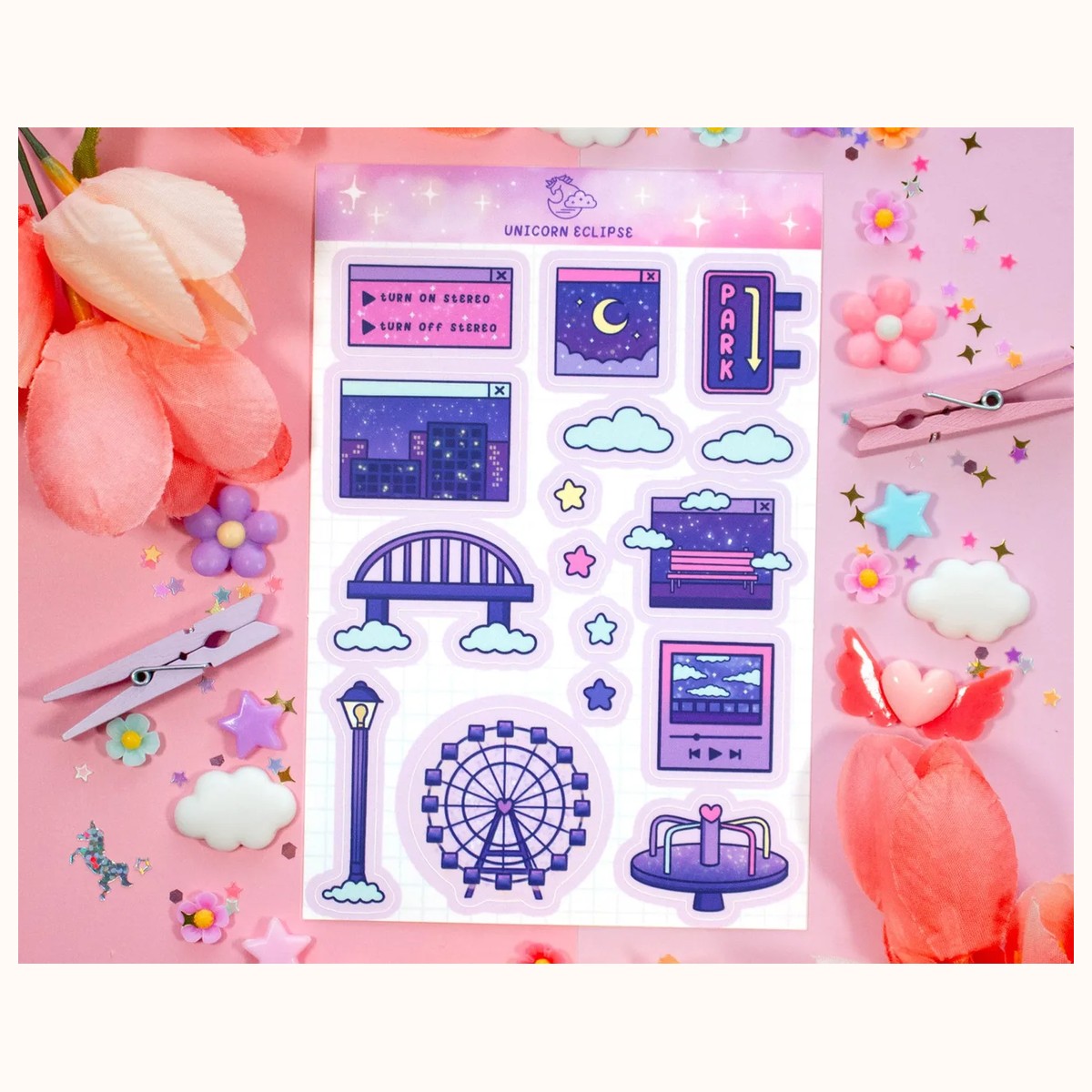
For a compact kit, begin with one writing surface, one visual cue, and one attachment method. The Writer Aesthetic Cute Sticky Note Memo Pad offers 3-by-3-inch adhesive sheets in a 50-sheet pad, useful for drafting a short message or placing a temporary note on an outer paper band. For tags that need a more bookish visual signal on a swap table, the City Nights Sticker Sheet contains 16 designs on a 4-by-6-inch sheet; use one small decorative accent on the removable tag, not across the book’s cover. If you want a sturdier writing surface for a longer reverse-side note, Starry Clouds Note Cards are 3 by 5 inches, with one lined and one unlined side.
These are examples from the Farouk Book Store selection, not a claim that Farouk manufactures every catalog design. Check the product page for current details, and confirm availability before planning a large swap. You can also browse the Stickers, Labels & Tags collection for a broader visual starting point. The products are optional; plain paper, a pencil, and a length of string can work just as well when the message is clear.
A repeatable handoff checklist
Prepare tags in batches, but write the personal recommendation last. First, make a blank template with space for the title, recipient or table, reason, condition, and optional reply. Next, inspect each book under ordinary light. Open it far enough to notice writing, loose pages, inserts, or a missing cover component. Then draft the note separately, checking that it contains no plot reveal or private information.
Attach the tag to an external band, sleeve, or piece of twine. Place the book on the swap table with the condition visible enough to be honest but not so prominent that it overwhelms the invitation to read. At the handoff, let the recipient ask questions and make a different choice without embarrassment. If they decline, the tag has still done its job: it made the offer understandable.
After the swap, remove tags from books that move to another person and replace them if the recommendation no longer fits. A note written for a close friend may sound presumptive at a public table. Change “You need to read this” to “I thought the setting might interest you.” If the book has acquired new marks, update the condition line rather than carrying forward an outdated description.
A final check keeps the system kind and useful: Is the tag removable from its actual attachment point? Does it explain why the book is being offered? Does it state meaningful wear without exaggeration? Does it avoid spoilers and personal data? Does it give the next reader room to say no? If all four answers are yes, the tag is ready to travel with the book—and ready to disappear when its work is done. For questions about Farouk Book Store or the shop’s current selection, use the About page or contact page rather than guessing at inventory or event arrangements.
Related reading: How to Use Book Annotation Tabs Without Overmarking, Bookmark Material Guide: Matching the Marker to the Book, and Small Gifts for Book Club Members Without Matching Everyone.