A bookmark is a small tool, but its material changes how it feels in a book. This bookmark material guide helps you choose between cardstock, paper, coated finishes, and more specialized markers by looking at page safety, thickness, reading habits, and care. The best choice for a paperback you carry daily may not be the best choice for a delicate novel, a planner, or a gift copy.
Think of a bookmark as a temporary page companion rather than a decoration alone. It should slide in easily, remain visible, and come out without catching the paper. Before choosing a design, identify the book’s page type and the reader’s routine: quiet reading at home, commuting, studying, journaling, or moving between several books.
Start with the book, not the bookmark
The first decision is how much pressure the book can comfortably handle. A modern paperback with flexible pages usually accommodates a slim cardstock marker. A softcover with a narrow spine, a small pocket book, or a book already packed tightly in a bag benefits from the lightest, flattest option you can find. A hardback has more structure, but that does not mean a thick or bulky marker is automatically harmless; excess material can still create a ridge in the closed book.
For valuable, older, or easily marked books, favor a smooth, thin marker with rounded corners. Avoid forcing any bookmark deep into a tightly closed section. If the pages bow when the book is shut, move the marker closer to the outer edge or choose a thinner design. Do not use a bookmark as a wedge, page separator, or tool for holding open a book while you write.
Page texture also matters. Uncoated paper generally feels forgiving, while very smooth pages can make a glossy marker slide if only a small portion remains outside the book. If you regularly read in short sessions, select a design with enough exposed area to find quickly. If you read in bed or on public transport, a simple, high-contrast marker may be easier to retrieve than a dark design against a dark cover.
For journals and planners, consider whether you need a place marker or a writing aid. A flat cardstock bookmark works well when you want to return to a spread without adding adhesive to the page. A removable note can be useful for temporary reminders, but it is a different tool from a durable bookmark and should not be treated as a permanent page tab.
Cardstock and coated finishes: the everyday default
Cardstock is a practical middle ground for everyday reading. It is light enough to sit between pages without much bulk, yet more substantial than ordinary loose paper. A smooth edge matters as much as the stock itself: rounded corners are less likely to snag when you turn pages or pull the marker out at an angle.
A glossy finish can make printed artwork look bright and gives the surface a smooth feel. It may be a good fit for readers who want a decorative marker that wipes clean with a dry, soft cloth if it gathers fingerprints or dust. However, gloss can reflect a lamp or sunlight. If you annotate while reading or dislike visual glare, a matte or uncoated surface may be more comfortable.
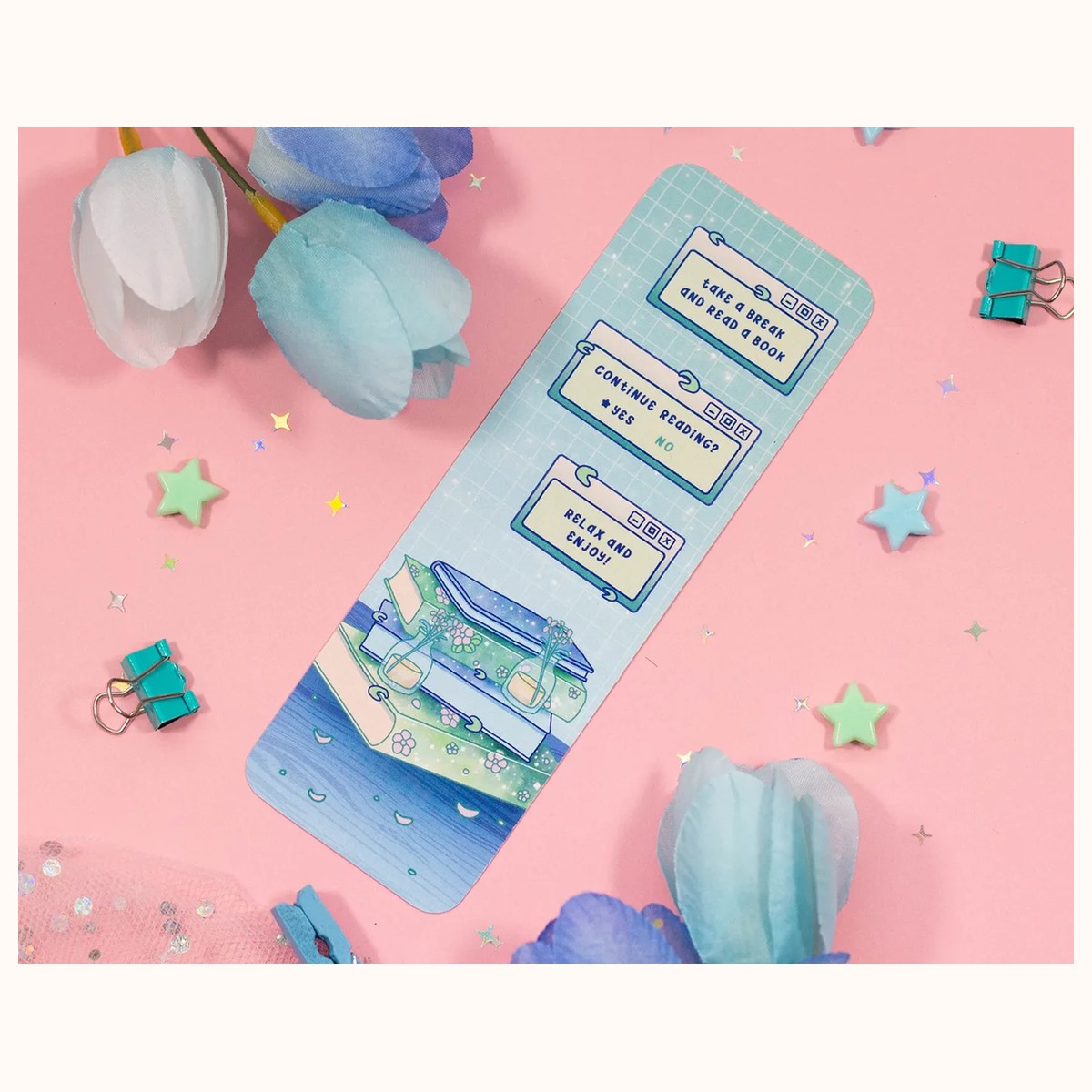
Farouk Book Store’s Stacked Books Cute Aesthetic Bookmark is a useful example of this everyday format: it is approximately 2 by 6 inches, made from glossy cardstock, printed on both sides, and finished with rounded corners. That combination suits novels, journals, and paperbacks when you want a visible, slim marker without a dangling attachment.
The Sunset Music Player Cute Aesthetic Bookmark follows the same practical profile. Choose a double-sided design when the bookmark may turn around in the book or when the reader likes to see artwork whichever side is facing out. If a marker is handmade, allow for minor variations rather than expecting every edge or printed detail to look mechanically identical.
A cardstock marker is not waterproof by default simply because it has a glossy appearance. Keep it away from drinks, damp bags, and wet hands. If it becomes creased, do not flatten it inside a heavy book immediately; pressing a damp or damaged piece can transfer marks. Let it dry naturally, then decide whether replacing it is safer for the book.
Match material to reading habits and book format
For a commuter, the main risks are bending, slipping, and getting crushed in a bag. Choose a slim, rounded bookmark with a finish that is easy to handle. A double-sided cardstock marker is a strong general option, but store it in a notebook pocket or a small sleeve when the book is not in use. Loose markers at the bottom of a bag can develop bent corners even when the material itself is reasonably sturdy.
For a reader who switches between several books, color or motif can become a practical locating system. Use one design for fiction, another for study, and another for a journal. This reduces the temptation to leave a marker protruding far from the page. The bookmarks collection is a sensible starting point when you want to compare designs by appearance before checking which one best suits each book.
For study books and textbooks, page thickness and frequent reference changes matter more than ornament. Use a marker that can be inserted and removed repeatedly without a sharp corner. If you need to mark several pages, use separate thin markers or removable notes rather than stacking a thick bundle in one place. A bookmark should identify one reading position; it should not create a stressed section in the spine.
For planners, a 2-by-6-inch marker may extend beyond a compact cover. Measure the closed planner before buying: compare the marker’s width with the page height and check whether the planner has a pocket. A bookmark that sticks out too far can catch on a bag zip or bend when the planner is shelved. In a larger journal, the same size may be easy to see and comfortable to remove.
For a gift, material should follow the recipient’s routine. A design-led glossy cardstock bookmark suits someone who enjoys illustrated stationery and reads at home. A quieter matte option may appeal to someone who takes notes under bright lights. If you are unsure, choose a slim rounded marker and pair it with a book whose cover or theme relates to the artwork. Avoid making claims about longevity, archival safety, or water resistance unless the product description explicitly provides that information.
Care, troubleshooting, and a quick decision checklist
Keep bookmarks flat when possible. A desk drawer, notebook pocket, or protective sleeve is better than a crowded pencil case. Handle the exposed edge rather than dragging the marker sideways across a page. When removing it, open the book enough to lift the bookmark straight out; pulling a tight marker across the paper can catch a corner.
If a marker keeps slipping, check the reading position first. A very smooth page, a shallow insertion, or a bookmark that is too short can all contribute. Insert it farther into the section without forcing it, leave a little more length visible, or switch to a design with a more noticeable shape. Do not add tape, glue, or a homemade clip directly to a book unless you accept the possibility of residue or damage.
If the corners catch, stop using it in that book and inspect the edges. A small crease or lifted layer can behave like a hook. Replace the marker, or carefully reserve it for a loose-paper notebook where snagging is less concerning. If the bookmark bends, place it between clean sheets of paper under a light, even weight for a short period. Avoid heat, moisture, and excessive pressure, which can worsen printed or coated surfaces.
If the surface becomes cloudy or marked, use a soft, dry cloth and gentle strokes. Do not assume that household cleaners are safe for printed cardstock. If a bookmark is exposed to rain or a spilled drink, remove it from the book immediately, separate any pages it touched, and let everything air-dry. For a book with a serious spill, consult a conservator rather than experimenting with household remedies.
Use this final checklist before choosing:
- Book condition: Is the book flexible, tightly bound, valuable, or easily marked?
- Material: Do you need the lightness of paper or the structure of cardstock?
- Finish: Would gloss add appeal, or would matte reduce glare?
- Shape: Are the corners rounded and the profile slim enough for the book?
- Routine: Will the marker travel in a bag, stay at a desk, or move between books?
- Care: Can you store it flat and keep it away from moisture?
For questions about a particular item, its current description, or whether a design suits a specific book format, use the Farouk Book Store contact page. A careful match is simple: choose the flattest, smoothest material that remains visible and pleasant for the way the book will actually be read.
Related reading: How to Choose Stickers for Journals and Planners · How to Build a Personalized Gift Bundle · 2026 Stationery Trends: Color, Texture, and Joy