A useful coaster material comparison starts with the surface beneath the drink, not just the look of the coaster. A home-office desk may need protection from condensation and scratches, while a side table may need better heat tolerance, a steadier grip, or an easier cleanup after a spill. The best choice depends on your drink habits, furniture finish, and how much maintenance you will realistically do.
This guide compares common coaster materials in practical terms: how they handle moisture, warm cups, movement, cleaning, and everyday wear. It also uses a real acrylic example from the Farouk Book Store coasters collection, including the Spirit Town Acrylic Coaster, so you can connect general advice with an actual product format.
Start with the drink, desk, and daily problem
Before comparing materials, identify what your coaster must solve. Cold drinks create condensation that can pool under a glass. Hot tea or coffee transfers heat and may leave a mark on a delicate finish. A mug can also slide when you reach for a pen, adjust a lamp, or move a laptop. These are different problems, so one material will not automatically be best for every table.
For a desk, moisture control and stability usually matter most. A coaster should catch drips without forcing you to move your keyboard or notebooks out of the way. A square coaster around four inches wide suits many mugs and tumblers, but check the base of an unusually wide cup before buying. A coaster that is too small may catch the center of a mug while allowing the rim to overhang and drip onto the desk.
For a side table, appearance and heat handling may carry more weight. A living-room table may hold a hot mug, a glass of water, and a decorative object in the same small area. A rigid coaster can look tidy, while a softer one may be quieter when set down. If the table is lacquered, painted, glass, or very smooth, also consider whether the underside could scuff or slide.
A quick decision rule is simple: choose the material that solves your most frequent problem, then check its weak points. If condensation is the daily nuisance, prioritize a water-resistant surface and a raised or absorbent design. If hot drinks are routine, inspect the product’s care guidance rather than assuming every decorative coaster is a heat barrier. If slipping is the issue, look for a grippy underside or feet.
Acrylic, ceramic, and stone: rigid everyday options
Acrylic is a practical choice when you want a firm, wipe-clean coaster with a printed decorative surface. It does not absorb a puddle, so moisture remains on top until you wipe it away. That is helpful beside a computer, where a damp coaster can be safer to manage than one that stays wet. The trade-off is that a smooth acrylic surface may let a glass move more easily than a textured or rubberized coaster, especially when condensation is present.
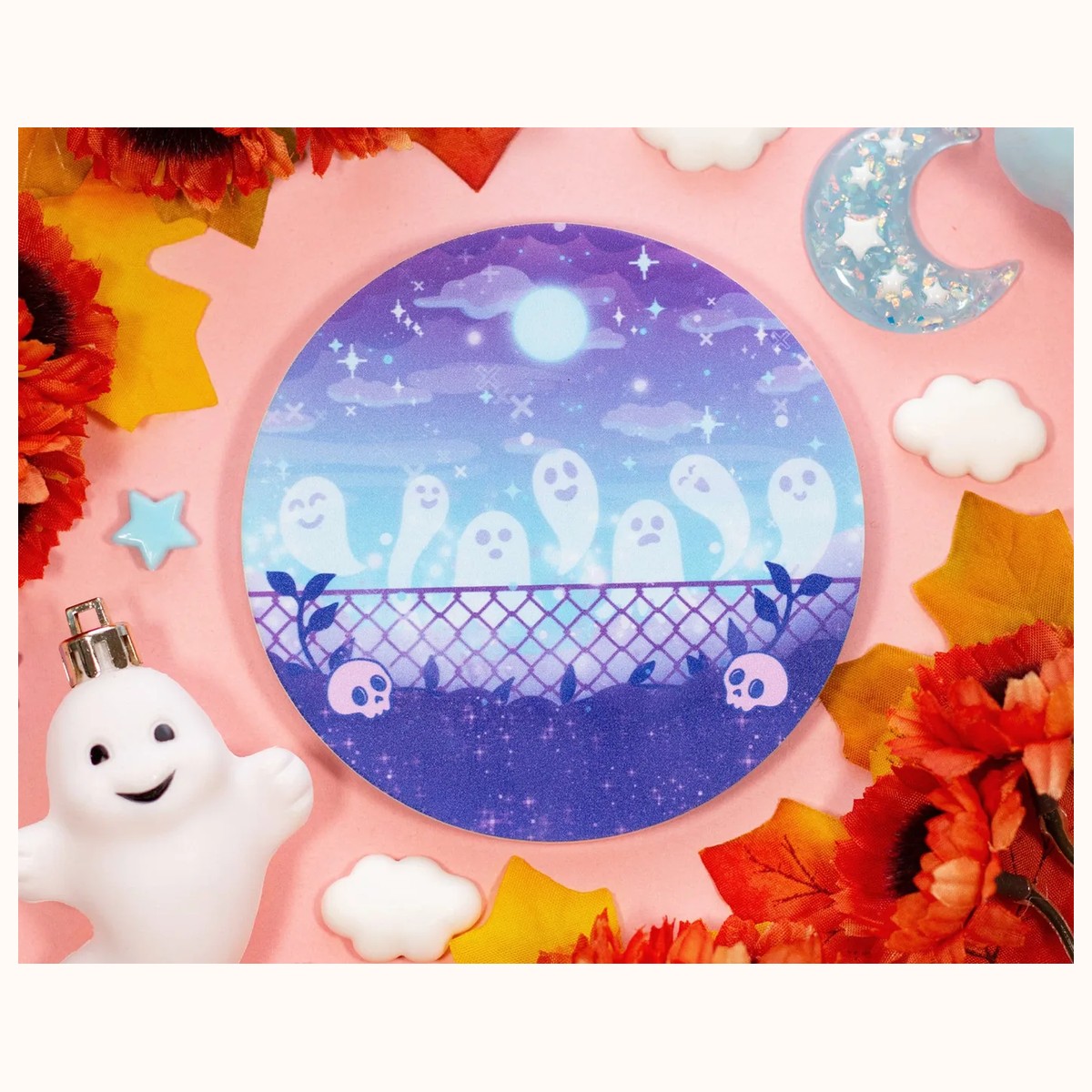
The Spirit Town Acrylic Coaster is a concrete example: it is listed at 3.9 by 3.9 inches, 5 mm thick, waterproof, and fitted with four rubber feet. Those feet help raise the coaster slightly and reduce slipping or direct contact with the furniture. Similar details appear on the Rosy Sky Acrylic Coaster, which is also described as a 3.9-inch square with rubber feet and a wipe-clean surface. For a desk, those features make acrylic worth considering when you want low-effort cleanup and a defined footprint.
Troubleshooting acrylic is mostly about residue and movement. If a cup seems to slide, check whether the rubber feet are sitting flat and whether the tabletop is dusty or oily. Wipe both surfaces with a soft cloth, then dry them. If a spill reaches the underside, clean it rather than leaving moisture around the feet. Avoid treating a product as an oven trivet or placing a very hot vessel on it unless the product information specifically supports that use; “waterproof” does not by itself establish unlimited heat resistance.
Ceramic has a substantial feel and often provides a lightly textured or glazed top. It can suit a side table where a decorative, weighty object feels at home. Glazed ceramic is generally easy to wipe, but the exposed edges and underside deserve attention: water can collect there, and a rough underside may mark a delicate finish. Ceramic can also chip if dropped or knocked against a hard tabletop. Place felt or another protective layer underneath only if it is securely attached and does not make the coaster unstable.
Stone, including slate or marble-style designs, is valued for weight and a natural look. Its mass can make it feel stable beside a sofa, and some stone surfaces offer useful texture. The practical question is porosity. A porous stone may absorb coffee, colored drinks, or oily residue and show a mark even when it appears dry. Sealing varies by product, so do not assume that a stone coaster is stain-proof. Use a soft cloth, avoid harsh cleaning experiments, and let the coaster dry fully before putting it on wood or a polished finish.
Cork, wood, silicone, and fabric: softer and more forgiving choices
Cork is light, quiet, and naturally suited to a workspace where objects are set down frequently. Its texture can help keep a mug from wandering, and it is less likely than a hard edge to clack against the table. Cork’s weak point is prolonged moisture. A saturated cork coaster can become stained, misshapen, or unpleasant to store. For a cold drink, empty standing water promptly and let the coaster air-dry separately from the desk.
Wood brings warmth to a side table and can coordinate with other furniture. It is not automatically moisture-proof, however. A finish may slow absorption, while an unfinished surface may darken or swell after repeated spills. Check the underside for roughness before placing it on a painted or glossy table. If the coaster feels damp after use, wipe it and allow it to dry upright or in an open area. Do not seal or oil a product unless its care instructions permit it; an unsuitable treatment can change the finish or leave residue on furniture.
Silicone is flexible, quiet, and usually easy to rinse or wipe. Its grip can be useful for a busy desk, especially when a hand repeatedly reaches around a drink. A raised rim may help contain small spills, but the shape matters: a flat silicone disc will not hold much liquid. Silicone can also attract lint and may feel less decorative than a printed acrylic or ceramic piece. If it develops a film, wash it according to the product guidance and dry it completely before reuse.
Fabric and felt provide a soft landing for cups and can protect a table from direct contact. They are comfortable in a reading corner or on a nightstand, but they need a clear moisture plan. A fabric coaster may absorb condensation, which is helpful until it becomes fully wet. At that point, it can transfer moisture to the surface below. Use fabric when small drips are common and you are willing to launder or replace the coaster, not when you need a permanently waterproof barrier.
A common failure across soft materials is storing them while damp. If a coaster smells musty, feels cool and wet, or leaves a ring underneath, separate it from the furniture and let it dry completely. If staining repeats, switch to a wipe-clean material or use a coaster with a removable, washable layer.
Match the material to the furniture and maintenance routine
On a wood desk, prioritize a dry underside, stable grip, and protection from pooled condensation. Acrylic with feet, silicone, or a well-finished cork coaster can work, provided you wipe spills promptly. For an antique, veneer, or freshly refinished surface, be more cautious: test the coaster in an inconspicuous area and look for moisture, dye transfer, or rough contact points before regular use.
On a glass side table, movement and noise become more noticeable. A coaster with rubber feet, silicone, or a soft underside can reduce sliding and the sharp sound of setting down a mug. Avoid a gritty underside. Dust trapped beneath any coaster can act like an abrasive when the coaster is moved, so lift it rather than dragging it.
On a laminate or painted table, nearly any clean, smooth-backed coaster may work, but heat and residue still matter. Do not leave a wet coaster in one place for hours simply because the surface is marketed as easy-care. Moisture can find seams or damaged edges. Likewise, remove sugary spills before they dry into a sticky layer that attracts dust.
For a small bedside or reading table, choose a footprint that leaves room for a phone and book. A compact square such as the 3.9-inch format used by several acrylic designs can be convenient, but measure the table and mug together. If the coaster crowds the edge, a smaller cup or a round alternative may be safer than a larger coaster that looks generous on paper.
Your maintenance routine should decide the final choice. If you want to wipe once and move on, choose acrylic, glazed ceramic, silicone, or a sealed material with clear care guidance. If you enjoy natural texture and do not mind drying or occasional replacement, cork, wood, stone, and fabric can add more tactile character. If nobody in the household remembers to clean spills, favor a raised, stable, wipe-clean option and keep a cloth nearby.
A practical buying and troubleshooting checklist
Before choosing, check five details in the listing or product itself: the coaster’s width, thickness, underside, surface-care instructions, and stated suitability for drinks. A product description that mentions rubber feet, a non-skid base, or a waterproof surface gives you useful information, but read each claim in context. Waterproof does not necessarily mean stain-proof, heat-proof, dishwasher-safe, or suitable for outdoor exposure.
When a coaster slides, clean the table and underside, confirm that feet or backing are intact, and stop dragging it across the surface. When it leaves a ring, remove the drink and coaster, dry both, and inspect whether the coaster is holding moisture underneath. When a coaster rocks, check for a warped base, uneven feet, or a crumb trapped beneath it. When a material stains, use only the recommended cleaning method first; aggressive scrubbing can dull acrylic, remove a finish, or spread a mark.
If you are buying a set for mixed spaces, do not assume every room needs the same material. A wipe-clean acrylic coaster can serve a work desk, while cork or ceramic may better suit a quieter side table. Choose complementary designs if you want a coordinated look, but keep function first: a beautiful coaster that stays wet, slides, or crowds the cup is not protecting the table effectively. For product details, sizes, and current availability, review the coasters category and contact Farouk Book Store if you need help verifying an item before purchase.
The best material is the one that fits the drink, furniture, and habits you already have. Compare moisture handling, heat expectations, grip, noise, cleaning, and footprint together. That approach produces a more reliable choice than selecting by appearance alone.
Related reading: How to Build a Personalized Gift Bundle · 2026 Stationery Trends: Color, Texture, and Joy · Why Handwritten Greeting Cards Still Matter