A lanyard can keep an ID badge, keys, or a small tool within easy reach, but the best choice depends on more than its pattern. Comparing lanyard length and attachments first helps you avoid a strap that hangs too low, a clasp that does not match your item, or a release point that is awkward for your routine. Before you buy, decide where the lanyard will sit, what it must carry, and how quickly you need to remove that item.
This guide uses the details available for Farouk Book Store’s lanyards collection and turns them into a simple buying checklist. Product measurements are approximate, and a product page is the best place to confirm the current description before ordering.
Start with where the lanyard will sit
Length is really a fit question. A lanyard worn around the neck should let its attached item land where you can reach it without forcing your shoulders forward or repeatedly lifting the strap. For many everyday uses, that means checking the distance from the neck area to the point where the badge or keys will hang. If you plan to wear it over a shirt, jacket, or other layers, allow for that extra space rather than choosing based only on how the strap looks in a product photo.
The catalog measurements for several Farouk lanyards list a strap about 3/4 inch wide and about 18 inches long on each side, with the clasp included in that measurement. Because a lanyard folds around the neck, “each side” is not the same as a single straight strap measured end to end. Read the wording carefully and compare it with a lanyard you already own. Lay your current lanyard flat, measure from the neck fold to the clasp, and then check whether the new listing describes one side, the full loop, or a measurement that includes hardware.
Use the intended position as a practical test. For an ID badge, hold a ruler from the base of your neck to the place where you normally scan or display the card. For keys, consider whether you want them near your hand or lower on your torso. A key lanyard that is comfortable while standing may swing against a desk when you sit, so test the seated position too. If you will wear it while moving through a workplace, classroom, event, or shop, imagine turning, bending, and reaching for a door or bag.
A shorter-feeling fit may be useful when the attached item must remain visible and stable. A longer-feeling fit can make keys easier to reach, but it may also increase swinging and snagging on handles or furniture. There is no universal “correct” length. The right choice is the one that places the item within reach while keeping the strap out of the way during your normal movements.
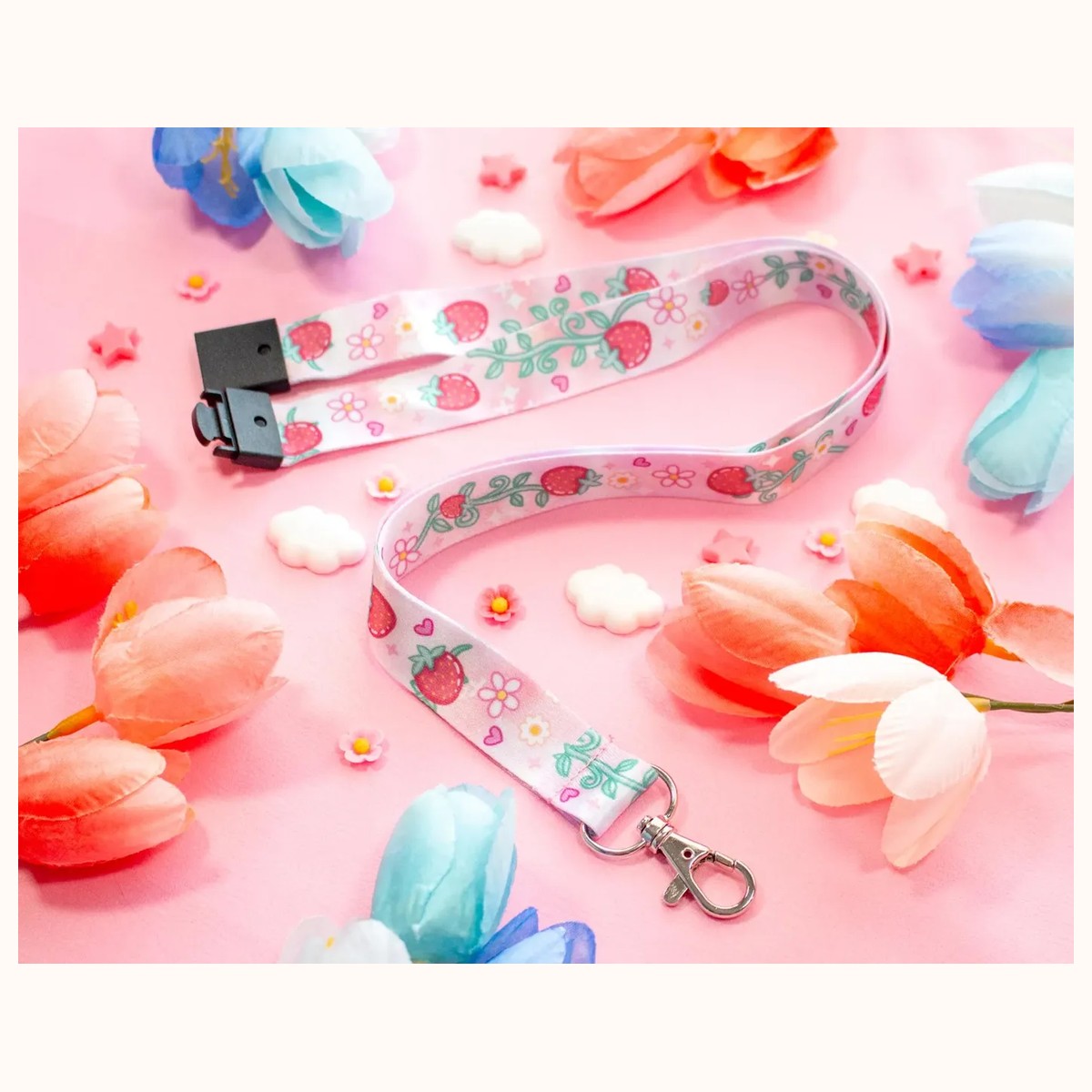
For a concrete example, the Strawberries Breakaway Lanyard is listed at approximately 3/4 inch wide and 18 inches long on each side, including the clasp. That gives you a useful reference point when comparing the lanyard’s position with your current badge or key setup. If you need a different fit, check the product description rather than assuming every lanyard in the category has the same dimensions.
Match the attachment to the item you carry
The attachment is the working end of the lanyard. Start by naming the item: an ID badge, a key ring, a zipper pull, or a small accessory may each need a different connection. Then inspect how that item is designed to connect. A badge holder may have a slot or punched hole. A key set may already use a ring. A small tool may have a loop, but that does not automatically mean every clasp will fit through it.
A metal lobster claw clasp is useful when you want to clip onto a ring or hole and remove the item without untying anything. Before buying, check three practical points: whether the clasp opening is large enough for the ring, whether the spring gate closes fully, and whether the item can sit without twisting. If a key ring is thick or crowded, the clasp may technically attach but still be difficult to operate. In that case, a small intermediate ring can make the connection easier, provided it is appropriate for the item and does not add unwanted bulk.
Think about weight as well as shape. A lanyard may be intended for keys, badges, or small accessories, but that does not mean it is suitable for a heavy bundle or equipment that pulls sharply. Keep the load modest, distribute several keys on a ring rather than piling them directly onto a tiny gate, and inspect the hardware when the lanyard is used often. If the clasp is hard to close, opens unexpectedly, or shows bending, stop using it and replace the connection.
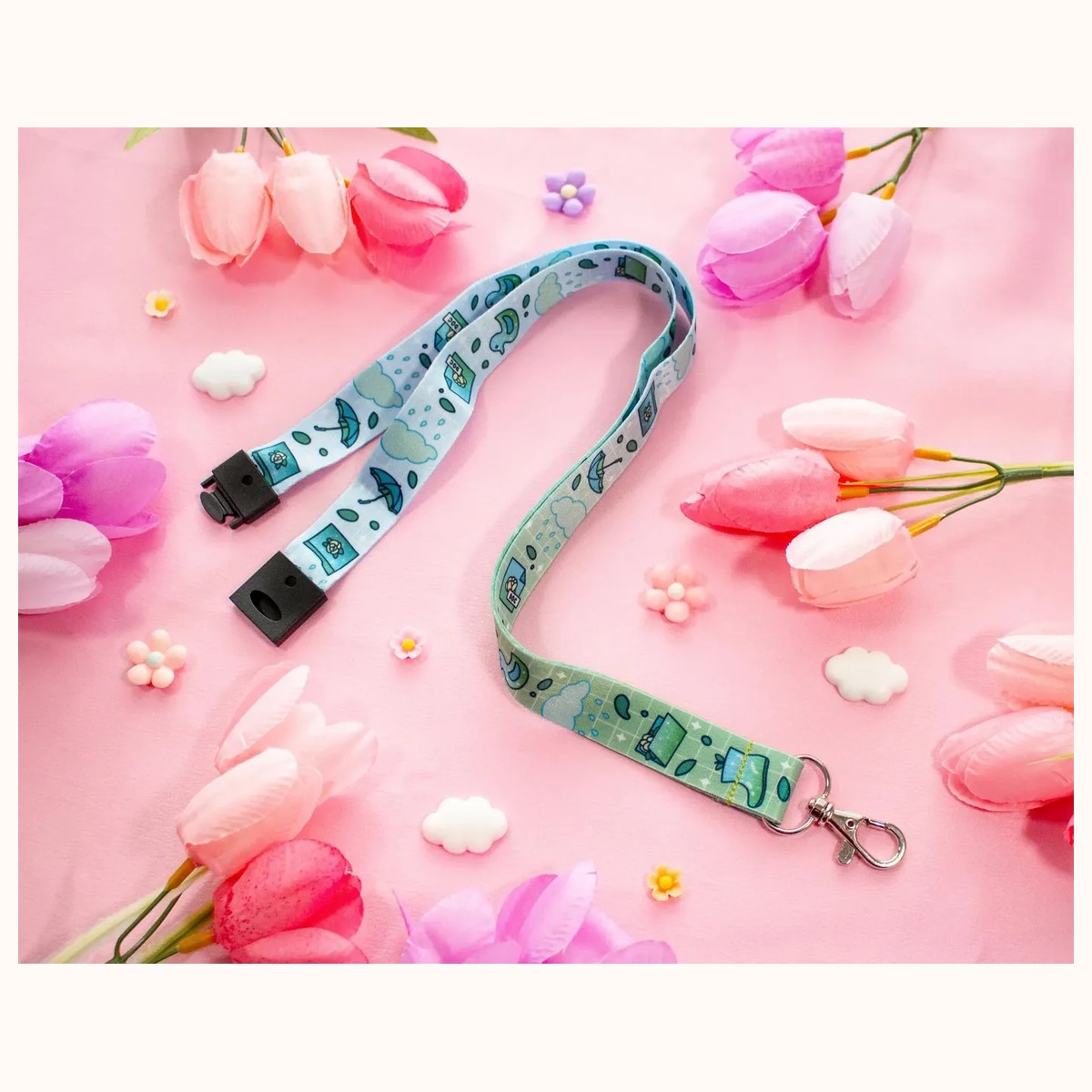
The Rainy Day Breakaway Lanyard is described with a metal lobster claw clasp for badges, key rings, or small items. That description tells you the intended attachment style, not a promise that every object will fit. Measure the hole or ring on your own item and compare it with the clasp opening, which you can confirm with Farouk Book Store before purchase if the listing does not provide that detail. The contact page is an appropriate place to ask about a measurement or current product detail.
If your item has no hole, ring, or loop, do not force it into the clasp. Use a compatible badge holder, split ring, or accessory designed for that item. If you need to change attachments frequently, prioritize a connection you can operate with one hand. If you rarely remove the item, a simpler, stable connection may matter more than quick release.
Understand what a breakaway point does
A breakaway attachment is a separate decision from the clasp at the bottom. In the catalog descriptions, breakaway lanyards are described as having a safety attachment that releases under tension or when needed. In practical terms, this can be helpful when a worn lanyard could catch on a handle, chair, or other object. It is not a substitute for careful use, and it should not be treated as a guarantee for every situation.
Check where the breakaway point sits. It is commonly near the back or side of the neck, while the clasp holding your badge or keys is at the front. That arrangement lets you remove the lanyard or relieve a pull without opening the lower clasp. Before wearing it, gently identify the release point so you know what it feels like. Do not repeatedly yank it as a test, and do not tie, tape, or sew over it, because changing the mechanism may prevent it from working as intended.
A breakaway design can be especially practical for busy environments, children’s activities, events, or any routine involving frequent movement around objects. However, it can also be inconvenient if you need the strap to stay connected during pulling or if losing the attached item would cause a problem. Consider whether the item can fall when the lanyard releases. A badge may be easy to pick up; a key set may need a backup plan. For important access items, carry a second method of access when appropriate rather than relying on one worn lanyard.
Troubleshooting is simple: if the lanyard separates during ordinary, gentle movement, inspect the release connection and stop using it until you understand why. If it refuses to release when pulled, do not assume that forcing it will make it safer. Check the product instructions or contact the store for clarification. The product descriptions explain the intended feature, while Farouk Book Store’s about page or contact page can help you verify a question that is not answered on the listing.
Make the final check before buying
Use a short comparison checklist before you add a lanyard to your cart. First, write down the item you will attach and its approximate weight. Next, measure the neck-to-item distance you find comfortable. Then check whether the product describes the strap width, the way length is measured, and the included hardware. Finally, decide whether you need a breakaway release, a lobster claw clasp, or a different attachment system.
Product wording deserves a close read. “18 inches on each side” is a measurement format, not a guarantee that the lanyard will hang exactly 18 inches below your neck after the clasp, fold, and attached item are in place. “Includes the clasp” also means the metal hardware is part of the stated side measurement. These details help you compare listings fairly, but your own body, clothing, and attached object still determine the final fit.
Look for signs that your first choice may not work. If the badge will sit behind a coat, the length may be too short for quick scanning. If keys will hit your desk while seated, the length may be too long for that workspace. If the clasp opening is smaller than your ring, choose an adapter or another attachment instead of bending the clasp. If the item is valuable or difficult to replace, avoid placing all responsibility on a single lightweight connection and consider a backup.
Care is part of the buying decision. Keep the strap and clasp away from situations that could catch, crush, or sharply pull them. Check the stitching, release point, clasp gate, and ring after heavy use or an incident where the lanyard snagged. A decorative design can make a daily accessory feel personal, but the attachment still needs the same practical attention as any other frequently handled item.
If you want an everyday reference with a clearly described safety feature, compare the Game Time Breakaway Lanyard with the other options in the lanyards collection. Its listing describes the same approximate 3/4-inch width, 18-inch length on each side including the clasp, polyester strap, breakaway attachment, and metal lobster-claw clasp. Use those listed details as a starting point, then confirm any fit or hardware question before buying. A few minutes spent checking length and attachment compatibility can make the difference between a lanyard that is merely attractive and one that works comfortably every day.
Related reading: How to Choose Stickers for Journals and Planners, 10 Best Creative Keychains for Thoughtful Gifts, How to Build a Personalized Gift Bundle