A friend may love the idea of exchanging art but still hesitate when the project sounds open-ended: What should I make? How polished does it need to be? When am I expected to reply? A shared mini-art envelope solves the practical problem by making the exchange small, themed, and optional rather than turning it into a pen-pal commitment. Farouk Book Store offers a useful starting point through its editorial selection of envelopes and paper goods; the creative work remains yours and your friend’s.
The best version is not a showcase of expensive materials. It is two modest packets of original, small-format pieces that can travel, sit on a desk, or become a private collection. Decide the boundaries before either of you starts: one theme, a fixed number of pieces, a simple size that fits the chosen envelope, and no requirement to match style or skill. Those decisions replace performance pressure with a clear invitation.
Set the exchange boundary before making anything
Begin with a message that makes the project easy to accept, decline, or modify. For example: “Would you like to trade three tiny original artworks around the theme of windows? No deadline, and sketches are completely welcome.” That sentence answers the questions that often stop creative plans before they begin. It also makes clear that the exchange is between two people, not a public challenge or a test of artistic ability.
Choose a bounded theme with room for different interpretations. “Three ways to notice blue” might produce a painted block, a collage of torn paper, and a line drawing. “Small things on a morning table” could lead to a mug, a key, or a patch of light. Avoid themes that require private information, a particular belief, or a recognizable person unless your friend has already agreed. A theme should give direction without deciding what the finished art must mean.
Next, choose a quantity. Three pieces each is enough to create a set while leaving room for variation. Five can work when the pieces are extremely quick, but it is easy for a larger number to become an obligation. Agree whether the exchange is simultaneous, sequential, or simply “send yours when it is ready.” If one person has less time, matching delivery dates can make a pleasant idea feel like homework.
Keep the response low-pressure from the beginning. A recipient can send a short note, a photograph of where one piece was placed, a single reaction, or another small artwork later. They should not have to produce an equal-length explanation. A good exchange protects the pleasure of making by leaving several graceful ways to answer.
Choose an envelope and a workable mini format
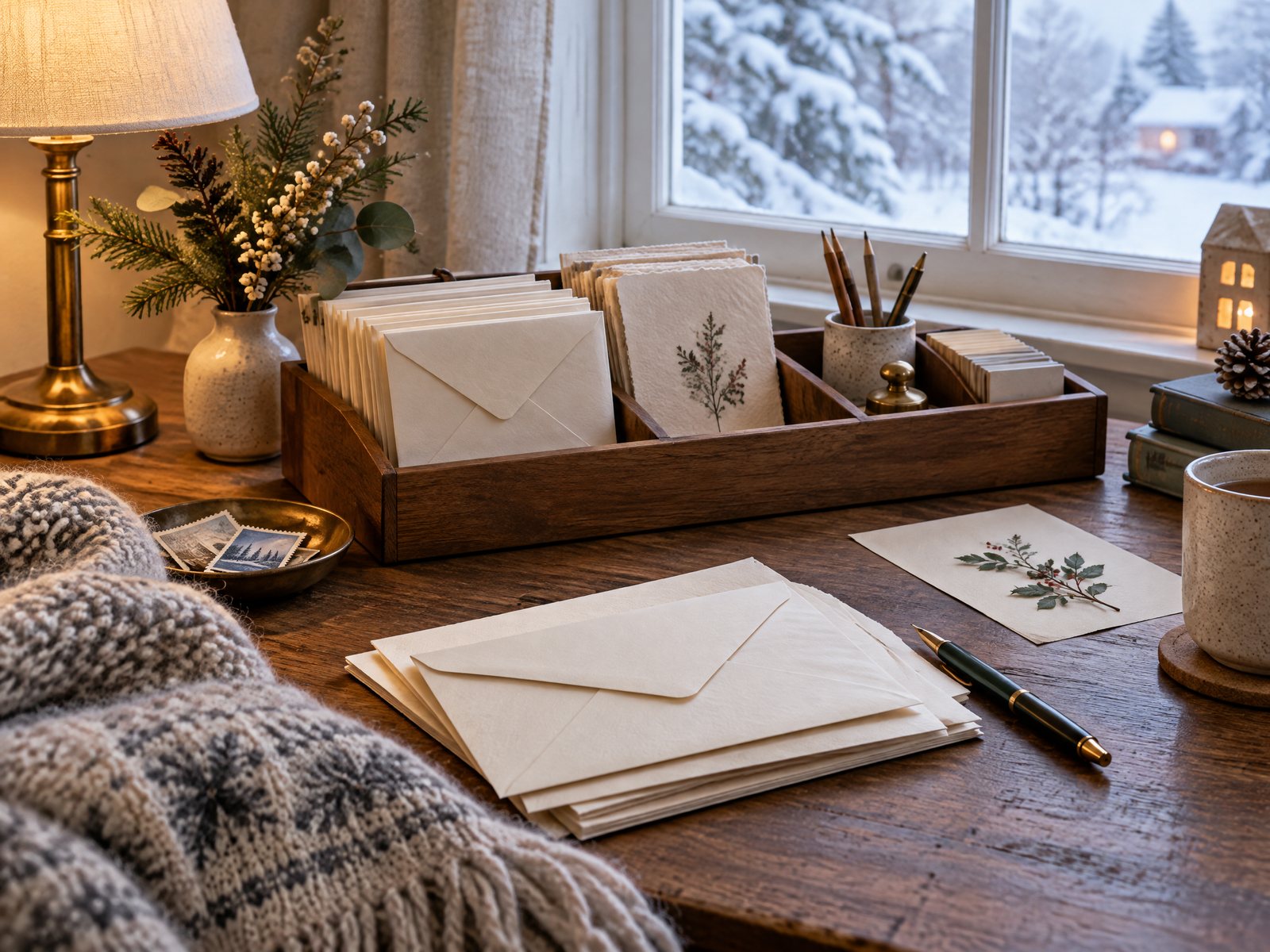
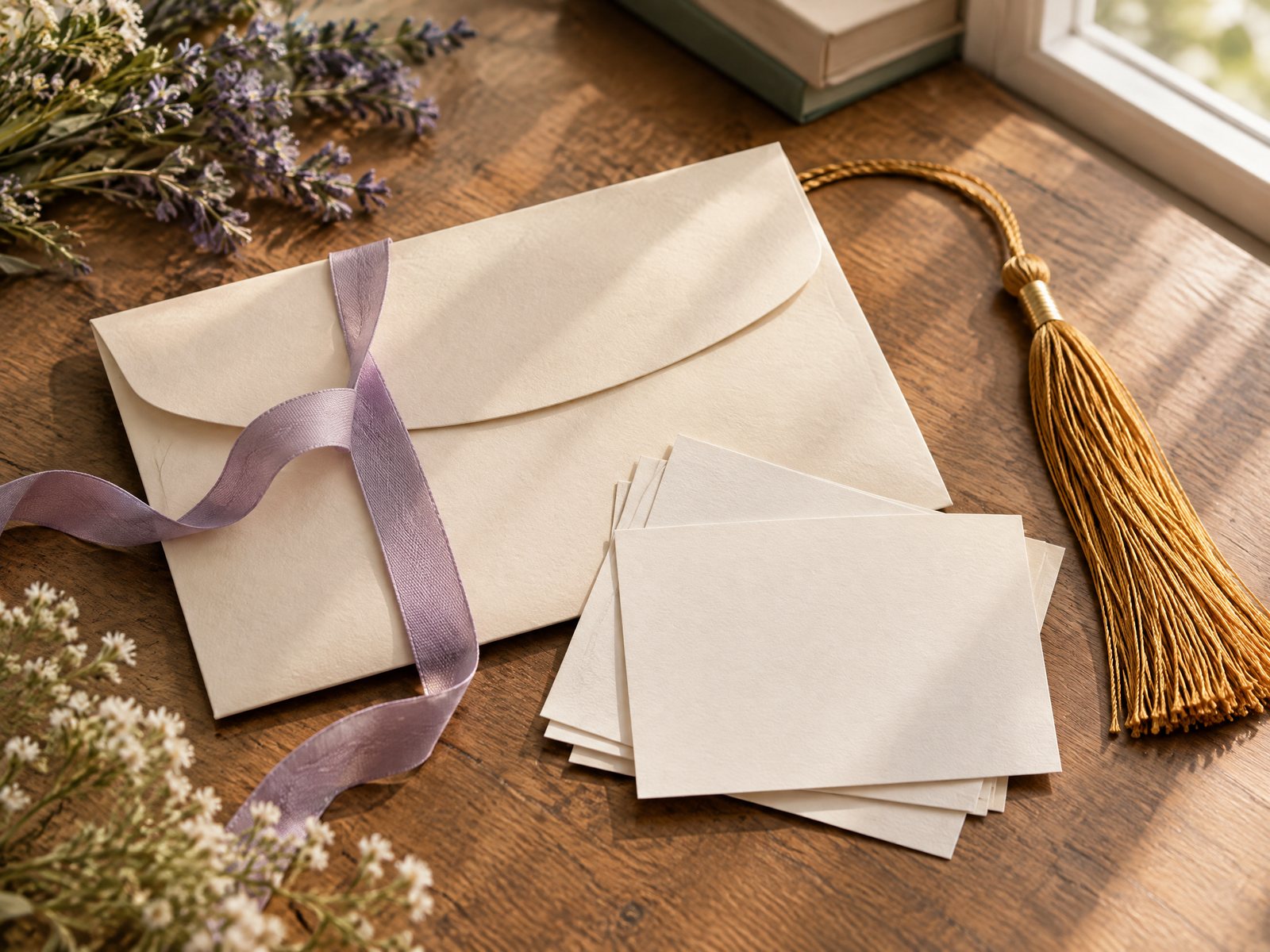
The envelope is part of the presentation, but it is also a physical limit. Farouk’s envelope selection is a practical place to compare the available styles. For a coordinated pair, Botanical Bliss Envelopes offer a floral direction, while Pastel Academia Envelopes suggest a softer scholarly mood. These are catalog examples selected by the shop; they are not presented as designs manufactured by Farouk itself.
Both examples are listed as A7 envelopes, approximately 5.25 by 7.25 inches, in sets of 10. That gives the project a generous outer boundary, but do not treat the envelope dimensions as the size of the artwork. Leave room for several pieces, a brief note, and a little air so nothing has to be forced into a bend. Make a paper test first: cut scrap paper to the size you expect to use, stack the pieces, and slide them inside. If the pile catches at the flap, reduce the quantity or use thinner stock.
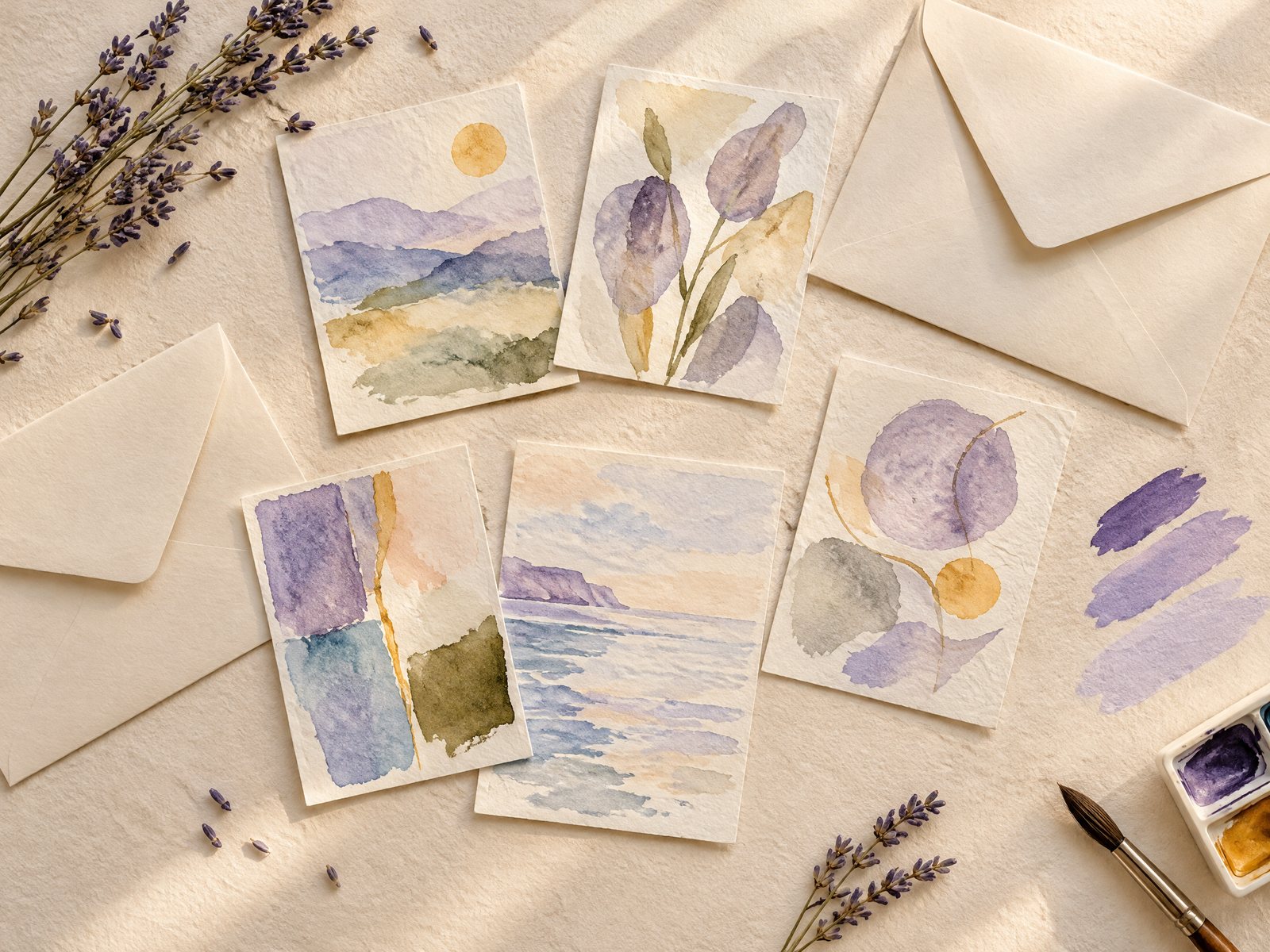
A small art piece can be a postcard-like rectangle, a folded miniature card, a collage tile, or a flat paper rubbing. Select a format that suits the medium. Watercolor-style marks may need a sturdier sheet than pencil sketches; a collage with raised scraps needs more clearance than a single ink drawing. You do not need to announce a precise technical specification to your friend. Simply agree on “flat pieces that fit comfortably” and show a quick paper mock-up if either of you is unsure.
Treat the envelope as a frame, not a promise that the contents will match it. A botanical envelope can hold geometric marks, while a pastel-academia envelope can contain bright shapes. If exact visual coordination matters, make that part of the invitation; otherwise, let the outside provide a gentle introduction and let the original art carry the surprise.
Build two related sets without copying each other
The most satisfying exchange has a shared rule and individual decisions. Use a simple three-part structure: one observation, one transformation, and one wild card. For a “things that float” theme, the first piece might show a real object, the second could distort its shape, and the third could use only color and movement. Your friend can follow the same structure without having to imitate your subject or technique.
Another useful method is a limited visual ingredient. Agree on one color, one recurring shape, or one word such as “open.” Keep the ingredient loose. If you choose lavender, one person might make a lavender wash and the other might draw a lavender-colored door; the connection is visible without becoming a matching set. When using a recurring shape, limit it to one or two appearances per piece so it remains an accent rather than a stencil.
Write the rule on a separate slip before you start. This prevents mid-project drift. A note might read: “Three pieces, each smaller than the palm, using one warm color and one found-paper texture.” The slip is a creative brief, not a grading rubric. If a piece breaks the rule but feels right, keep it and adjust the note rather than discarding the work.
Consider making one piece deliberately unfinished. A blank corner, an interrupted line, or a small area reserved for the other person can invite continuation, but ask first whether collaborative marks sound welcome. Some people enjoy adding to a work; others prefer receiving a complete object. If you do include an unfinished element, label it clearly: “Optional: add one mark if you feel like it.” That wording preserves choice.
A short caption can add context without turning the envelope into an essay. Name the prompt or the material, not the correct interpretation: “Made from the sound of rain on the window” is an invitation; “This represents our friendship” may place an emotional burden on the recipient. Do not reproduce lines from a poem, song, or artwork that you did not create. Original marks, your own words, and general prompts keep the exchange personal and uncomplicated.
Test the packet, then send an easy invitation
Before sealing, lay out the contents in order. Put the brief note on top, followed by the artworks separated by plain paper if their surfaces might rub. Remove loose glitter, wet paint, or bulky embellishments that could transfer or catch on the flap. If a piece is fragile, identify it as delicate and decide together whether the project should remain a hand-delivered exchange rather than an item sent through the mail. This is a practical choice, not a claim about postal handling.
Check privacy before the packet leaves your desk. Use only the address or delivery method your friend has voluntarily provided, and avoid writing personal details on an artwork that might later be displayed. If the envelope is a gift at a gathering, ask whether the person wants to open it in public. A quiet handoff can be more comfortable than a surprise reveal in front of others.
The outside can carry a simple project name, but it does not need a dramatic announcement. “Three small blue things” is enough. Inside, include the agreed boundary and one response option: “Send a photo, a note, or nothing until you feel like making something.” If you want a future exchange, propose a check-in window rather than a deadline: “If this was enjoyable, we can choose another theme next month.”
Common failures are easy to correct. If the project feels too broad, reduce the theme to a single sensory observation. If both sets look unrelated, add one shared ingredient to the next round instead of remaking everything. If one person produces polished pieces and the other sends rough sketches, emphasize that the rule was participation, not finish. If the envelope is crowded, remove the least meaningful item and keep the stronger three. If nobody knows how to respond, explicitly retire the exchange: receiving the art was the response.
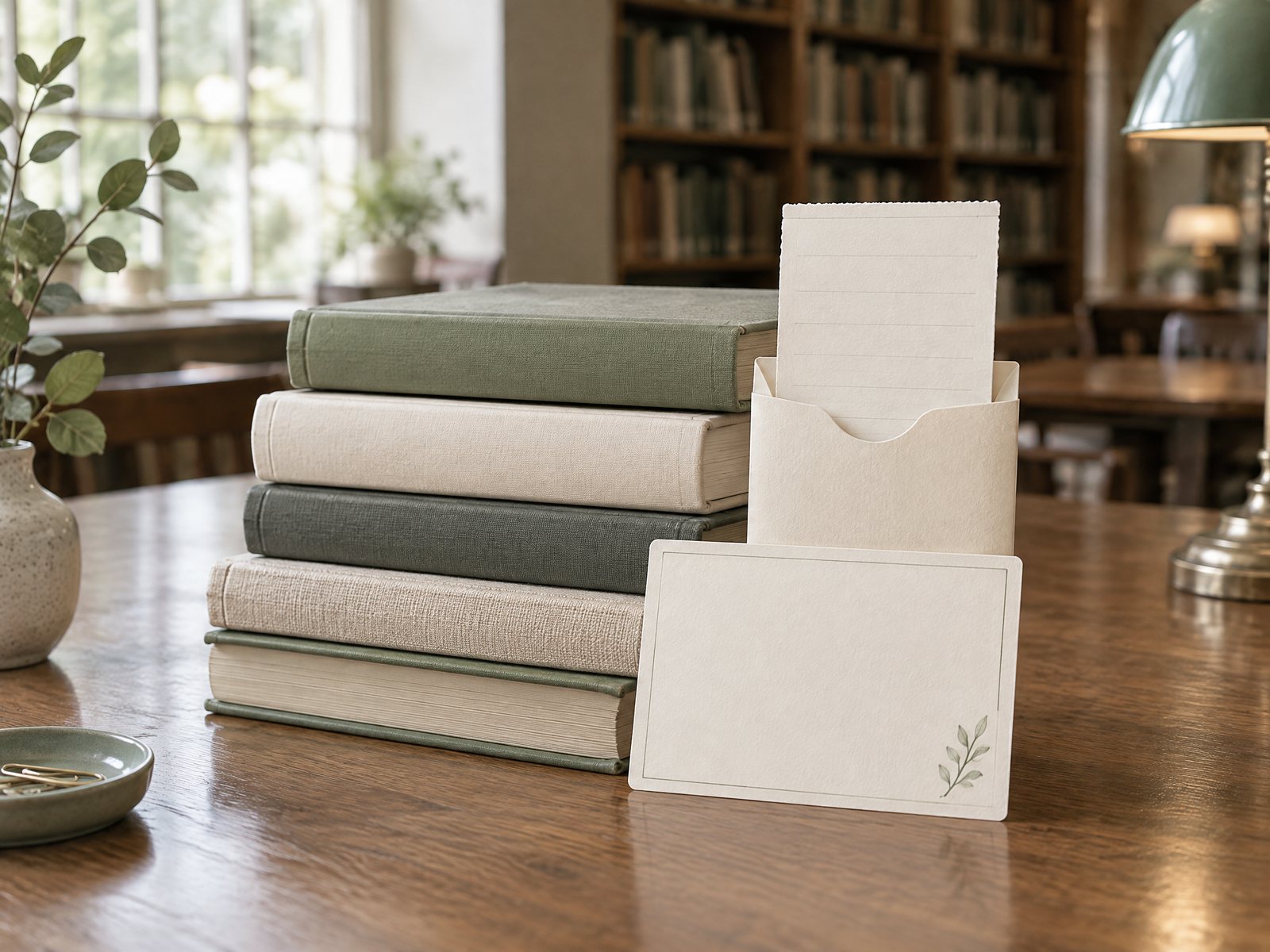
For a different presentation, pair the envelope with a small, flat note card rather than adding more art. Reading Room Note Cards are listed as 3-by-5-inch cards with one lined side and one blank side, a useful format for a brief caption or an optional reply. Again, choose according to the current catalog listing and confirm availability when ordering; the shop’s bag prepares an email order request, so inventory, taxes, and shipping need confirmation rather than assumption. For questions about a selection or an order request, use Farouk’s contact page; basic shop information is also available on the about page.
A shared mini-art envelope succeeds when it stays small enough to finish and open enough to interpret. Give the exchange a theme, a limit, and an exit; then let the two people bring different hands, references, and levels of confidence. The result may be three tiny images, a few marks on paper, and a note that takes less than a minute to read. That modest scale is the point: it makes room for attention without asking either friend to perform.
Related reading: Explore How to Start a Reading Journal You Will Actually Use, A Personal Playlist Paper Gift with Farouk, and A Photo-Caption Envelope with Farouk Paper Goods for other ways to give a small paper project a clear, personal boundary.