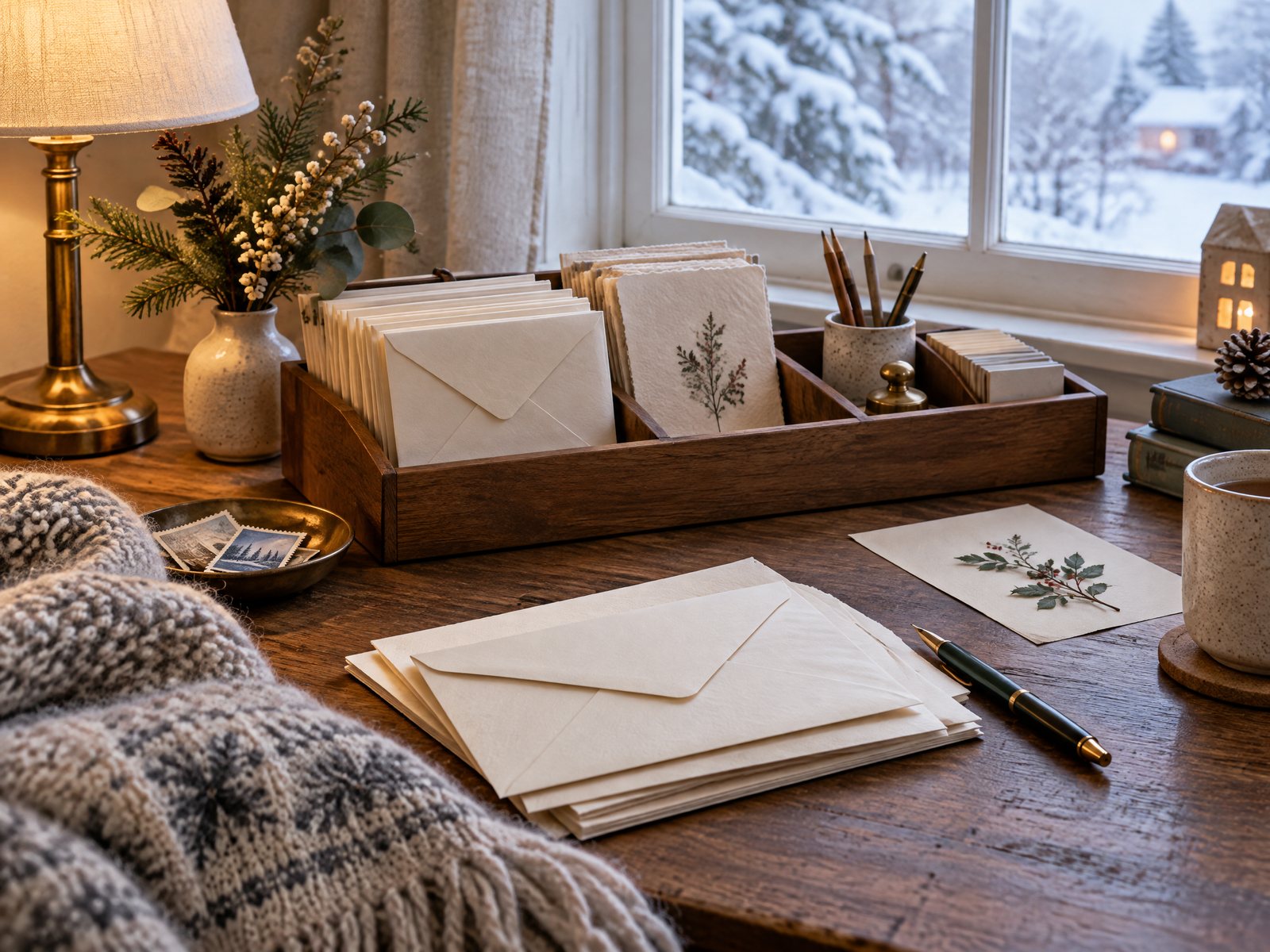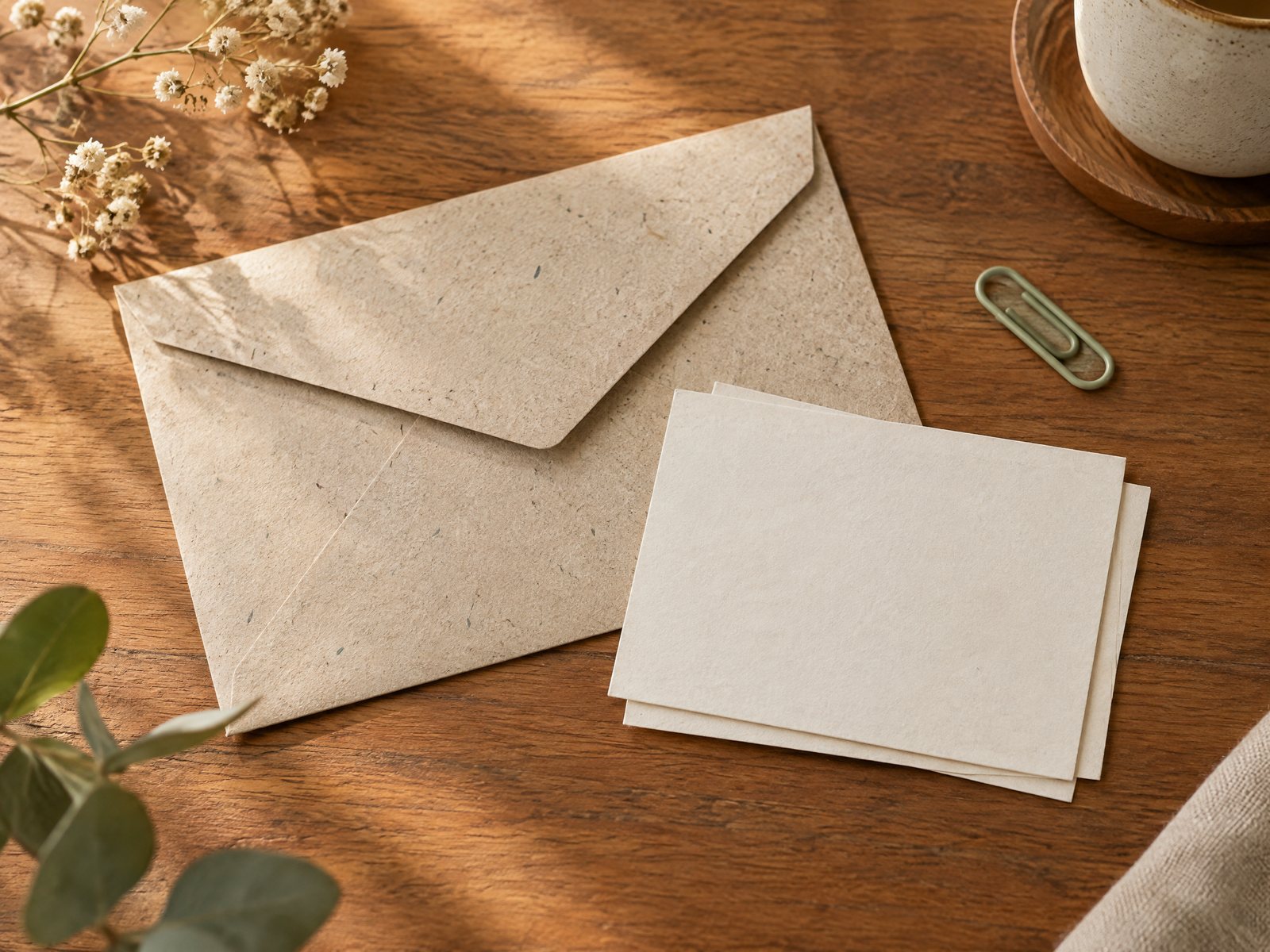
A half-used envelope, an attractive backing card, or a blank corner of a stationery sheet can feel too useful to discard and too awkward to use. The problem is not a lack of ideas; it is deciding what is genuinely clean, private, and suitable for a second job. Farouk Book Store offers a broad editorial selection of paper goods, so it is a helpful place to start when you need a fresh envelope or note card to pair with what you already have—not a reason to treat every piece of paper as endlessly reusable.
This is a small, practical approach: inspect the piece, remove identifying information, give it a modest new purpose, and stop when the result becomes inconvenient. It makes no environmental certification claim, measures no saved resources, and assumes no particular manufacturing story. It simply treats usable paper with attention.
Start with a three-question paper check
Before cutting, folding, or writing, ask three questions: Is it clean? Is it private? Is it structurally sound enough for the new task?
“Clean” means free of food residue, oily marks, moisture, mold, strong odors, or anything that could transfer onto another item. A paper scrap from a dry desk drawer may be fine; a piece that sat beneath a drink is not worth rescuing. Do not try to disguise stains with decoration when the paper will touch a book, photograph, or gift.
“Private” means that no name, address, phone number, order detail, handwriting, barcode, or message remains visible. Turn an envelope over and check every flap, interior, and edge. A neatly cut address panel can still reveal a surname on the reverse. If the information cannot be removed without making the piece fragile, discard or recycle it according to your local arrangements rather than passing it along.
“Sound” depends on the destination. A slightly softened corner can work as a temporary desk note but fail as a protective pocket. A small crease may be harmless on a collage scrap and annoying on a card insert. Match the flaw to the task instead of pretending the flaw is not there.
A quick sorting system helps. Make three piles: ready to reuse, private information to remove, and not suitable. The third pile is not a failure. It prevents a reuse project from becoming a drawer full of questionable fragments.
Give envelopes a second job without exposing the first one
An envelope can become a temporary holder for loose paper: recipe notes, a short reading list, receipts you plan to file, or paper prompts for a game night. Keep this use private and informal. Do not use a reused envelope to mail a document merely because it looks intact; a crossed-out address, weak adhesive, or confusing markings can create avoidable problems.
For a clean, unmarked envelope, label the new purpose on a removable slip rather than writing directly on the surface. For example, place a small note inside that says “ideas to sort” or “library receipts.” That keeps the outer paper flexible if the envelope needs another role later. Avoid storing passwords, identity documents, medical information, or financial records in a repurposed piece unless you have a secure system appropriate to those materials. This article is about paper handling, not data security advice.
If you need new envelopes for a deliberate paper project, the envelopes collection can provide a starting point. The Botanical Bliss Envelopes are a useful example of choosing a purpose-built set when appearance, consistency, and a clean presentation matter. Farouk is presenting a shop selection here; the store should not be read as the manufacturer of every catalog design.
A common failure case is the “almost reusable” envelope: its flap is torn, the interior has writing, and the front carries an old address. Cutting it into decorative shapes may seem clever, but the remaining fragments can still reveal information. If the privacy check fails, move on. A fresh scrap of plain paper is better than a pretty piece that should not be shared.
Turn safe scraps into small, useful paper tools
Once a scrap passes the check, choose a task that suits its size. Narrow strips can become page flags for a personal notebook. A blank rectangle can hold a short packing checklist, a plant-observation question, or a reminder to return a borrowed item. A larger, clean panel can serve as a backing card for a small group of loose stickers or paper cutouts.
Keep the job temporary when the material is uncertain. A scrap used as a desk sorting card does not need to survive months in a bag. If it curls, tears, or becomes visually confusing, replace it. Reuse should reduce friction, not create a maintenance project.
For decorative pieces, use the same restraint. The Penpal Snail Mail Aesthetic Matte Sticker Sheet is designed for letters, envelopes, planners, journals, and other paper projects, and its sheet format makes it easy to reserve a few motifs for separate jobs. You might place one sticker on a clean scrap as a temporary category marker, while keeping the rest for a proper letter or journal page. Do not apply a sticker to an old address panel and assume the information is gone; cover only after checking that the underlying text cannot be read around the edges.
Another practical option is a note-card pairing. A clean envelope that has lost its original occasion can hold a new, private note, while a fresh card keeps the writing surface consistent. Pastel Academia Note Cards can anchor a small correspondence set when you want a coordinated look without forcing a reused scrap to carry the whole presentation. The useful decision is not “reuse everything”; it is “reuse the safe supporting piece and buy or select a clean primary piece where that matters.”
When cutting, draw the smallest shape that will do the job. Oversized scraps invite vague future plans and then disappear into storage. A 2-by-3-inch rectangle may be enough for a label; a narrow strip may be enough for a page marker. The goal is a clear function, not maximum extraction from every sheet.
Set boundaries for privacy, presentation, and storage
Reuse becomes less appealing when the paper’s history is visible. For personal use, a faint reverse-side mark may be acceptable on a rough planning card. For a gift, shared notebook, community exchange, or outgoing mail, use a stricter standard. The recipient should not have to inspect the paper to discover someone else’s address or message underneath.
Try a light test before committing: hold the scrap near a window or lamp, tilt it, and check both sides for show-through. Then read the edges, not just the center. If a name or number appears anywhere, trim farther only if doing so leaves a stable piece. Otherwise, keep it for private sorting or let it go.
Store approved pieces in one small folder or envelope marked by function, not by an ambitious promise. “Temporary labels,” “clean collage scraps,” and “notes to sort” are more useful than “someday.” Set a review date—perhaps the next time you tidy your desk. If a scrap has not found a purpose by then, it has already told you that the purpose was not needed.
Do not mix questionable paper with clean stationery. A damp or scented piece can affect neighboring sheets. Keep adhesives, ink, and loose clippings away from items intended for a polished letter. If a reused envelope has a weak seam, reinforce it only for light internal storage; do not represent it as secure packaging.
The Dreamy Thoughts Cute Aesthetic Sticky Notes show another useful distinction: a purpose-made adhesive note is convenient for short reminders, while a rescued envelope fragment may be better as a removable sorting card. Choose the tool that makes the next action obvious. A scrap is not automatically better than a new note, and a new note is not automatically necessary for every tiny task.
Know when to stop and choose a fresh piece
Stop reusing when cleaning, hiding, trimming, or explaining the paper takes longer than the task. Stop when a privacy concern remains. Stop when the paper may carry moisture, residue, or an unknown substance. Stop when a new recipient deserves an unmarked surface. These are practical boundaries, not moral judgments.
It also helps to separate reuse from repair. Repair can make a sound item useful again; it cannot make confidential writing disappear. A folded envelope may be fine for holding your own receipts, while a torn envelope is not a substitute for a reliable mailing envelope. A decorated scrap may brighten a private notebook, while a visibly repurposed panel may not suit a thank-you note.
If you are ordering from Farouk Book Store, remember that the site bag prepares an email order request rather than functioning as a payment checkout. Inventory, taxes, and shipping need confirmation. That makes it sensible to choose a small, specific list: perhaps one clean envelope set, one note-card set, or a sticker sheet for a defined paper project—not an oversized pile justified by vague future reuse.
A calm paper habit has room for both choices. Use the clean scrap that genuinely fits. Select a fresh piece when privacy, strength, or presentation calls for it. The value is in making a clear decision and giving the material a fitting job, without turning an ordinary stationery choice into a grand claim.
If you need help selecting a format or checking a current item, contact Farouk Book Store.
Related reading: Envelope Sizing for Note Cards and Small Paper Gifts, Stationery Care and Storage in Warm, Dry Climates, and Why Handwritten Greeting Cards Still Matter.