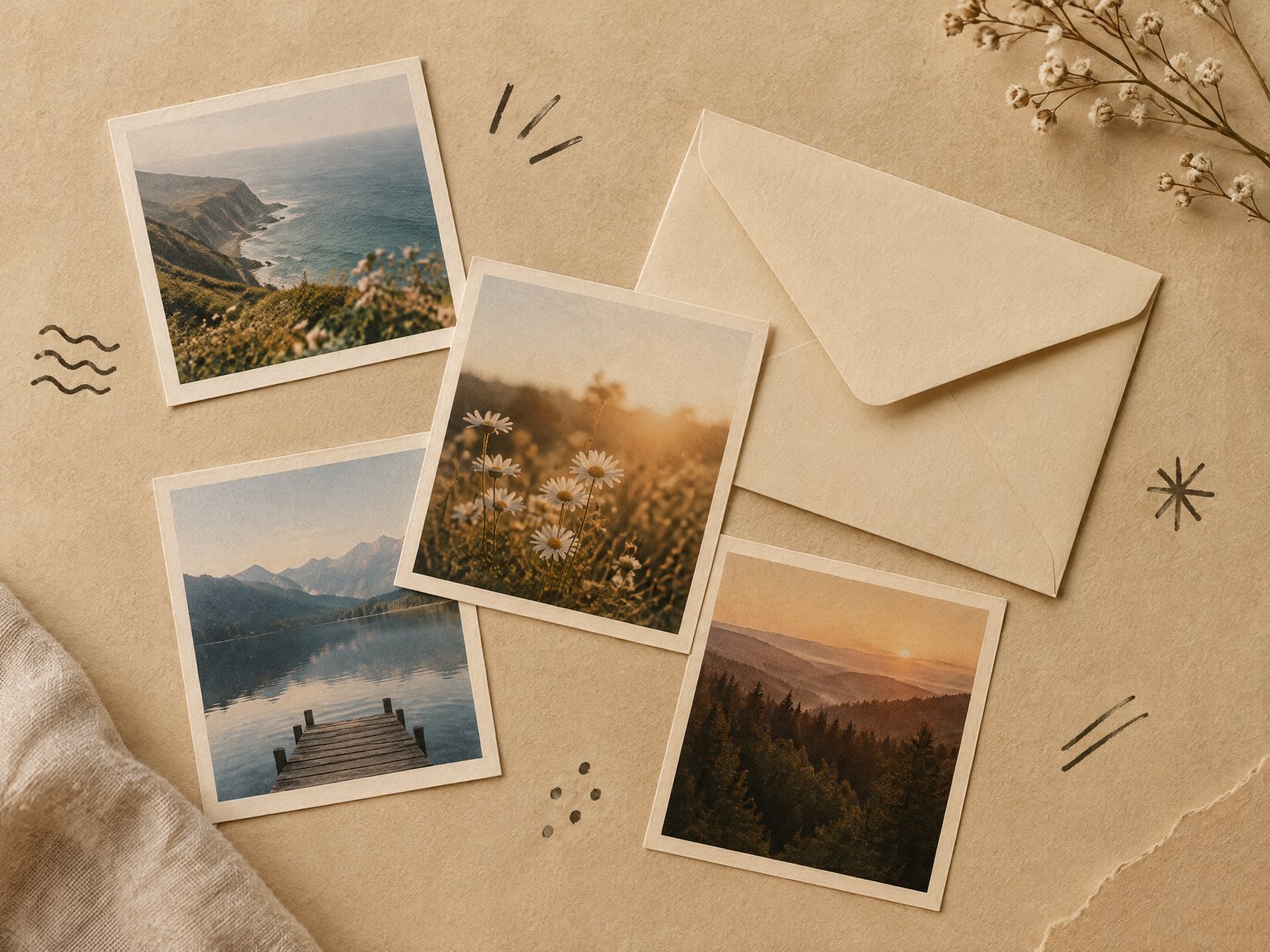
A handful of photographs can be meaningful and still be awkward to give: too private for a public scrapbook, too loose in a drawer, or too important to squeeze into a long message. A small photo-caption envelope gives those images a clear boundary. At Farouk Book Store, the idea is less about decorating every surface and more about selecting a few pictures, adding your own words, and making a compact paper object that the recipient can open at their own pace.
The project works for a birthday, a move, a friendship milestone, or an ordinary afternoon you want to remember. It does not require a large album or a complicated craft kit. The strongest version usually contains three to six photos, one short caption per image, and an envelope that feels intentional without making the contents look like a performance.
Start with permission, privacy, and a clear purpose
Before printing anything, decide who is allowed to see each image. A photo may include a friend, child, coworker, home interior, name badge, license plate, or another detail that was never meant for wider circulation. Ask the people pictured if sharing the image in this format is comfortable, especially when the envelope might be opened around others. If the recipient is not the person who took the photo, consider whether the photographer’s permission matters as well.
Keep the purpose narrow. “A few moments from our weekend” gives you a useful boundary; “everything from the last year” invites an unmanageable stack. A compact envelope can hold a sequence, not an archive. Choose one of these practical frames:
- One shared day: three moments that show a beginning, middle, and small closing detail.
- A place remembered: a doorway, a view, and an object that would otherwise be hard to explain.
- A quiet thank-you: images connected to a person’s help, humor, or presence, without exposing a private conversation.
- A transition marker: a few photographs from a move, new job, finished project, or changed routine.
Do not include documents or sensitive records simply because they appear in the background. Crop them out before printing, or choose another image. If a photo makes you hesitate, leave it out. The envelope should feel safe to open, not like a test of how much personal information the recipient will accept.
Choose the paper pairing before you write
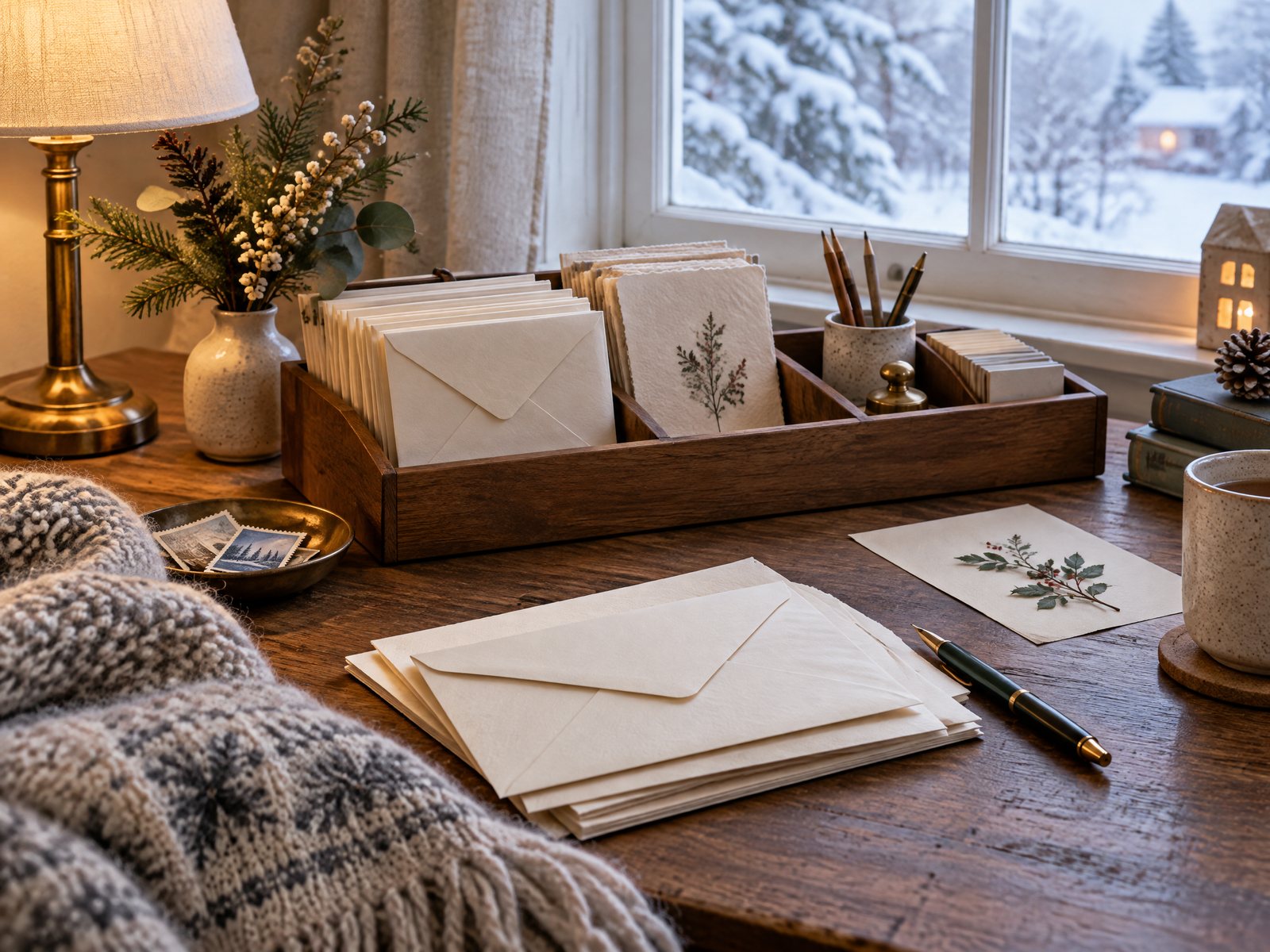
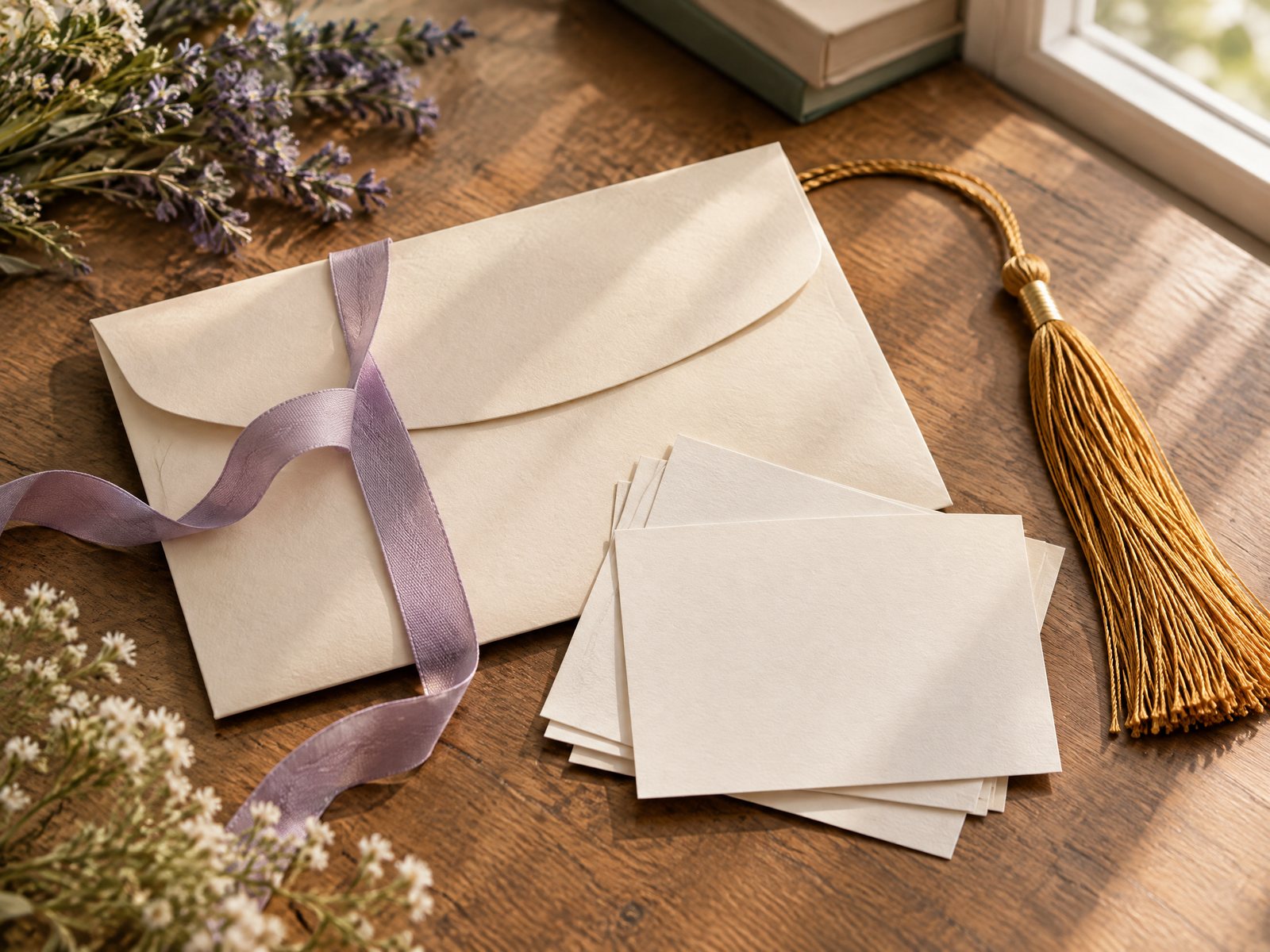
The envelope is the container and the cards are the speaking surface. Farouk’s envelopes collection is a useful place to compare the visual weight of available options, while the Botanical Bliss Envelopes offer a floral printed setting for a gentle, personal sequence. Their listed format is A7, approximately 5.25 by 7.25 inches, and the set contains 10 envelopes. Treat those specifications as a planning reference: measure your printed photos and caption cards rather than assuming every combination will fit comfortably.
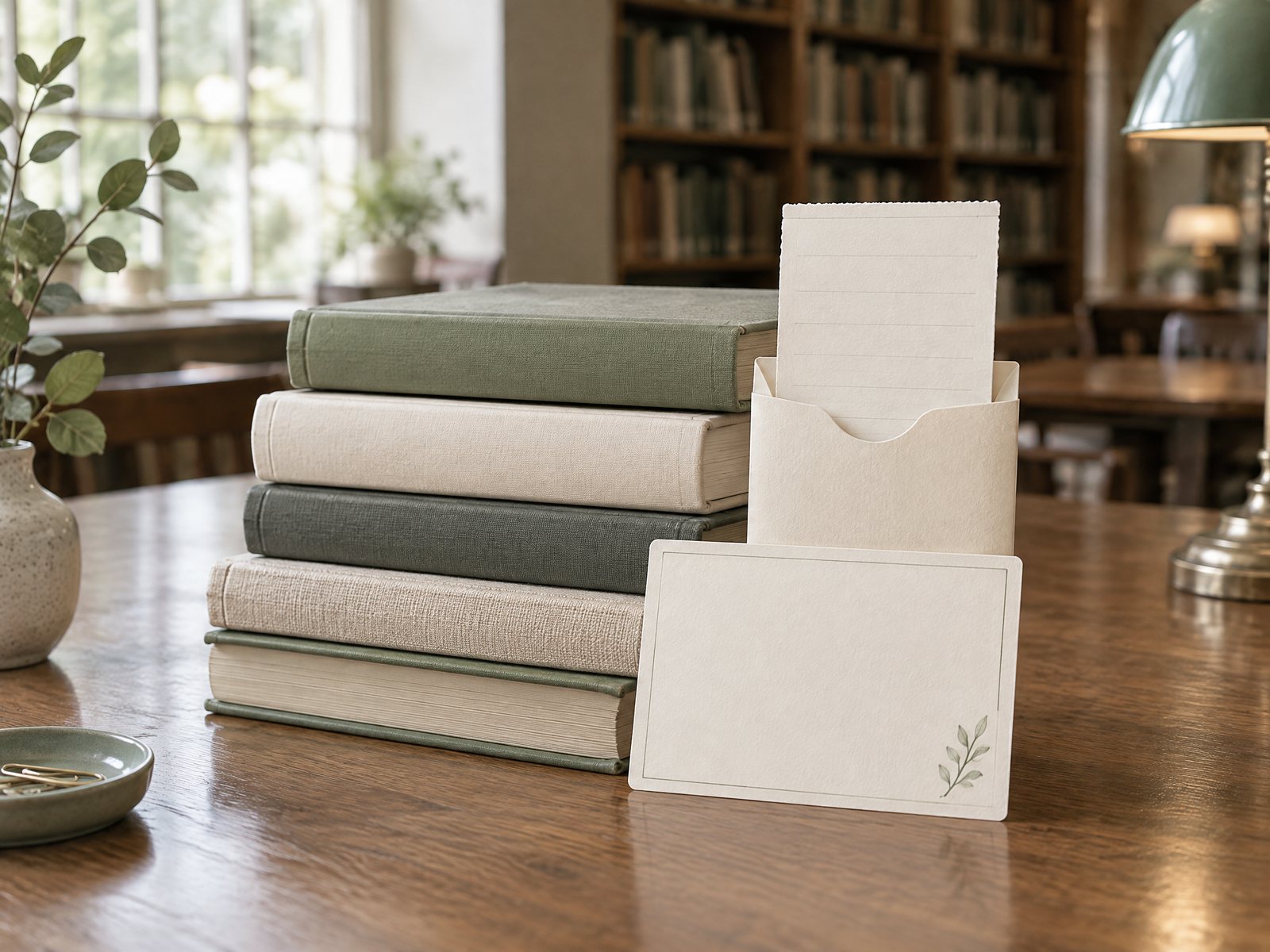
For a more controlled writing surface, Reading Room Note Cards are listed as 3 by 5 inches, with one lined side and one blank side. That gives you a simple division of labor: write the caption on the lined side and use the blank reverse for a date, a tiny sketch, or a discreet sequence number. The Pastel Academia Note Cards use the same listed 3 by 5-inch format and pair a ruled side with a blank reverse, so they can support a different visual mood without changing the basic workflow.
These are examples from Farouk’s shop selection, not a claim that Farouk manufactures every design in the catalog. Compare the printed envelope with the photo colors before committing to a combination. A busy floral interior may compete with a bright street scene; a softer image may benefit from that same pattern. If the envelope already carries strong visual detail, keep the cards plain and let the photographs do the work.
A useful test is the three-piece spread: place one photo, one caption card, and the empty envelope on a table. Ask whether your eye lands on the photo first, then the words, then the container. If everything has equal visual force, remove an accent rather than adding another. This is a keepsake, not a sticker composition, so skip decorative stickers and embellishments that make the photos harder to handle.
Write captions that add context, not a transcript
An original caption does more than label the location. It supplies the detail that a future viewer will not know: what happened just before the shutter clicked, why a seemingly ordinary object mattered, or what you noticed that day. Aim for one to three sentences. A short line such as “The first coffee after we found the new apartment” is more useful than “Coffee, Saturday,” but it does not need to explain every feeling.
Try one of these caption structures:
1. Moment plus detail: “We stopped here because the rain finally let up, and the window had the best light.” 2. Shared reference: “You pointed out the crooked sign; I took the picture after we both started laughing.” 3. Then and now: “This was the empty table before the project began. The marks on the edge are still there.” 4. Question for later: “What do you remember noticing first?”
Write from your own memory. Do not copy a lyric, poem, quotation, social-media caption, or passage from a book to make the envelope sound more polished. Your own plain sentence has stronger provenance and avoids putting copyrighted text in a private-looking gift. If the photo came from someone else, you can credit them discreetly on the back of the card or in a separate note, provided that credit does not reveal information they wanted kept private.
Make the tone match the relationship. A caption for a grandparent might explain a place that has changed; a caption for a close friend might preserve an inside reference without making the recipient decode it. Avoid turning the envelope into a demand for reassurance. “I hope this makes you remember me” can feel heavier than “A small record of that afternoon.” Give the recipient room to respond—or not respond.
Read every caption beside its photo, not in isolation. A sentence that sounds warm alone may feel intrusive when paired with an image of someone who was not expecting to be included. If the caption names a difficult event, ask whether the envelope is the right format and timing. A paper keepsake can be considerate without being emotionally exhaustive.
Assemble a small sequence and protect the originals
Print or prepare duplicates when possible. Keep the original digital files in a clearly named folder, and do not write on the back of a one-of-a-kind print until you have checked the ink and surface. Paper, ink, adhesive, heat, moisture, and friction can all change a photograph over time, so the envelope is a presentation container, not a guaranteed archival system.
Start with a dry layout. Put the photos and cards in order on a clean table, then check four things:
- Fit: The stack slides in without forcing the flap or bending corners.
- Sequence: The first image gives enough context for the next one.
- Identification: A date or place appears only where it is useful and safe.
- Balance: No card is so long that it overshadows the photo it explains.
If the envelope bulges, reduce the contents before changing the paper. Three well-chosen photos usually communicate more clearly than ten similar ones. If a card shifts around, use a loose paper belly band or a small removable paper divider rather than putting adhesive on the photo. Avoid glue, tape, or stickers directly on photographic surfaces unless the print and adhesive are explicitly compatible; ordinary craft materials can leave residue or make later removal difficult.
For the outside, write only what is necessary. A first name, a neutral phrase such as “open when convenient,” or no label at all may be appropriate. Do not put a private event, full address, or sensitive relationship detail on an envelope that could be seen before delivery. If you are handing it over in person, let the recipient decide when to open it. If another person will transport it, use an outer protective sleeve or folder and keep the envelope flat.
After assembly, photograph the finished contents for your own reference only if everyone pictured is comfortable with that record. Store the envelope away from direct sun, damp areas, and places where it will be crushed under heavier books. For photographs that matter beyond the gesture, maintain a separate digital backup and label the files with dates and neutral descriptions. That second copy is a practical safeguard, not a reason to overload the paper version.
A photo-caption envelope succeeds when it respects the image as much as it celebrates the memory. Choose a small story, confirm permission, write words that belong to you, and let the paper support rather than compete with the photographs. Farouk Book Store’s envelope and note-card selection can provide the physical starting point; the meaning comes from the careful decisions you make before anything is placed inside. For general shop context, visit About Farouk Book Store.
Related reading: Why Handwritten Greeting Cards Still Matter, How to Build a Personalized Gift Bundle, and Why Small Gifts Create Big Connections.