The hardest part of a small event guest gift is rarely finding something attractive. It is choosing an item that does not create a new problem: a guest cannot use it, the design feels too personal, the object takes up valuable table space, or people wonder whether they were expected to open it immediately. Farouk Book Store’s catalog can be treated as an editorial selection for solving that narrow hosting problem: a modest, optional gesture that acknowledges each place without demanding a particular reaction.
This is not a plan for a uniform favor line or a retail assortment. It is a way to make a short, considerate choice for a dinner, reading gathering, workshop, celebration, or community table where guests may have different ages, access needs, tastes, and levels of familiarity with one another.
Begin with the guest experience, not the object
Before browsing, define the moment the gift is meant to support. Is it a welcome at arrival, a quiet takeaway at the end, or a small prompt for conversation? The answer changes the right format. A welcome item should be easy to identify and not require instructions. A takeaway can be sealed and left untouched until the guest is ready. A conversation prompt should never force a person to disclose anything about themselves.
Write down four decisions:
- How many guests are actually confirmed? Keep a small reserve only if it is practical; do not assume every invitation becomes an attendance.
- Where will the item sit? A place setting, entry table, chair, or separate exit basket each creates a different reach and visibility issue.
- What must remain optional? Eating, writing, wearing, displaying, and participating are all choices, not obligations.
- What can guests learn without asking? A short neutral label can explain whether an item is for taking, using at the table, or saving for later.
Accessibility begins with the layout. Leave a clear path and do not place a small gift where it blocks a cane, wheelchair approach, plate, name card, or personal device. Avoid tying an item to a glass, utensil, or chair if removing it would create a spill or snag. If the gathering includes children, older adults, or guests with limited dexterity, choose packaging that opens without intricate knots and make sure the item can be moved aside easily.
A useful rule is “one focal gesture, one quiet alternative.” The focal gesture might be a small note card; the alternative might be no-item participation or a take-home envelope. This keeps the table from becoming a test of taste.
Choose a format that carries a small message
For an event place gift, paper is often easier to offer neutrally than a wearable or strongly functional object. It can be read, repurposed, stored, or declined without making the choice conspicuous. The note cards collection is a useful starting point, but the collection should be filtered by purpose rather than by the number of designs available.
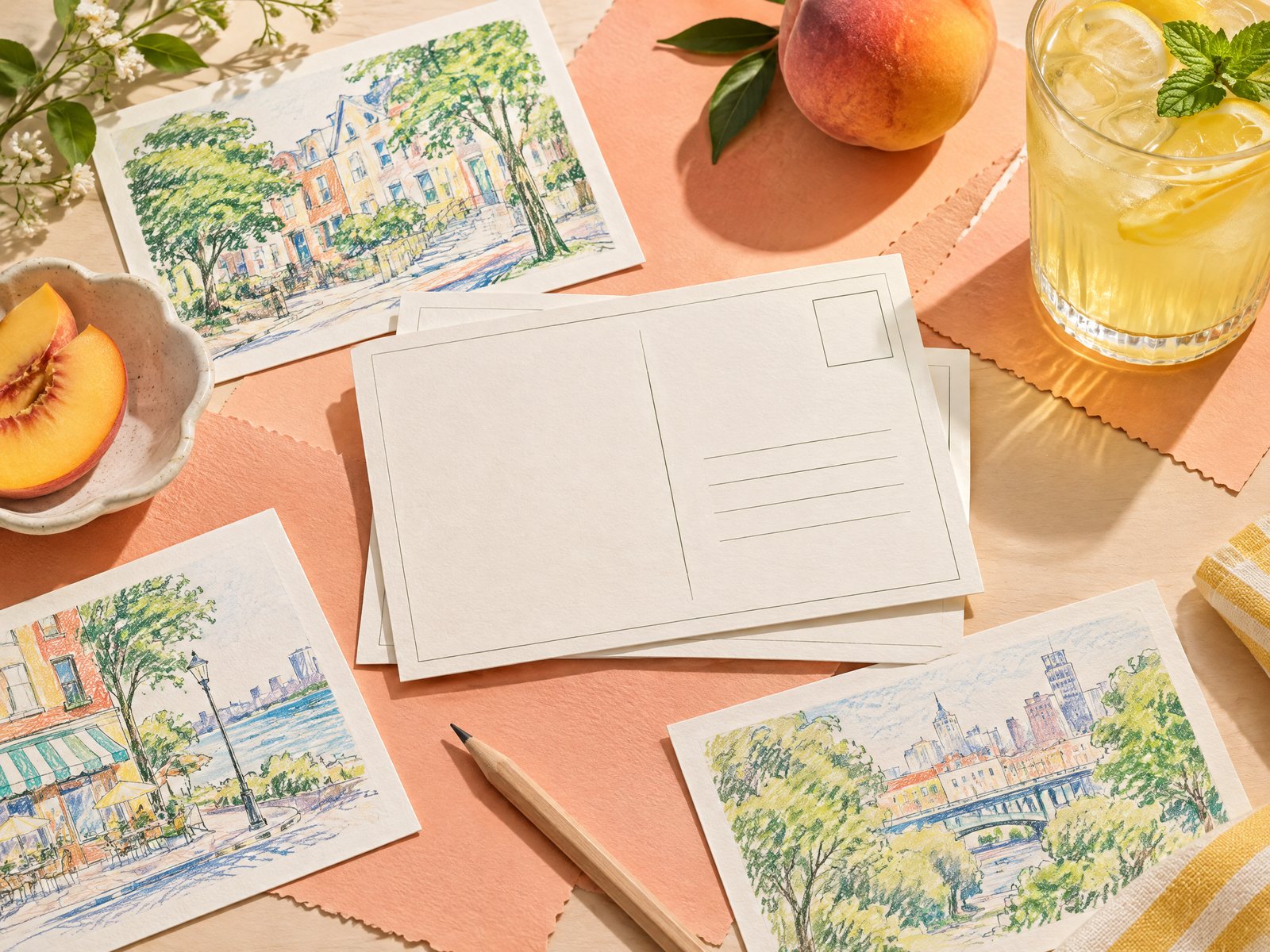
The Pastel Academia Note Cards are an example of a compact option: the catalog describes a bundle of 50 cards measuring 3 by 5 inches, with one ruled side and one blank side. That combination supports a low-pressure gesture. One side can hold a brief host message, while the blank side remains available for a guest’s own note, sketch, or nothing at all. Because the set is larger than a single event’s attendance, it also works when the host wants to prepare a small batch without making a custom object for every person. Use the exact Pastel Academia Note Cards listing to check the current details before planning.
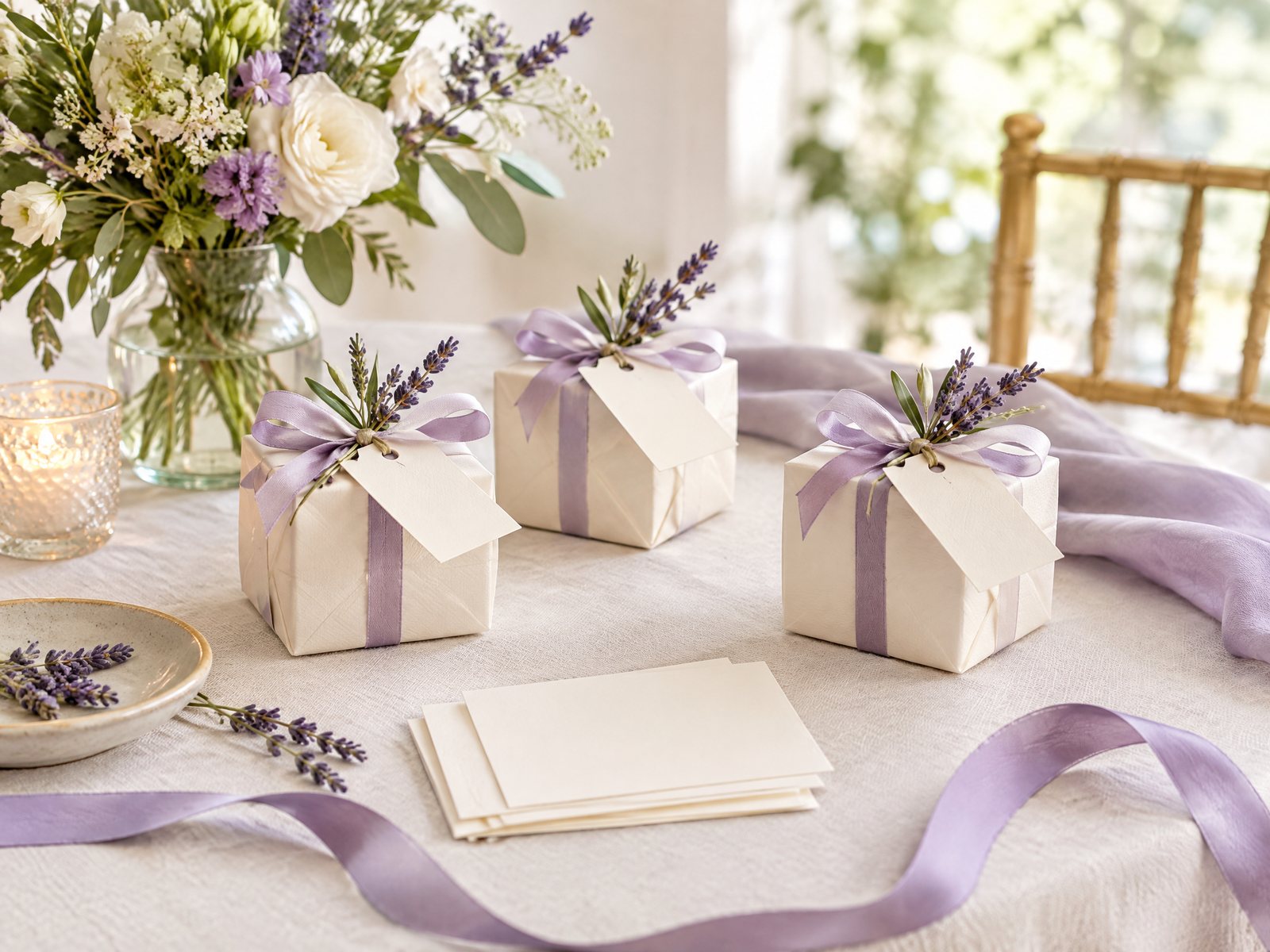
If a card feels too exposed on a place setting, use an envelope as the presentation layer. The Reading Room Envelopes are listed as A7 envelopes, approximately 5.25 by 7.25 inches, in sets of 10. They can hold a short card or a small paper message and keep the gesture private until the guest decides to open it. Their printed interior may make the opening feel finished, but avoid describing the design as suitable for everyone; a restrained version may be preferable for a formal gathering, while a brighter one may fit a creative event. See the Reading Room Envelopes product page for the catalog description.
A third direction is a useful shared object rather than one item per person. The Botanical Bliss Spiral Lined Notebook is described as a 7 by 9 inch notebook with 120 lined pages and a spiral binding. That scale is better suited to a host’s welcome table, community message station, or drawing-and-comment book than to every individual place setting. Invite guests to contribute only if they want to; a blank page should not become a public attendance record. If you use it as a communal book, identify it as optional and keep a separate private way to leave feedback. The Botanical Bliss Spiral Lined Notebook listing provides the actual product details.
These examples illustrate three different jobs: a small individual card, a protective presentation envelope, and a shared notebook. They are not a branded matching set, and Farouk Book Store should be understood as the shop offering an editorial selection rather than the manufacturer of every catalog design.
Build fair choices for different preferences
A thoughtful table does not need a different product for every person. It does need a way for people to opt out without explanation. Prepare a simple two-choice system: “take a note card” and “leave this for another guest.” If you use envelopes, offer sealed envelopes at the exit instead of putting one at every place. This avoids making a guest announce that they do not want a gift.
For visual variety, keep the format consistent and vary only the motif. For example, use the same size envelope for everyone but place two or three designs in a small basket. Do not label designs by personality—avoid claims such as “for the creative guest” or “for the serious reader.” Let people choose by color or pattern, or let a host quietly select one based on a preference the guest has already shared. If someone has a color sensitivity, print concern, or need for high contrast, have an unpatterned alternative ready rather than asking them to justify it publicly.
For writing-related gifts, make the message short and specific. “Thank you for making time to be here” is a complete gesture. A prompt such as “one moment I enjoyed tonight” can be offered as an invitation, but never as a required activity. Avoid collecting addresses, dietary information, health information, or other personal details on the gift itself. If the event is professional or community-based, do not use the card to request a donation, review, contact, or future commitment unless that request has been clearly separated from the gift.
Budget fairness also matters, even when prices are not being calculated in the article. A guest gift is not improved by visible differences in value. If one person receives a notebook while others receive a single card, explain the notebook as a shared event object rather than a special reward. Conversely, do not give a more elaborate item to a speaker, organizer, or VIP at the same public table unless the distinction is intentional and private.
Assemble, place, and adjust without creating pressure
Prepare the items in a short test run before the event. Put one gift at a typical place setting, then sit down and check the sightline, reach, writing space, and cleanup path. Try opening the envelope with one hand. If the card slides under a plate or catches on a napkin, move it to a standing place card or a small basket. If the design competes with names or menu information, reduce the decoration around it rather than adding more signage.
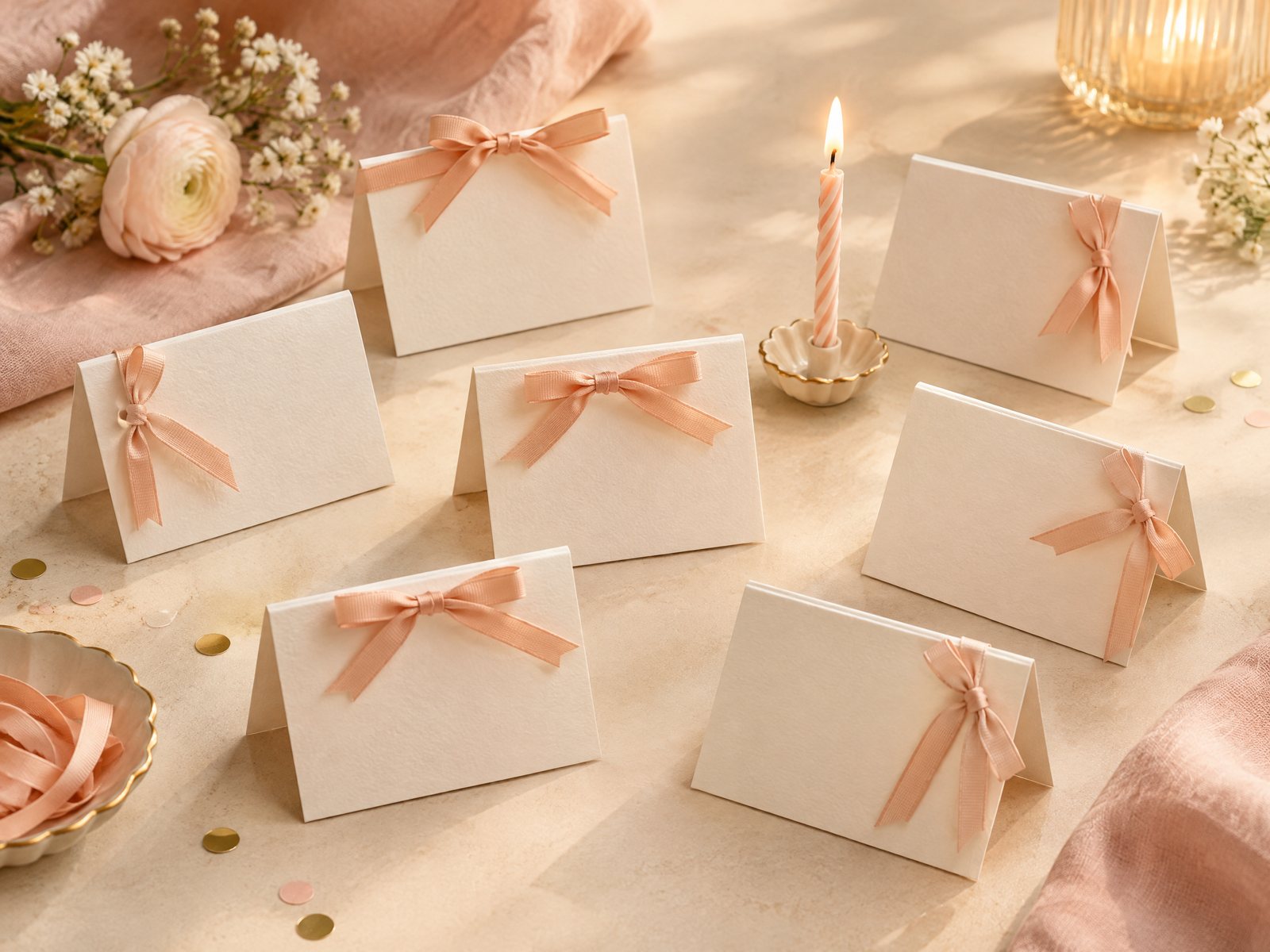
Use a neutral display card with one sentence: “Please take one if useful; leaving it here is completely fine.” This solves several problems at once. It tells guests the gift is optional, prevents a host from repeatedly explaining the arrangement, and makes non-participation ordinary. If the event is seated, place the message where it can be read without turning over a guest’s personal papers. For guests who prefer not to be singled out, make the same choice available to everyone.
Failure cases are useful design tests. If guests begin asking whether the item is edible, add a plain descriptor such as “paper note card.” If the basket becomes a bottleneck, move it to the exit and let people choose later. If several envelopes remain untouched, do not interpret that as rejection; some people may prefer to take them home unopened. If a card’s printed side makes writing difficult for a guest, offer the blank reverse or an unprinted substitute. If a guest has brought a support person, provide the same choice to both without assuming they share preferences.
After the event, gather unused items separately from personal notes. Do not photograph or publish written messages without permission. A small guest gift succeeds when it gives people room: room to accept, decline, use, save, or forget it without social cost. That standard is more valuable than a perfectly matched table.
For more planning ideas, see How to Build a Personalized Gift Bundle and Small Gifts for Book Club Members Without Matching Everyone. If your event includes written appreciation, How to Write a Thank-You Note That Feels Personal offers a separate guide to the message itself.
If you need help selecting a format or checking a current item, contact Farouk Book Store.
Related reading: How to Build a Personalized Gift Bundle · Small Gifts for Book Club Members Without Matching Everyone · How to Write a Thank-You Note That Feels Personal