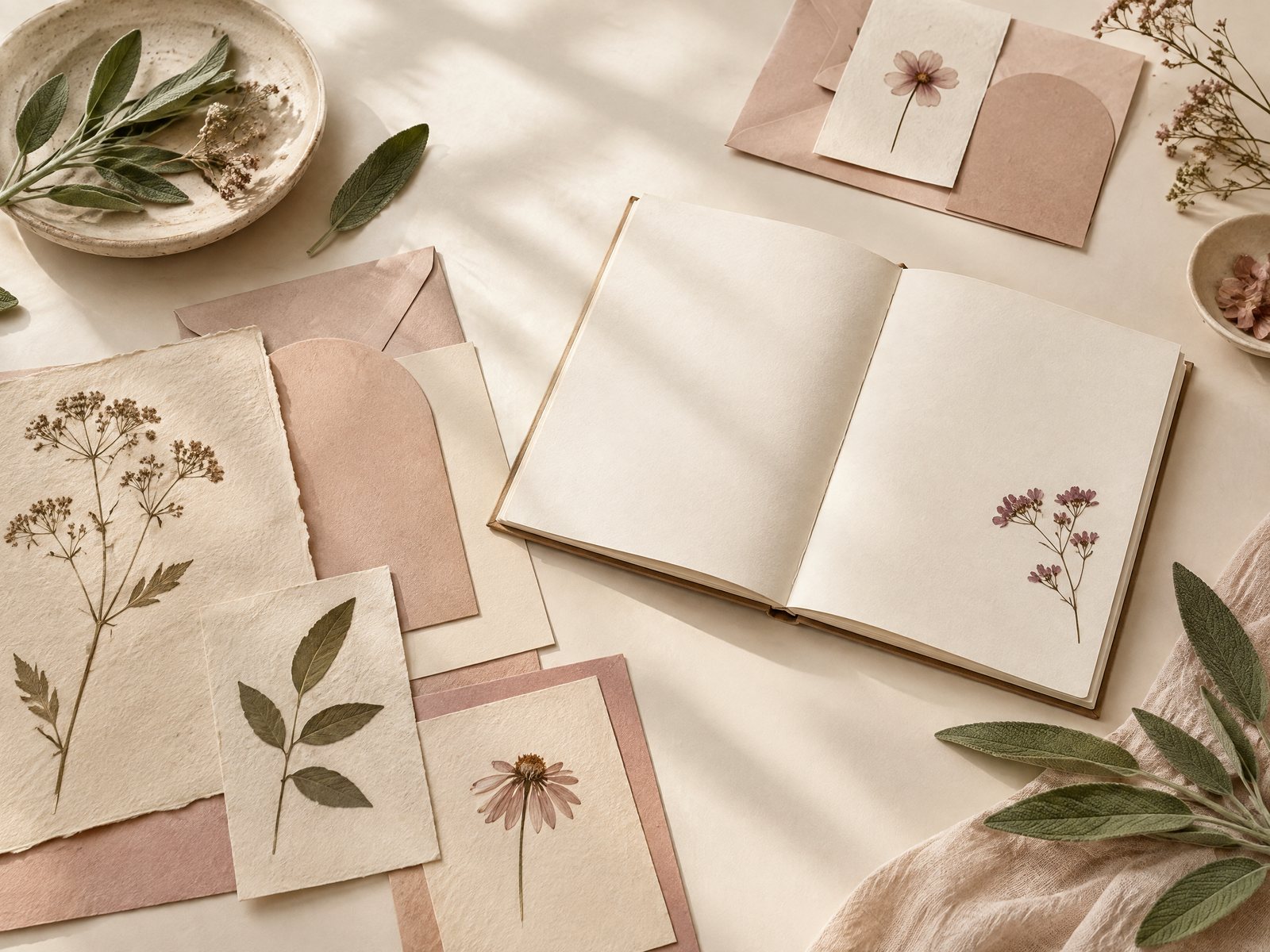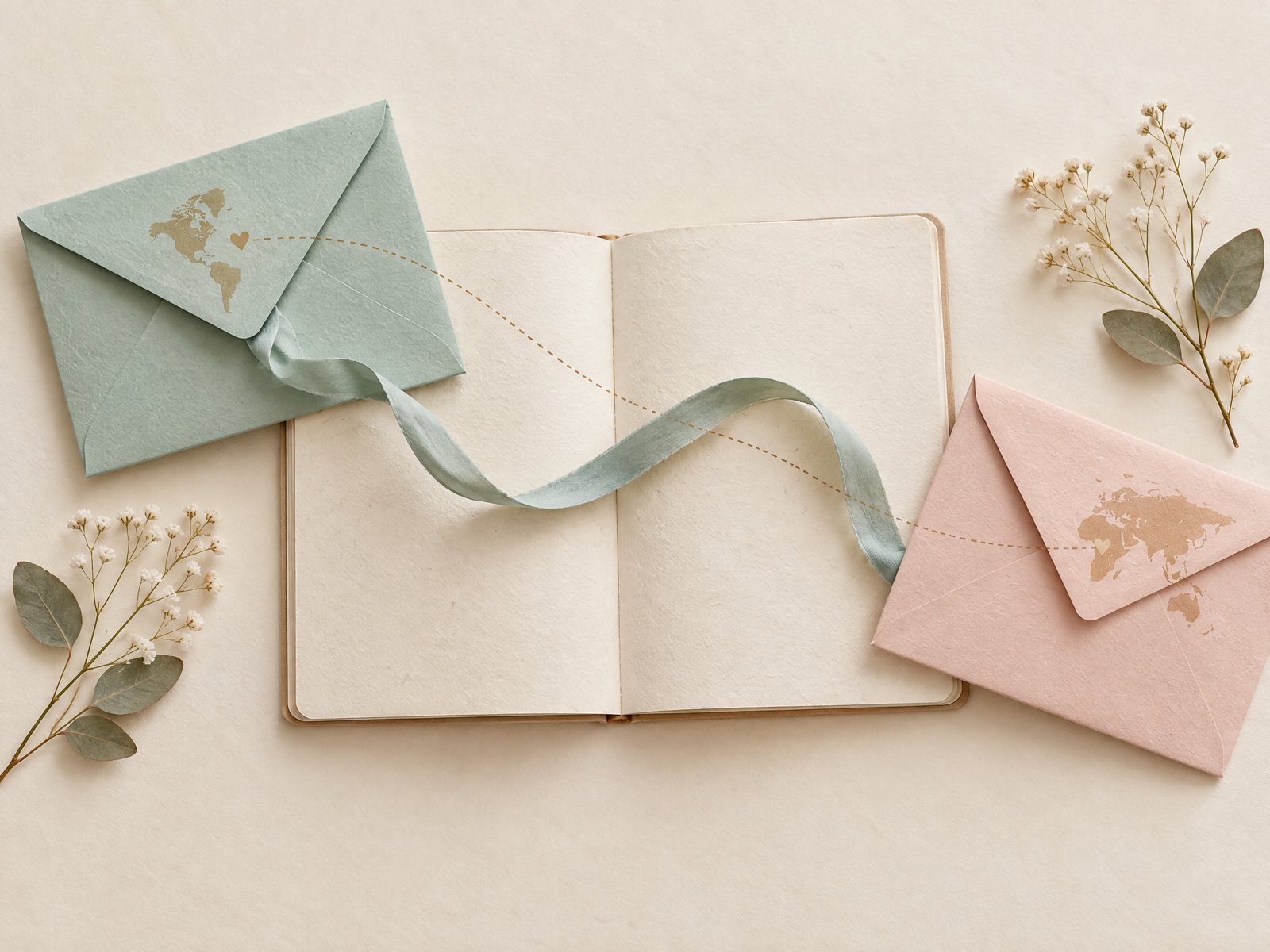
When a friend lives far away, the difficult part is rarely finding another message to send. It is finding a small, repeatable way to say “this made me think of you” without creating an obligation to answer immediately. Farouk Book Store can help you turn that intention into two coordinated paper selections: related enough to feel shared, different enough to respect each person’s taste, space, and comfort.
This is not a pen-pal introduction or a matching-gift challenge. Think of it as a visual thread. One person might use a sticker on a journal while the other uses a note as a temporary page marker. The connection comes from a chosen color, motif, or rhythm—not from requiring identical routines. A good theme should survive different time zones, different communication habits, and a long pause between one parcel and the next.
Start with a connection that does not require private information
Before choosing paper goods, decide what the two selections have in common. A shared theme can be as light as “soft colors and everyday reminders,” “music and reading,” or “small marks of encouragement.” It does not need to encode a hometown, workplace, address, medical detail, family situation, or any other information your friend may not want repeated on an envelope or visible notebook.
Write the theme in one plain sentence. For example: “We are using cheerful, compact motifs that can appear in ordinary reading or planning.” That sentence is a useful filter. If an item only works because it reveals a private fact, leave it out. If the idea depends on your friend photographing their desk, posting a parcel, or replying on a schedule, soften it.
Privacy also affects the outside of the package. Use the recipient’s preferred name and the address they have explicitly given you; do not pass an address to another friend just to coordinate a surprise. Avoid writing a personal message where a delivery worker or housemate can easily read it. Inside, a simple card can say, “Open whenever convenient,” which makes the gesture welcoming rather than time-sensitive.
The theme should also leave space for different forms of contact. One friend may send voice notes, another may prefer occasional letters, and a third may simply enjoy seeing a small object in daily use. The paper selection is an invitation, not a test of closeness.
Build two related palettes, not two identical bundles
Choose one anchor and one supporting detail for both selections. The anchor might be a recurring color family; the supporting detail could be a shared motif or a similar scale. Then vary the remaining choices according to each person’s actual preferences.
Here is a practical three-part structure:
1. Shared anchor: one visual idea both friends would recognize, such as floral lines, record-inspired shapes, stars, or a calm pastel family. 2. Personal branch: one choice that reflects each friend’s habits. A reader may want something that can sit inside a book; a laptop user may prefer one prominent decal. 3. Flexible use: one item that can be used, moved, or kept aside without damaging an object or demanding display space.
For example, one friend could receive a floral-and-music direction while the other receives a single characterful accent in a similar color range. The selections feel like two chapters of the same idea, not duplicate kits. Resist the urge to equalize every detail. Fairness here means giving each person a considered choice, not making the contents visually or financially identical.
A compact starting point from the stickers and labels collection is the Blooming Records Sticker Sheet. Its catalog description identifies 18 record-inspired and floral designs on a 4 in x 6 in matte sheet, labeled waterproof. That combination offers a clear shared anchor: each friend can choose a different design while the visual conversation remains recognizable. Use the sheet as a source of options rather than assuming every sticker must go on a permanent surface.
For a friend who likes brief notes or movable reminders, the Blooming Records Sticky Notes create a related paper moment without duplicating the sticker sheet. The listed format is a 3 in x 3 in pad of 50 sheets with adhesive backing. Pair it with the sticker sheet for one person, then give the other the sheet plus a different small paper component only if that matches their habits. The point is to compare uses, not to make a product checklist.
A third route is the Fortune Teller Sticker, a die-cut vinyl decal listed at approximately 3.5 x 2.6 in, with a matte finish and waterproof, weatherproof material. It can serve as a more singular accent for the friend who prefers one strong image over a page full of small pieces. Because Farouk is a shop with an editorial selection rather than the asserted manufacturer of every catalog design, describe it as an item selected from the catalog—not as a Farouk-designed object.
Match the theme to two different daily habits
Ask two quiet questions before finalizing: “Where might this friend use it?” and “What would make it easy to ignore if they are busy?” The first prevents a decorative item from becoming a burden. The second protects the low-pressure character of the gesture.
For a friend who reads frequently, offer a limited number of small motifs to mark a current book or reading notebook. Keep any note general: “A page that made me pause reminded me of you.” Do not ask for a photo of the marked page or a detailed update. For a friend who plans on a screen, a single decal may be more welcome than a sheet that assumes regular journaling. A third friend might enjoy sticky notes for errands, recipes, or short reminders but dislike anything permanent.
Different preferences can be functional, not just aesthetic. One person may prefer muted colors and generous blank space; the other may like a busier pattern. One may enjoy applying stickers immediately; the other may keep them in a drawer until a fitting project appears. Both responses are valid. Tell them the pieces can be used separately, saved, traded back, or left untouched.
A common failure case is choosing a theme based on an old shared interest that no longer fits. If you have not discussed that interest recently, make it optional: include one small reference, then surround it with neutral or broadly useful choices. Another failure case is sending a fragile-looking arrangement that requires careful display. Replace it with a flat, lightweight selection that can travel through an ordinary routine without becoming a special project.
Make the exchange easy to sustain—and easy to pause
Decide what the gesture actually is before you send it. Is it one shared package sent on the same day, two separate surprises, or a small series with no fixed end? For long-distance friendships, a finite first exchange is often kinder than an open-ended project. “One theme, two selections, and no schedule” gives the idea shape without turning it into homework.
If you want a shared ritual, make the action optional and specific. You might suggest that each friend use one piece during the next book, walk, or desk reset, then mention what they noticed whenever they next talk. Avoid deadlines such as “send a picture by Friday.” A delayed response may reflect work, caregiving, travel, changing access, or simply a different communication rhythm.
Keep the written message short enough to leave room for the recipient’s own interpretation. A useful structure is: why you chose the theme, what they can do with it, and permission to use it differently. “I chose a small music-and-flower thread because it reminded me of our conversations. Use any part of it wherever it suits you; no reply needed.” That is more durable than a long explanation of what every piece is supposed to mean.
Before ordering, review the practical details on the item pages and confirm what is currently available. The Farouk website’s bag prepares an email order request rather than a payment checkout, so inventory, taxes, and shipping still need confirmation. Do not promise a delivery date to your friend until those details are settled. If you need clarification, use the store’s contact page; for general context about the shop and its selection, see About Farouk Book Store.
Finally, make a small “adjustment plan.” If the first selection feels too busy, the next one can use one anchor color and fewer motifs. If a friend dislikes permanent decoration, shift toward removable paper. If the theme feels too sentimental, describe it as a visual link rather than a symbol of the friendship. These changes do not weaken the gesture; they show that the friendship has room for two real people.
A shared theme works best when it is recognizable but not rigid. Let one friend choose the floral record, another choose the single fortune-teller accent, and both decide when—or whether—the pieces enter daily life. The distance remains, but the paper gives the friendship a quiet, flexible point of return.
Related reading: How to Choose Stickers for Journals and Planners, Why Small Gifts Create Big Connections, and How to Build a Personalized Gift Bundle.