A grocery list notepad system is more useful than a single rushed list because it gives every reminder a place, a timing, and a final check. Instead of trying to remember milk while cooking, searching for a pen at the door, and hoping nothing was missed in the shop, you create a small repeatable process. The system below works with an ordinary memo pad, sticky notes, or a larger sheet of paper. It is designed for real households: changing schedules, half-used ingredients, shared errands, and the occasional item that only comes to mind after you have left.
The goal is not to make grocery shopping elaborate. The goal is to move decisions earlier, when you have the time to notice what is missing, then make the shopping list easy to scan when you are in the store.
1. Give every grocery thought a capture point
Forgotten items often begin as unrecorded thoughts. Someone notices that rice is nearly gone, a recipe calls for lemons, or the last roll of kitchen paper is opened. If each person writes in a different place—or relies on memory—the reminder can disappear before shopping day. Start by choosing one visible capture point in the kitchen or household command area.
A compact 3-by-3 pad is useful when the first job is catching short reminders. The Beach Cute Aesthetic Sticky Note contains 50 adhesive sheets, so one note can stay near a pantry shelf, refrigerator, or household calendar. Use it for quick entries such as “oats low,” “cat food,” or “buy birthday candles.” When the note fills, transfer its contents to the main list rather than letting several loose notes become a second filing system.
For a household that wants one larger running list, the Purple Gradient Clouds Aesthetic Message Memo Notepad offers a 4-by-6-inch, 50-sheet memo format. Its pages are non-adhesive, which makes it better for a fixed notepad spot, a clipboard, or a drawer where the current page can be removed and carried. That distinction matters: choose an adhesive pad when you want reminders posted around the kitchen; choose a loose memo pad when you want a clean master sheet for shopping.
Set a simple rule: every grocery thought is written down immediately, even if it feels obvious. Write the item and, when useful, a qualifier: “tomatoes—salad,” “yogurt—plain,” or “light bulbs—warm white.” Qualifiers prevent a second round of uncertainty in the aisle. If a shared household uses the pad, add initials only when clarification may be needed; do not turn the list into a conversation log.
Keep the capture point where decisions happen. A pad hidden in a desk may look tidy but will lose to a refrigerator door, pantry handle, or weekly meal-planning spot. If the pad keeps falling or getting covered by receipts, move it. The best location is the one people can reach with one hand while putting groceries away or preparing food.
2. Convert the running list into store zones
A running capture list is not automatically a shopping list. Before shopping, reorganize it into the order you normally move through the store. This reduces backtracking and makes omissions more visible. Your zones might be produce, bakery, chilled foods, meat or alternatives, pantry, frozen, household, and personal care. Use only the zones that match your usual trip; a five-zone list is often easier to scan than a detailed map of every aisle.
On the next clean page, write the zones as short headings. Under each heading, record the item, quantity, and any decision that affects the purchase. For example:
- Produce: bananas (6), spinach (1 bag), lemons (4)
- Chilled: plain yogurt (large tub), butter (1)
- Pantry: oats, rice (2 kg), tomato paste (2 cans)
- Household: laundry detergent, bin liners (medium)
Quantity is valuable because “buy rice” can produce the wrong size or a duplicate purchase. Add a brand or format only if it matters to the household. Otherwise, keeping the wording flexible makes substitutions easier when a shelf is empty.
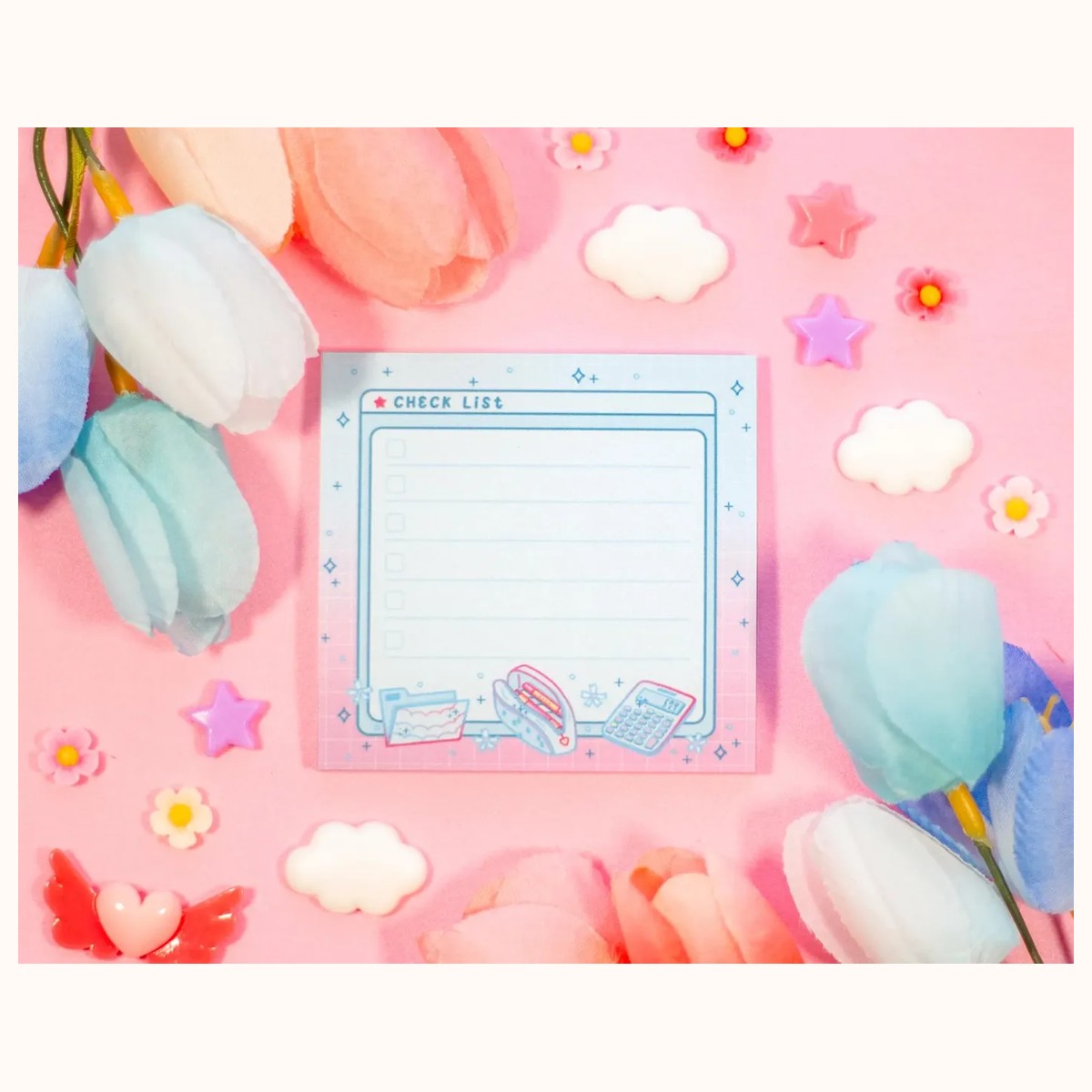
A checklist-style pad can speed up this stage. The Straight-a-student Check List Cute Aesthetic Sticky Notes is a 3-by-3-inch adhesive pad with 50 checklist-style sheets. It works well for a short trip, a single meal plan, or a “must not forget” section placed beside a larger list. Because the format is compact, use it for essentials rather than trying to fit a full family shop on one small sheet.
Try a two-level list when your shopping varies week to week. The first level is “must buy”: ingredients or household necessities that affect the next few days. The second is “if convenient”: optional snacks, a preferred substitute, or a pantry item that is low but not urgent. This prevents the optional section from competing with essentials. Mark “if convenient” clearly; otherwise, an item can feel equally urgent and encourage overspending or unnecessary searching.
Before leaving, compare the organized list with three physical areas: refrigerator, freezer, and pantry. Look for nearly empty containers, not just empty shelves. Check recipes or meal plans for ingredients that are easy to overlook, such as herbs, stock, cooking oil, or toppings. If another person shops, ask them to confirm unclear quantities before they leave, not from the middle of a crowded aisle.
3. Add a departure check and a store check
A reliable system has two checkpoints: one at home and one while shopping. The departure check catches practical details that are not food items. Scan the list for reusable bags, a shopping bag for cold items if you use one, a payment method, and any loyalty or discount information you normally need. These are personal routines, so write only what genuinely prevents a problem.
Then use a quick “read from the bottom” review. Reading in reverse order can make familiar top-of-list items feel less automatic and helps you notice the final household or freezer entries. Circle anything that is time-sensitive, such as an ingredient needed for tonight’s meal. If the list includes a substitution, write it before leaving: “cheddar, or another mild cheese.” This avoids standing in the aisle trying to make a decision without context.
In the store, check items by zone and mark them as you place them in the basket. A simple tick is enough. If you cannot find something, use a dash and write the next action: “ask staff,” “substitute,” or “buy next trip.” Do not erase a missing item immediately. An erased line can look like a completed purchase when you review the list later.
Use a separate “bought elsewhere” mark for items picked up from another shop or already delivered. This is especially helpful for shared lists. For example, one person might buy detergent at a pharmacy while another completes the food shop. A clear mark prevents the second shopper from purchasing a duplicate.
If the list is on a small sticky note, attach it to a larger sheet or place it in a wallet or phone case so it does not vanish. If the list is on a loose memo page, fold it with the writing facing outward and keep it in the same pocket every trip. The format matters less than having a predictable place for the active list.
4. Close the loop after shopping
The final step is a two-minute reset. When you return, check the list for items that were missed, substituted, or deliberately postponed. Move postponed items to the capture pad only if they are still relevant. Otherwise, cross them out. This prevents the next shopping list from becoming a historical record of every idea you have ever had.
Notice patterns without turning them into statistics. If eggs are repeatedly forgotten, give them a permanent place in the chilled section. If a household member adds items too late, set a cut-off such as the evening before shopping. If a small pad fills too quickly, switch to a larger sheet or use one pad for capture and another for the organized trip list. If loose pages scatter, keep a clip or shallow tray at the capture point.
A useful weekly reset can take five minutes. Start a fresh master page, carry forward genuine staples, and remove items already purchased. Then ask three questions: What ran out unexpectedly? What was bought but not used? Which item was hard to find because the wording was vague? The answers improve the next list. “Vegetables” may become “carrots, broccoli, and salad leaves,” while “snacks” may become “one savory option for school lunches.” Specificity should solve a real confusion, not make every line cumbersome.
Choose the notepad format according to the failure you are trying to fix. Use sticky notes when visibility and quick capture are the problem. Use a 4-by-6 memo pad when you need more writing space and a portable master page. Use a checklist pad when a short, repeatable essentials list is the main need. Browse Farouk Book Store’s notepads collection to compare formats, and check the contact page if you need to verify current product details before choosing.
The best grocery list notepad system is deliberately ordinary: one place to capture, one place to organize, a few store zones, two checks, and a reset after the trip. Start with the next shopping run rather than designing a perfect household system. After two or three trips, keep the steps that prevented real omissions and remove anything that only added work.
Related reading: How to Choose Stickers for Journals and Planners · 2026 Stationery Trends: Color, Texture, and Joy · How to Build a Personalized Gift Bundle