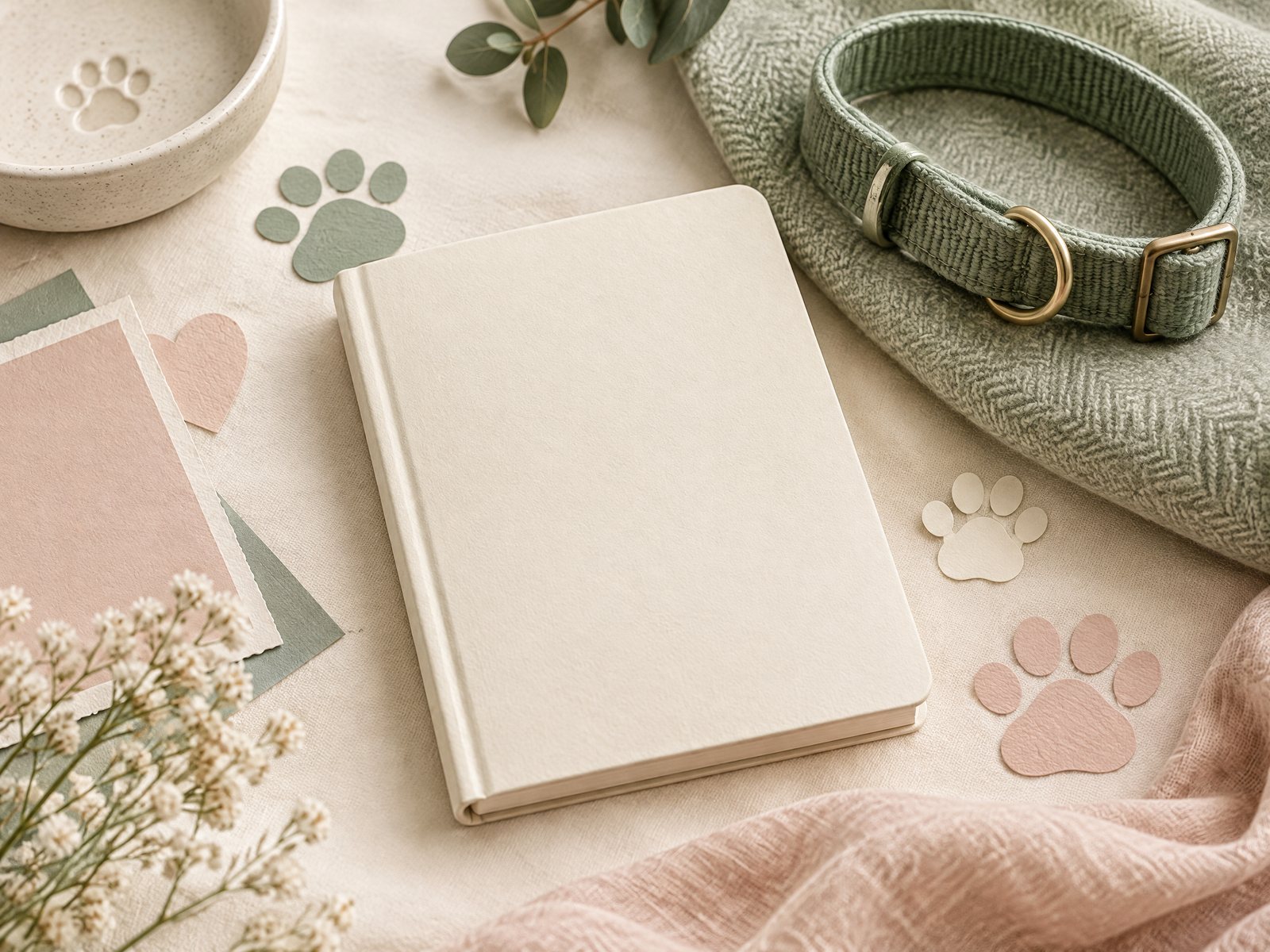
Adoption day can produce a surprising pile of small things: a handwritten note, a photo, a tag from a first toy, a map of the route home, and a dozen details you are sure you will remember. A month later, those details are harder to place. A pet-adoption memory folio gives them a home without turning the first day with a new animal into a formal record-keeping project. Farouk Book Store can help you choose the paper foundation and a few decorative touches, while the meaning comes from your own dates, observations, and words.
The useful distinction is between a keepsake and a file. A folio can hold the story of how you met, what the journey felt like, and which ordinary moment made the new arrival feel at home. It should not become the place for vaccination certificates, medication instructions, adoption contracts, microchip details, or other documents that may need secure storage and accurate updating. Keep those private records in the appropriate place, and use the folio for memories you would be comfortable revisiting or sharing.
Decide what belongs in the memory folio
Begin with a one-page boundary note before adding decorations. Write two headings: memory and private record. Under memory, list items such as “first photograph,” “first quiet evening,” “the name we considered,” “a funny first habit,” or “who was there.” Under private record, list identification numbers, addresses, financial information, signed agreements, and care instructions. The second list is a reminder to leave those materials out, not an invitation to copy them.
This separation prevents a common failure: placing every adoption-related paper into one attractive notebook and then carrying it around. A folio can be sentimental and still be selective. If a rescue or shelter gave you a paper that feels meaningful, record the date and a short description rather than attaching the original when the paper contains personal details. For a photo, consider a small print or a caption instead of a page showing a phone number, email address, or visible address label.
Choose a simple sequence that can grow without becoming a scrapbook obligation:
1. The arrival page: date, broad location, and one sentence about the first impression. 2. The people page: first names or initials only if you plan to show the folio to others. 3. The ordinary-details pages: food-bowl location, favorite resting spot, first game, or a sound that became familiar. 4. The first-week page: three dated moments, not a complete daily diary. 5. The open pages: blank space for later memories, drawings, or a photograph.
Avoid writing a dramatic “before and after” story on the first evening. You may not know the animal’s full history, and guessing can turn a loving page into an unverified account. “Arrived carrying a blue blanket” is a strong memory. “Was definitely abandoned by someone” is a conclusion you may not be able to support. Keep the language close to what you saw, heard, and were told.
Select a paper base that can handle real use
A notebook that lies flat and gives you room for dates, captions, and small sketches is more useful than a format chosen only for its cover. The Botanical Bliss Spiral Lined Notebook is listed as a 7 x 9-inch notebook with 120 lined college-ruled pages and a spiral binding. That combination offers enough writing area for a small folio sequence while allowing the page to stay open as you add a caption or draw a simple floor-plan-like memory of the first evening. Its floral-inspired cover can sit naturally beside a gentle animal story without suggesting that the shop produced the original design.
If your plan includes loose photos, cards, or a folded note, do not force every item between notebook pages. Use an envelope or a separate archival-safe pocket, labeled with a neutral date, and keep it beside the notebook. A page can say “see the envelope marked April 12” without revealing anything private on the page itself. This also makes it easier to remove a duplicate photo or replace a paper that fades, curls, or becomes awkward to handle.
A writing surface should match your actual habit. If you expect short entries, use one page per moment rather than leaving a large spread for an imagined masterpiece. If you like sketches, reserve the right-hand page for a loose outline and the left-hand page for words. If the animal is likely to bump the table or investigate the supplies, write first and decorate later. The best folio is one you can pause and resume without rebuilding the setup each time.
For carrying the notebook between rooms or to a quiet family visit, the Cafe Quest Book Sleeve With Zipper and Pocket is listed at approximately 9 x 12 inches and described as fitting a 7 x 9-inch notebook; measure your own items before choosing it. Its pocket can hold a pencil or a loose memory card, but do not treat the sleeve as a secure place for private documents. The bag on the website prepares an email order request rather than functioning as a payment checkout, so inventory, taxes, and shipping should be confirmed with Farouk before assuming an item is available.
Build pages from specific, ordinary moments
The folio becomes personal through precision, not volume. Instead of writing “the first week was sweet,” record “on the third evening, the new arrival slept beside the bookcase while the kettle cooled.” Instead of listing every item purchased, note “the first toy that held attention for more than a minute.” These details will mean more later because they identify a scene rather than announcing a general feeling.
Try a repeatable four-line entry:
- Date: Use the calendar date, even if you add the page later.
- Place: Keep it broad, such as “living room” or “back porch,” if the folio may leave home.
- Seen or heard: Describe one observable detail.
- What I want to remember: Add one sentence in your own voice.
A small sketch can be as simple as the shape of a blanket, a bowl beside a chair, or the position of a leash on a hook. Do not turn the drawing into an attempt at identification or a claim about behavior. The point is to preserve your perspective on an ordinary scene.
Decorations should support the memory rather than compete with it. One small paw-shaped accent near a date can establish the theme; a full border on every page may make later writing difficult. A real catalog option such as the Ocean Window CLEAR Cute Aesthetic Vinyl Sticker is described as approximately 2 x 3 inches and intended for smooth surfaces such as notebooks. If you use it, place it on the outer cover or a removable divider rather than over a caption you may later want to revise. Its ocean view does not need to match the adoption story literally; a restrained accent can be enough.
Another approach is to leave the notebook mostly plain and make a single title card for the folio. Write the animal’s chosen name only if you are comfortable sharing it, then add the adoption date and a neutral phrase such as “first pages.” Avoid putting an address, phone number, shelter contact, microchip number, or other identifying detail on an exterior that might be photographed or misplaced.
Handle privacy, pauses, and imperfect pages
Privacy is part of the design, especially when several people contributed to the adoption. Ask before including another person’s full name, photograph, message, or story. If a child helped choose the animal, initials or a first name may be enough. If the folio might be posted online, make a separate shareable page rather than photographing the entire notebook. Check the background of photos for labels, paperwork, keys, or screens before sharing.
Expect the first plan to need adjustment. If the animal chews a corner, moves the notebook, or makes writing time impractical, relocate the folio to a high, dry shelf and keep a temporary card nearby. Transfer the note later with its original date. If pages fill faster than expected, switch from one page per day to one page per week. If nothing memorable seems to happen, use a “quiet day” entry rather than inventing a milestone. “Slept through the afternoon; I noticed the room was finally quiet” is still a real observation.
Watch for these failure cases:
- The folio becomes a care manual. Move feeding, medication, and veterinary instructions to the private record system recommended by the appropriate professional or organization. Keep the folio descriptive, not advisory.
- Every page becomes a photo page. Alternate a photo with a caption-only page, a sketch, or a blank pause. Repetition makes meaningful images harder to notice.
- The story assumes an unknown past. Replace speculation with “I was told” or “I do not know,” and record only confirmed context.
- The notebook is left where it can be damaged. Store it away from water, food, claws, and direct mess while still keeping it easy for you to reach.
- The decoration takes over. Remove an accent from a draft page before committing it to the notebook. If the writing becomes harder to read, the page needs less ornament.
For more paper choices, browse Farouk’s journals and notebooks collection, then read the current listing details rather than assuming that every notebook has the same paper, size, or binding. Farouk is a shop with an editorial selection, so the catalog may include designs from different sources; describe a product by its listed features and do not present the shop as the manufacturer of every design. Questions about the catalog are best directed through the Contact page, while general shop information is available on the About page.
A pet-adoption memory folio does not need a perfect first page, a complete timeline, or a sentimental conclusion. Give it a date, one observed detail, and enough empty space for the next ordinary moment. Years later, the page that says where the bowl stood, who laughed, or how long it took to settle may carry the clearest sense of arrival. The folio works when it preserves that small evidence without asking private documents, professional instructions, or imagined history to do the same job.
Related reading: Continue with How to Start a Reading Journal You Will Actually Use, Creative Notebook Sections for One Useful Everyday Book, and Stationery Care and Storage in Warm, Dry Climates.