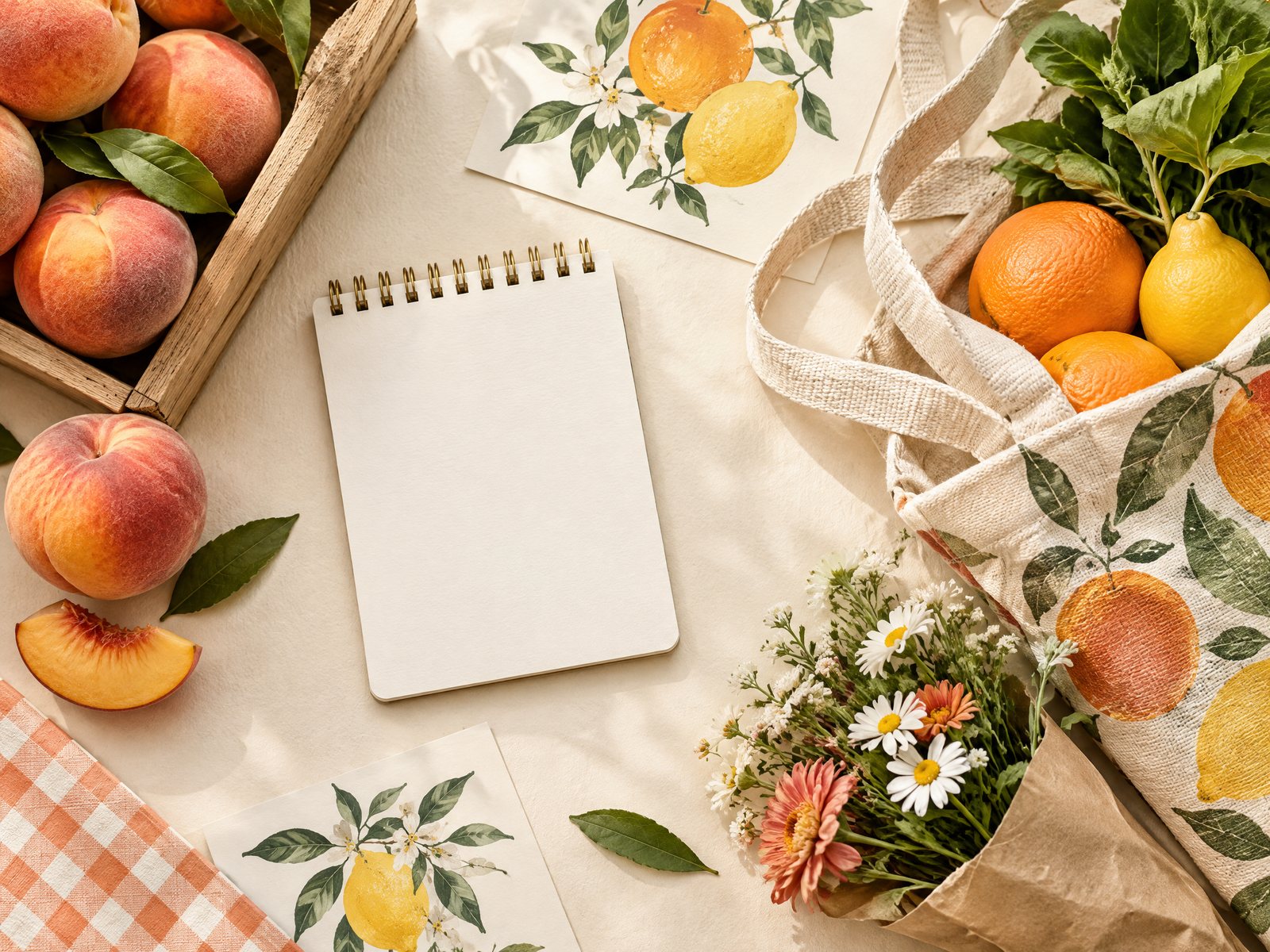
A market can be full of good intentions and missing details: you remember that a jam was bright, a pastry had a toasted edge, or a vendor explained an ingredient, but by the time you get home every sample has blurred into “nice.” A small tasting-notes habit gives those fleeting impressions somewhere to land. Farouk Book Store’s notepad selection can support that habit without turning a relaxed weekend walk into a formal review or a grocery-list exercise. The aim is a personal record of taste, context, and questions—not a nutrition report or professional food assessment.
Start with a question, not a shopping list
Before leaving, decide what you want to notice. A grocery list answers “What do I need to buy?” Tasting notes answer “What did I experience, and what would I like to remember?” Keeping those jobs separate prevents the page from becoming a crowded checklist of produce, quantities, and errands.
Choose one simple lens for the outing. You might compare how two fruit varieties differ in aroma and texture, record which stall gave the clearest explanation, or document a single unfamiliar ingredient. A narrow question is easier to revisit than a page that tries to capture every table in the market. Write the question at the top, followed by the date, market name, and a broad location if useful. Avoid recording private details about vendors unless they have clearly offered them for that purpose.
A practical page can use five short prompts:
- Item or sample: What was offered, and how did the vendor identify it?
- First impression: What did you notice before trying it?
- Taste and texture: Use your own plain-language words, such as crisp, floral, tangy, dense, buttery, or lingering.
- Context: Note the stall, season, pairing, preparation, or conversation that shaped the moment.
- Return thought: Would you seek it again, ask a question, or simply remember the experience?
These prompts leave room for uncertainty. “Not sure yet” is a useful observation when your first taste is influenced by temperature, a strong preceding flavor, or a busy environment. Personal notes do not need to sound like a critic’s copy. They need to help your future self recognize the moment.
Build a pocket-sized market page
The best setup is the one you will actually carry. The Notepads collection gives you a place to compare compact paper options, but choose by writing behavior rather than appearance alone. If you expect to stand, walk, and write between samples, a small square pad is easier to handle than a large notebook. If you want a longer reflection after returning home, reserve a second page for the recap instead of trying to write a complete paragraph beside a crowded stall.
The Beach Cute Aesthetic Sticky Note is listed as a 3-by-3-inch, 50-sheet paper pad. That compact format suits one observation per sheet: a single fruit, a short vendor explanation, or a quick comparison that you want to move later. Its adhesive backing can be useful for arranging temporary notes in a home notebook, but do not attach it to a vendor’s display, packaging, or another person’s property. Treat the removable page as your own organizing tool, not as a label for food.
For a similarly compact approach, Dreamy Thoughts Cute Aesthetic Sticky Notes are listed as 3-by-3-inch, 50-sheet paper notes. Use one note for “before tasting” and one for “after tasting” when you want to notice how your expectation changed. The two-note method is especially useful for unfamiliar foods: the first page preserves what you imagined, while the second records what actually stood out. If handwriting space feels tight, use keywords and expand them at home rather than squeezing in a full review.
A third option is the Purple Gradient Clouds Aesthetic Message Memo Notepad, listed as a 4-by-6-inch paper memo pad. The larger page gives you room for a mini field entry: item, vendor description, sensory words, and one follow-up question. It is a good choice when you prefer one continuous record rather than loose observations. The color or artwork can make the pages pleasant to revisit, but do not let decoration replace the details that make the note meaningful.
Catalog descriptions and availability can change, so compare the current listing before choosing. Farouk Book Store is presenting an editorial selection of paper goods here; the shop should not be treated as the manufacturer of every catalog design. If you need to clarify an item before ordering, use the contact page. The site’s bag prepares an email order request rather than a payment checkout, so inventory, taxes, and shipping still need confirmation.
Record taste without pretending to measure it
Taste notes become more useful when they distinguish observation from judgment. “The skin felt firm” is an observation. “I preferred the softer sample” is your preference. “This is healthier” is a health claim and does not belong in a casual market notebook. Keep the page grounded in what you personally noticed, without presenting it as nutritional guidance or a universal verdict.
Try a three-pass entry. First, pause before tasting and record appearance, aroma, temperature if relevant, and the vendor’s description in your own words. Second, taste slowly enough to notice an opening impression, a middle note, and what remains afterward. You do not need specialist vocabulary; “bright, then mellow” can be more honest than a borrowed flavor term. Third, add a practical response: “ask about serving it chilled,” “compare with a less-ripe sample,” or “look for this stall again.” That final line turns description into a memory aid.
Be precise about the limits of the setting. A crowded market, changing weather, shared utensils, allergies, and a sample’s serving temperature can affect what you perceive. If you cannot identify an ingredient, write “vendor described it as…” rather than asserting a fact. If a sample is not available for tasting, record what you saw or discussed and label it accordingly. Never pressure yourself or anyone else to sample something; a note can document interest without documenting consumption.
A useful vocabulary bank can stay simple:
- Aroma: fresh, grassy, roasted, citrusy, earthy, floral, or faint.
- Texture: crisp, creamy, fibrous, chewy, tender, sticky, or airy.
- Balance: sharp, sweet-leaning, savory, mild, intense, or gradual.
- Finish: quick, lingering, warming, dry, clean, or uncertain.
These words are prompts, not a scoring system. If you do use a scale, define it on the first page and keep it personal: “1 means I would not seek it again; 5 means I would plan around finding it.” Do not imply that your score measures quality or gives a professional recommendation.
Turn scattered notes into a small weekend record
The home review is where loose pages become a story. Set aside ten minutes the same day, while the setting and conversation are still clear. Group entries by stall, ingredient, or question rather than by price or an imagined ranking. Add a short “context” paragraph: who you were with, what the weather felt like, or what you learned about the market. Keep identifying details minimal unless a vendor has invited you to share them.
One effective layout is a two-page spread. On the left, place three short entries with their original sensory words. On the right, write “surprised me,” “would revisit,” and “still wondering.” This arrangement prevents the record from becoming a list of winners and losers. It also makes room for an imperfect experience: perhaps the sample itself was ordinary, but the vendor’s explanation changed how you understood it.
If you used sticky notes, move only the observations you expect to keep. A common failure is preserving every fragment and then creating a second pile to sort. Keep the edits small: select a maximum of five notes, write a one-sentence recap, and discard duplicates. Another failure is trying to transcribe a full conversation from memory. Instead, mark a short paraphrase and a question to verify later. Your notebook is a personal memory aid, not a public transcript.
You can finish each entry with one of three gentle decisions: seek again, try differently, or remember only. “Seek again” might mean returning to a particular stall. “Try differently” could mean tasting the ingredient in another preparation, if you choose to do so. “Remember only” recognizes that an experience can be worth recording without becoming a purchase or a repeat plan. This keeps curiosity separate from consumption and leaves space for changing preferences.
A market notebook works best when it protects attention rather than demanding performance. Carry one small pad, write a few honest words, and let the rest of the day remain unrecorded. The value is in the details you would otherwise lose: a vendor’s helpful explanation, the contrast between two samples, or the exact word that captured a first impression. For more paper-based ideas around reading and everyday records, explore How to Use Sticky Notes for Weekly Planning and A Brain Dump Notepad Routine for Busy Days. If your weekend notes become part of a reading or gifting project, How to Build a Study Routine with a Planner Pad offers another way to give a page a clear job.
Related reading: How to Use Sticky Notes for Weekly Planning, A Brain Dump Notepad Routine for Busy Days, and How to Build a Study Routine with a Planner Pad