A caregiver may be doing difficult, repetitive, or deeply personal work while having little time for a public thank-you. The challenge is not finding the grandest gift; it is making appreciation feel sincere without exposing private details, crossing a workplace policy, or asking the recipient to respond. Farouk Book Store offers a useful paper starting point for that quieter gesture: a note selected for its size, visual tone, and ease of delivery rather than for a promise that it will solve anything.
This guide is for appreciating an unpaid family caregiver, a friend who helps regularly, or a professional caregiver whose employer sets clear boundaries. Instead, it helps you make a few considerate decisions: who should receive the note, what can safely be written, how much visual detail is appropriate, and when a small paper message is better than a parcel.
Start with privacy, permission, and the recipient’s role
Before choosing a card, decide what “private” means in this situation. A note handed over in person may be private enough for a family member, but not for someone working in a shared home or facility. A sealed envelope may be preferable when other people could see the message. If you cannot give it directly, ask a trusted coordinator or family contact about the appropriate channel rather than sending a personal item to a workplace without checking.
Separate unpaid and professional care in your planning. A relative or friend may welcome a warm, familiar sentence. A professional caregiver may need a shorter message with no personal information, money, or item that could conflict with an employer’s policy. Appreciation should never create an obligation to accept a gift, disclose a private relationship, or make an exception to a rule. If a policy prohibits gifts, a note alone—or a message routed through the approved supervisor—may be the respectful option.
Keep the recipient in control of the moment. Say that there is no need to reply. Do not ask them to confirm receipt, describe their own circumstances, or share the message with anyone else. If the person is often interrupted, a small card they can read later is more considerate than a long conversation at the doorway. For a family caregiver who is exhausted, “I wanted you to know I noticed” may be more welcome than a request to discuss feelings.
A quick privacy check can prevent an awkward mistake:
- Could a visitor, resident, patient, child, or coworker read this if the envelope were opened at the wrong time?
- Does the message name a condition, treatment, schedule, address, or family event that should remain confidential?
- Does the recipient’s workplace allow personal notes, small gifts, or food?
- Can the note be delivered without requiring the caregiver to sign, call, or respond?
If any answer is uncertain, reduce the detail and confirm the permitted route first. Thoughtfulness includes restraint.
Choose paper for the situation, not a stereotype
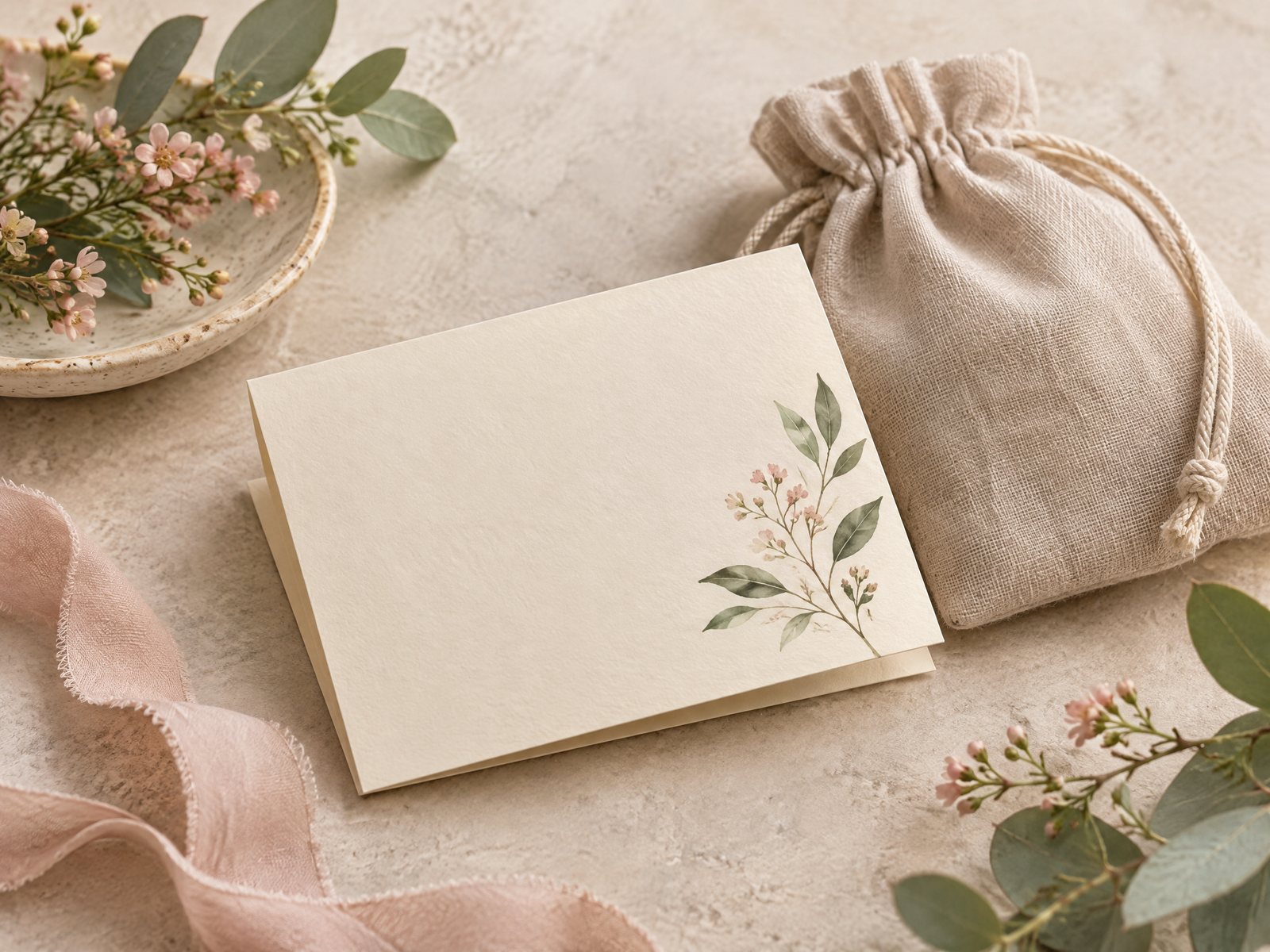
A caregiver does not need to be assigned a personality based on their job. Botanical, pastel, academic, or plain designs can all work; the best choice is the one that matches what you know about the recipient and the setting. A busy floral pattern might feel warm to one person and too conspicuous to another. A neutral cream card may be ideal for a professional exchange, while a familiar color or motif can make a family note feel personal.
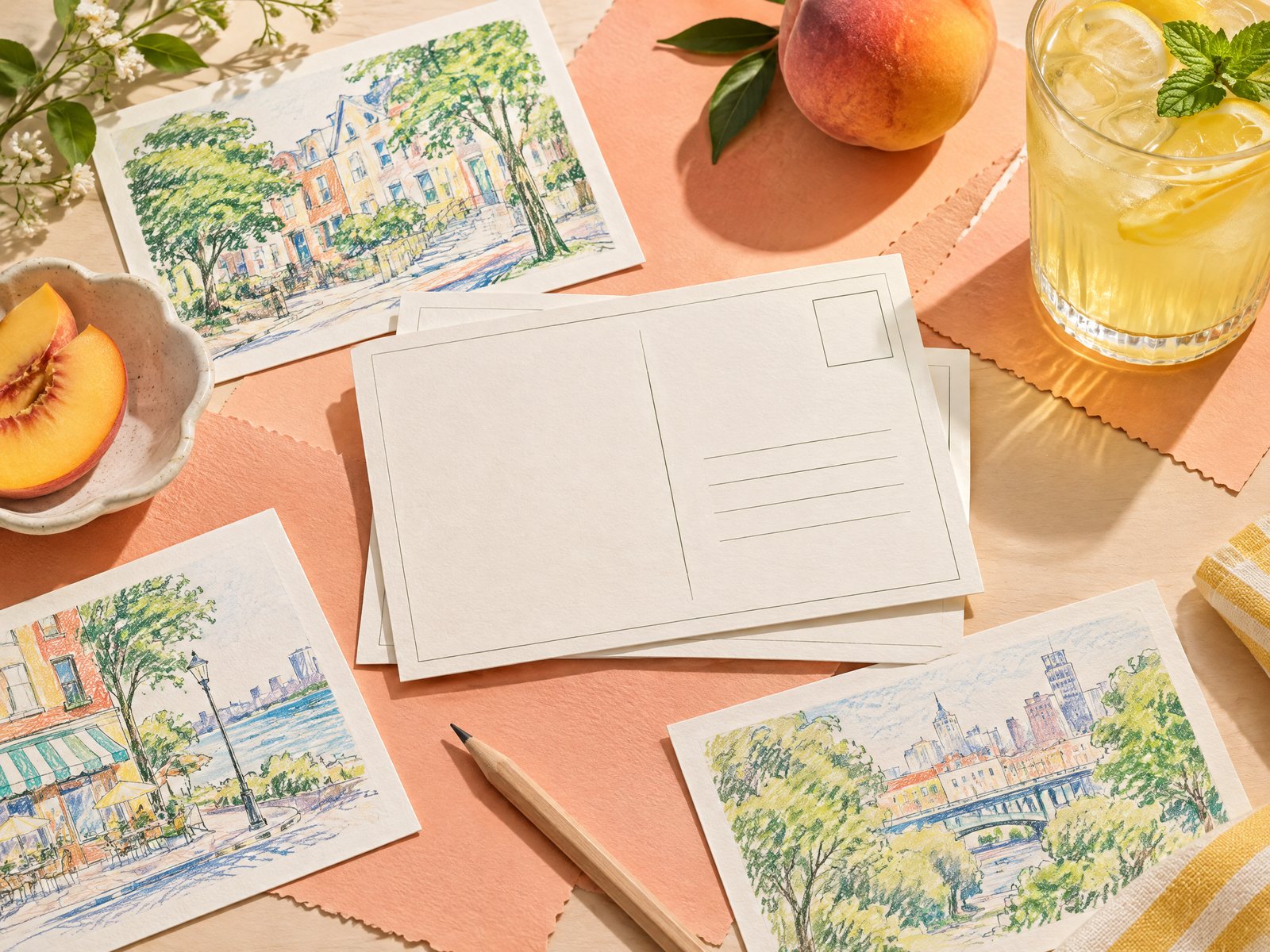
For a compact message with a little structure, consider the Starry Clouds Note Cards. The catalog describes a 3-by-5-inch bundle with one lined side and one unlined side, so you can write a short message on the lined side and leave the reverse unused. That format is useful when you want the note to be legible and contained, not a long letter that demands a large emotional response. Because it is a selection in Farouk’s catalog, not a design Farouk is asserting it manufactured, judge the actual visual tone before choosing it.
If a calmer, more restrained surface suits the recipient, the Reading Room Note Cards offer another 3-by-5-inch option. Their lined and blank sides can support two distinct approaches: a few sentences on the front, or a short note plus a simple hand-drawn mark on the reverse. Do not add a drawing merely to fill space. Empty paper can make a private message feel deliberate.
You can browse the note-card collection for alternatives, but narrow the decision to one card style before writing. Too many decorative choices can turn appreciation into a shopping exercise. Ask which option is easiest to read, easiest to conceal in an envelope, and least likely to conflict with a workplace context.
An envelope can add discretion without making the gesture elaborate. Botanical Bliss Envelopes are listed as A7 envelopes, approximately 5.25 by 7.25 inches, in a set of 10, with a botanical print and moisture seal. Use an envelope only if it suits the recipient and the delivery setting; a decorative exterior should not identify sensitive information or announce a private relationship. Check the actual fit and current listing details before ordering, and confirm availability and delivery arrangements rather than assuming a timing promise.
Write one specific acknowledgment, then stop
The strongest private appreciation notes usually name an observable action rather than making a sweeping claim. “Thank you for making time to explain the next step when the day felt confusing” is more personal than “You are the best caregiver.” It recognizes care without pretending to measure the recipient’s whole character or promising an outcome.
A reliable four-part structure is short enough for a note card:
1. Address the person as they prefer. Use their name only if you are certain it is appropriate. 2. Name one action. Mention a moment of patience, steadiness, preparation, listening, or practical help. 3. State what you noticed. Explain briefly how that action affected the day or helped you feel supported, without making a medical claim. 4. Release the obligation. End with appreciation and “No need to respond” when that would reduce pressure.
For example, an unpaid family caregiver might receive: “Thank you for keeping track of the small details and for explaining the plan so calmly yesterday. I noticed how much care went into that. I’m grateful—no need to write back.” A professional caregiver might receive: “Thank you for your patience and clear communication during the afternoon visit. Your careful attention was noticed and appreciated. Please don’t feel any need to respond.”
Avoid language that turns gratitude into an evaluation. Do not write that someone “saved” a person, “guaranteed” an outcome, or “always” handles everything perfectly. Those claims can feel heavy, inaccurate, or uncomfortable in a professional context. Avoid describing a person’s diagnosis, medication, personal history, or family conflict. If the appreciation depends on a private detail, refer to the helpful action rather than recording the detail on paper.
Also avoid the hidden request. “Thank you for everything—can you help again next week?” is two messages, and the second may overshadow the first. Put a practical request in a separate conversation. A note should not be used to negotiate schedules, ask for special treatment, or seek reassurance.
Plan delivery and adjust when the first idea fails
Write the note when you are calm, then read it once as if you were the recipient. Is the first sentence understandable without background? Does the closing create work? Could someone nearby learn more than they need to know? If so, edit for privacy before you decorate or seal it.
A few common failure cases are easy to correct:
The message is too long. A full page may be appropriate for a close relative, but it can be difficult for a professional caregiver to read during a shift. Keep one specific example and remove the second and third. If more needs to be said, plan a separate conversation rather than squeezing it onto a small card.
The design is too conspicuous. Bright color, large lettering, or a conspicuous envelope can make a private gesture public. Switch to a quieter card, use a plain outer envelope, or deliver it at a time when the recipient can choose where to read it. The goal is recognition, not attention from bystanders.
The note accidentally sounds like feedback. “You need to keep doing exactly this” can feel like an instruction from a family member or client. Replace it with an observation: “I appreciated how clearly you explained that step.” Appreciation describes your experience; it does not supervise the caregiver.
A gift is not allowed or may be misunderstood. Do not substitute a larger item, cash, food, or a personal favor. Ask about the approved method, then send only what is permitted—or send a kind message through that channel. Boundaries are part of respect, not a failure of gratitude.
The recipient is overwhelmed. Give the note without waiting for a reaction. A simple “You can read this whenever you have a quiet minute” acknowledges their pace. If a card itself would create clutter, a short approved digital message may be the better adjustment; the point is the appreciation, not the paper format.
Farouk Book Store’s selection can help you make the paper gesture tangible, but the shop should be treated as a source of editorially selected stationery, not as the asserted maker of every catalog design. Review the listing before ordering, and remember that the website bag prepares an email order request rather than completing a payment checkout; inventory, taxes, and shipping require confirmation. For general questions about the shop and its catalog, use the Farouk Book Store about page.
A private caregiver appreciation note works when it leaves the recipient with recognition rather than responsibility. Choose a format that fits the relationship and the rules around it, write one concrete acknowledgment, protect personal details, and let the person receive it on their own terms. The quietness is not a limitation; it is often what makes the gesture considerate.
Related reading: How to Write a Thank-You Note That Feels Personal, Why Handwritten Greeting Cards Still Matter, and How to Build a Personalized Gift Bundle.