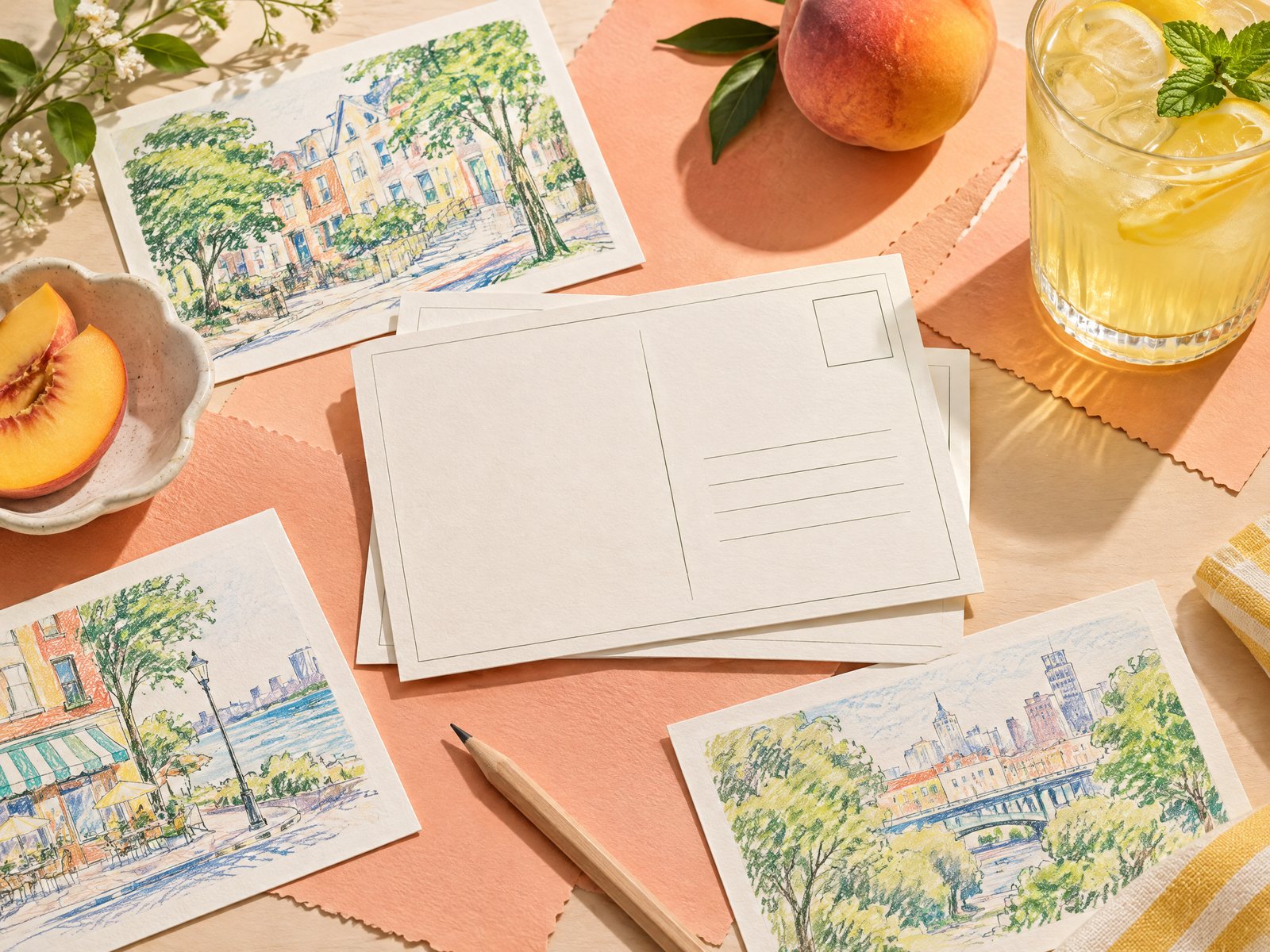
A new neighbor has moved in, and you want to acknowledge the change without making the first interaction feel like an obligation. That is the specific problem: a welcome can become too intimate, too detailed, or too demanding before anyone knows what kind of contact is comfortable. Farouk Book Store’s paper selection offers a simple alternative—a short note and, only if it feels appropriate, one tiny paper item that can be accepted without a conversation.
The aim is not to start a friendship on schedule. It is to say, “I noticed you arrived, and I hope settling in goes smoothly,” then leave room for the other person to choose what happens next. A card left at the door or handed over briefly can do that better than a large bundle, an unannounced visit, or a list of questions. Think of this as a considerate greeting, not a request for access to someone’s life.
Start with the boundary, not the decoration
Before choosing paper, decide what you will not ask. Do not request a phone number, workplace, family information, social-media handle, moving story, or exact schedule. Do not mention that you have been watching deliveries or tracking who comes and goes. Even friendly curiosity can sound like surveillance when people are new to a place.
Keep the message to three useful pieces: a welcome, one practical offer, and an easy ending. For example:
> Welcome to the neighborhood. I hope your first few weeks here go smoothly. If you ever need the name of a nearby library or a quick local direction, feel free to leave a note at [your preferred contact method]. No need to reply—just wanted to say hello.
That wording works because the offer is specific but not intrusive, and “no need to reply” removes the social invoice. If you do not want to share contact details with someone you have not met, omit the offer entirely: “Welcome to the neighborhood. Wishing you an easy start in your new home.” A note does not need a service directory, a personal biography, or a promise to be available at all hours.
Avoid language that presumes a relationship. “We should get together soon” creates a follow-up expectation. “Let me know if you need anything” can sound generous but places the work of defining “anything” on a stranger. Replace it with one bounded option, such as directions to a nearby public place, and only include it if you genuinely want to offer it.
Choose one paper format that makes the gesture easy
A low-pressure welcome should be physically small enough to read quickly and simple enough to leave behind. The note-cards collection is a useful place to compare formats, but choose by the message you need to write rather than by visual novelty.
For a compact, straightforward card, Reading Room Note Cards are 3 by 5 inches, with 50 cards in a bundle. One side is lined and the reverse is blank, so you can write a brief welcome without needing to fill a large greeting-card interior. The matte 14 pt paper gives you a practical surface for a pen or pencil. Use one card, not a handful: the point is a single greeting that does not feel like a mini correspondence project.
If you want a softer, more playful look while keeping the message short, Pastel Academia Note Cards offer the same 3 by 5-inch format, 50-card bundle, ruled side, and blank reverse. The pastel styling can work when the doorstep setting already feels casual, but decoration should not overpower legibility. Write in dark, calm lettering and leave generous space around the words. A neighbor should be able to understand the note at a glance.
An envelope is optional rather than required. If you want the message to feel more contained, Reading Room Envelopes are A7 envelopes, approximately 5.25 by 7.25 inches, sold as a set of 10. Their printed exterior and interior make the presentation more finished, but the set is not a reason to add extra contents. One card inside is enough. If an envelope makes the gesture seem formal or gift-like, skip it and use a single card instead.
These are examples from Farouk Book Store’s editorial selection, not a claim that Farouk manufactures every catalog design. Check the current product page for the listed details and availability. The site’s bag prepares an email order request rather than taking payment at checkout, so inventory, taxes, and shipping still need confirmation before treating a selection as final.
Add a tiny paper item only when it helps
The optional item should be small, useful, and easy to ignore. A single extra paper piece can make the welcome feel thoughtful; several extras can turn it into a gift that demands appreciation. Ask one question before adding anything: does this give the neighbor a pleasant, low-effort use, or does it ask them to perform enthusiasm?
A small pad of Blooming Records Sticky Notes can be a reasonable add-on for someone who has already mentioned making lists, labeling boxes, or keeping reminders. The pad is 3 by 3 inches and contains 50 adhesive sheets. Put it beside the note, not inside a complicated bundle, and describe it plainly: “A little something for moving-day lists.” Do not imply that you know how they organize their home, and do not attach it to a door, wall, vehicle, or package that is not yours to mark.
If you do not know anything about the neighbor’s preferences, the safest choice is no add-on. A plain note is not incomplete. It reduces assumptions about style, allergies, children, pets, reading habits, or household needs. Paper itself is optional; consent and distance are the design constraints.
The same rule applies to the visual theme. A floral card, pastel card, or scholarly pattern is a selection choice, not a personality diagnosis. Avoid statements such as “This is so you” when you have never met. If the only available design feels highly specific, return to a simpler card or write on a small piece of plain paper. Warmth comes from the sentence and the freedom to decline, not from maximizing coordinated details.
Deliver it without creating a doorstep performance
Timing and delivery shape the meaning of the note. A brief handoff can work if you encounter the neighbor naturally: “Hi, I’m in the area nearby. I wanted to leave this welcome note—no need to stop.” Then step back. Do not hold the conversation open by asking where they came from, whether they own or rent, or when they are usually home.
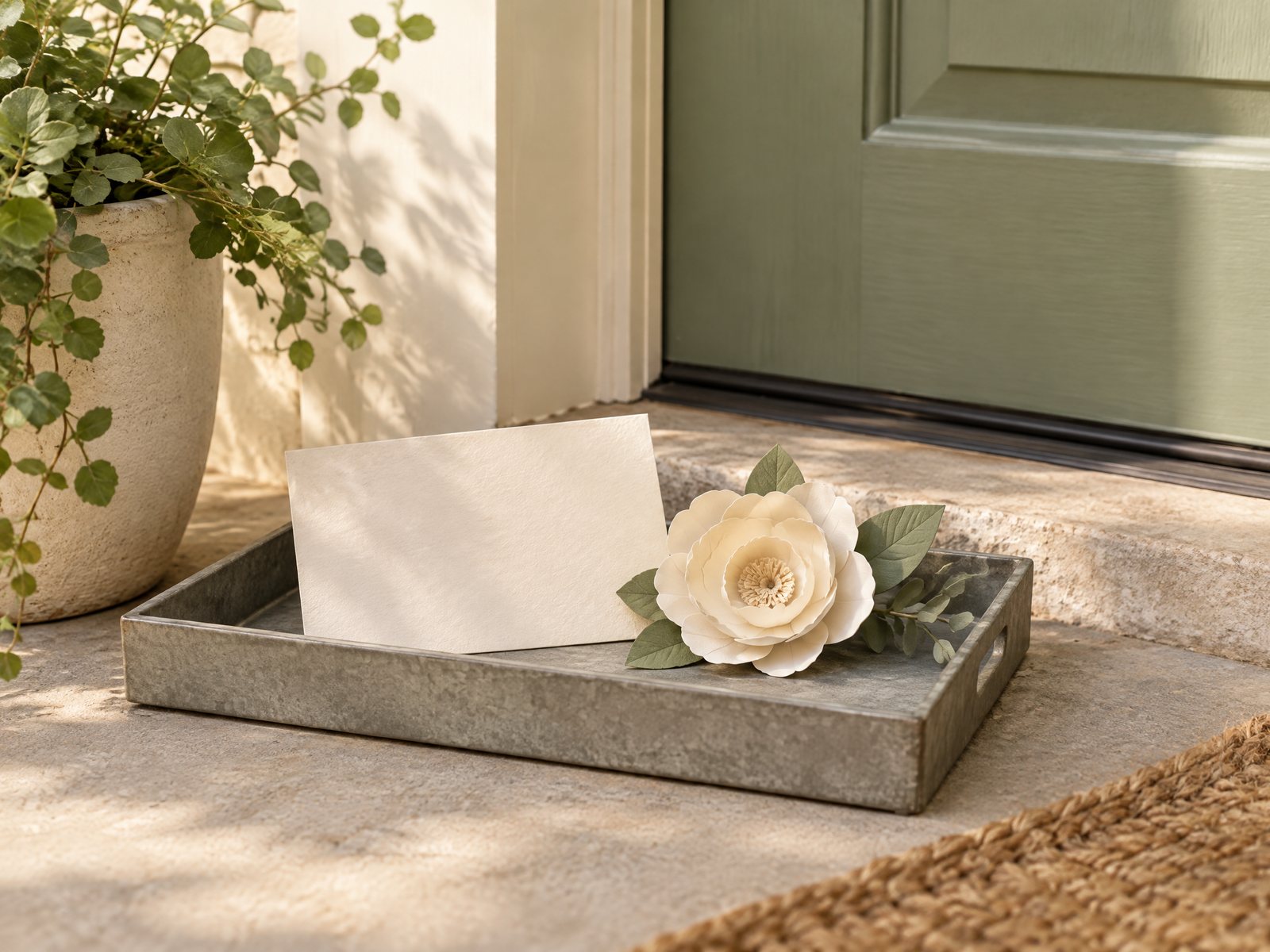
A door drop can be quieter, but protect privacy. Use the doorstep only when leaving paper there is normal and safe in the setting. Keep the note visible and dry, avoid blocking the door, and do not include identifying information about yourself beyond what you are comfortable sharing. Never photograph the delivery or announce it in a neighborhood group as proof of being welcoming. If a building has a shared-entry policy or prohibits items in common areas, follow that rule or choose a brief verbal greeting instead.
Consider accessibility and household context without guessing. A card left on a low ledge may be hard to notice; one placed where rain, sprinklers, or foot traffic can reach it may be ruined. A loud knock late at night is not friendly simply because the message is friendly. If there is a clear “do not disturb” signal, respect it. The kindest adjustment may be to wait until an ordinary daytime encounter—or not deliver anything at all.
There are also failure cases worth planning for. If the neighbor does not respond, do not send a second note asking whether they received the first. If the card is still present later, do not interpret that as rejection or investigate. If they respond warmly, match their pace rather than escalating immediately to an invitation. If they seem rushed, say “Glad to meet you” and end the exchange. If they decline the item, accept the answer with no explanation required.
A good welcome leaves the recipient with choices: read it now or later, reply or not, keep the paper or recycle it, accept future conversation or remain politely distant. That is why one card, one clear sentence, and one optional paper accent are often more considerate than a generous-looking parcel.
A simple final check before you leave it
Read the note as if you were tired, unpacking, or cautious around unfamiliar people. Can you understand it in five seconds? Does it ask for information? Does it imply that a reply, visit, or friendship is owed? Does the paper stay within the physical space you are allowed to use? If any answer feels uncomfortable, shorten the message or remove the extra item.
A practical final version might be: “Welcome to the neighborhood. I hope settling in goes smoothly. I’m nearby if you ever need a local direction—no reply needed.” Sign with a first name only if you want to be identifiable; otherwise, “A neighbor” is enough. Do not add your full address or a detailed map. If you include a way to contact you, choose one channel and be prepared for either no response or a response later.
Farouk Book Store can help you select a small paper format for this kind of gesture, while the editorial decision remains yours: keep it brief, avoid collecting details, and let the recipient set the pace. A welcome succeeds when it acknowledges a new arrival without making their arrival public property.
If you need help selecting a format or checking a current item, contact Farouk Book Store.
Related reading: Why Handwritten Greeting Cards Still Matter, Envelope Sizing for Note Cards and Small Paper Gifts, and Small Gifts for Book Club Members Without Matching Everyone.